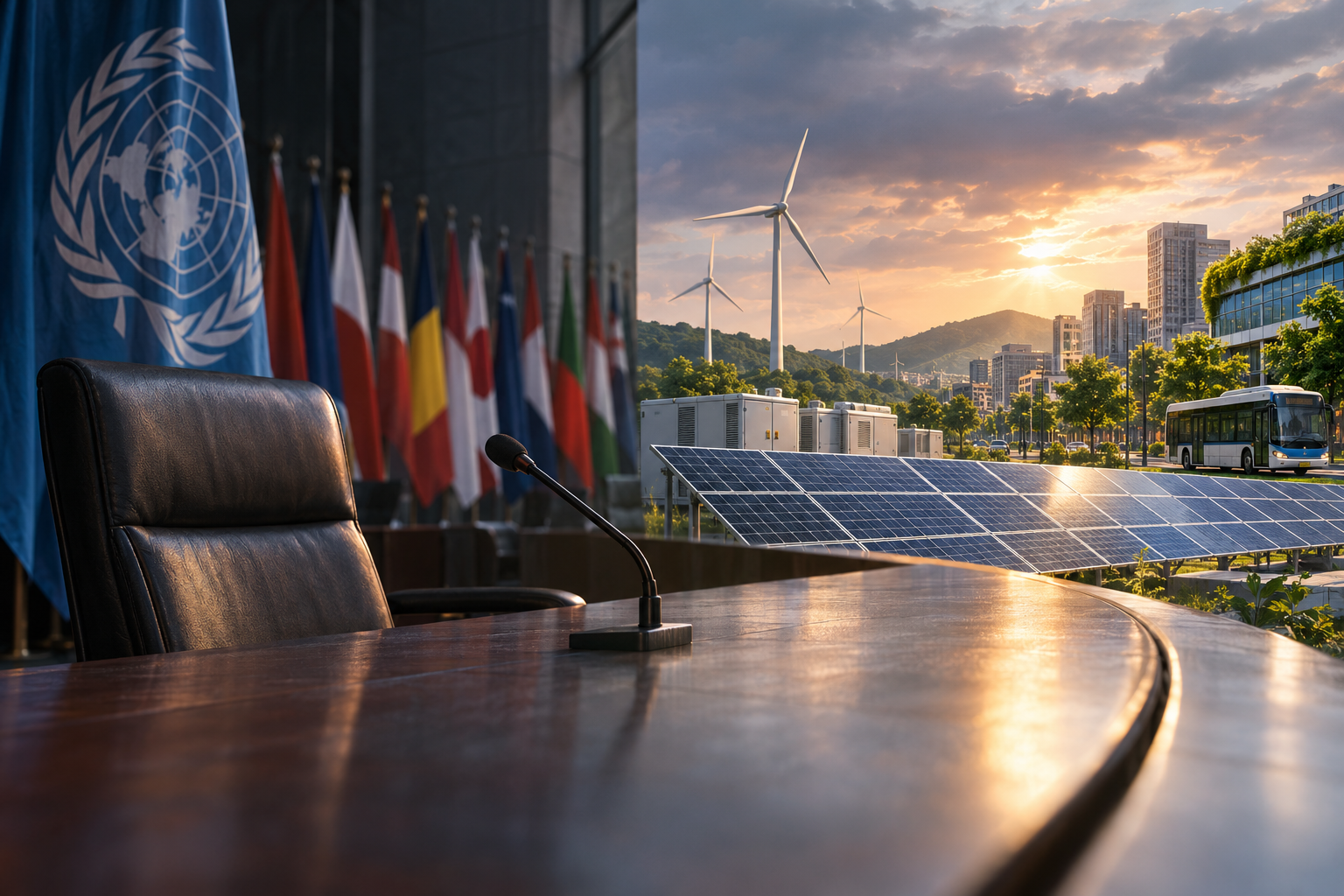
COP31 Climate Talks Broke Down. Now What?
COP31 was the longest UN climate summit in history. It ended without a final deal—the first breakdown of this kind in 17 years.
The immediate failure was a rejected draft decision. The deeper problem was the finance-and-fossil-fuel lock: vulnerable countries wanted credible support for climate damage, while governments could not agree on the fossil-fuel commitments meant to drive the transition. Until those two demands move together, a global climate pact can stall even when the need for action is clear.
That shifts the question after COP31. Climate action can still advance through smaller pacts, local governments, and clean-energy deployment. But those channels must now prove they can deliver what the summit could not: real funding and measurable implementation.
The Deal Failed at Its Core Trade-Off
The talks, co-chaired by Turkey and Australia, were intended to add urgency to climate action and financing for countries most exposed to the crisis. Instead, member states left without agreement on how to fast-track either.
The proposed cover decision became the point of collapse. Governments and campaigners rejected it amid disagreement over fossil fuels, while vulnerable states sought stronger financial support.
This was not a procedural miss. It was a failure to settle the bargain at the center of the negotiations: who moves faster away from fossil fuels, and who pays to help countries bearing the worst effects of a warming climate.
The Global Table Is No Longer the Only Table
With the central deal absent, progress is likely to move through narrower arrangements among governments, cities, regions, investors, and industry.
Those groups can act without unanimous UN consent. They can coordinate clean-power standards, grid investment, methane reductions, supply chains, procurement, and local infrastructure.
That is useful, but incomplete. Smaller agreements may move faster than a global pact, yet they do not automatically carry its financing scale or its legitimacy—especially where adaptation and support for vulnerable countries are concerned.
The post-COP31 risk is not inactivity. It is a busy patchwork of commitments that never adds up to the support and coordination the failed deal was meant to provide.
Clean Energy Can Keep Moving—Up to a Point
Clean-energy deployment remains a channel that does not depend entirely on a summit outcome. Investment, local policy, commercial incentives, and decisions on renewables, storage, transmission, and electrification can continue.
Cities and regional governments also control practical levers: permitting, procurement, building rules, and public infrastructure.
But deployment is not a substitute for diplomacy. It cannot resolve the fossil-fuel dispute or supply adaptation finance to countries facing the sharpest impacts. Clean energy can limit the damage from a diplomatic breakdown; it cannot close the finance-and-fossil-fuel lock on its own.
Watch for the First Receipts
The next evidence checkpoint is concrete, not rhetorical.
Look for funded commitments to vulnerable countries, rather than renewed statements of ambition. Look, too, for smaller climate agreements that identify their participants, timelines, targets, and delivery mechanisms.
If those receipts appear, COP31 may mark a rough transition from one keystone pact to a more distributed climate system. If they do not, the summit will stand as something simpler: a loss of coordination without a workable replacement.