Anthropic’s Public Debut Is Already Testing AI’s Legitimacy
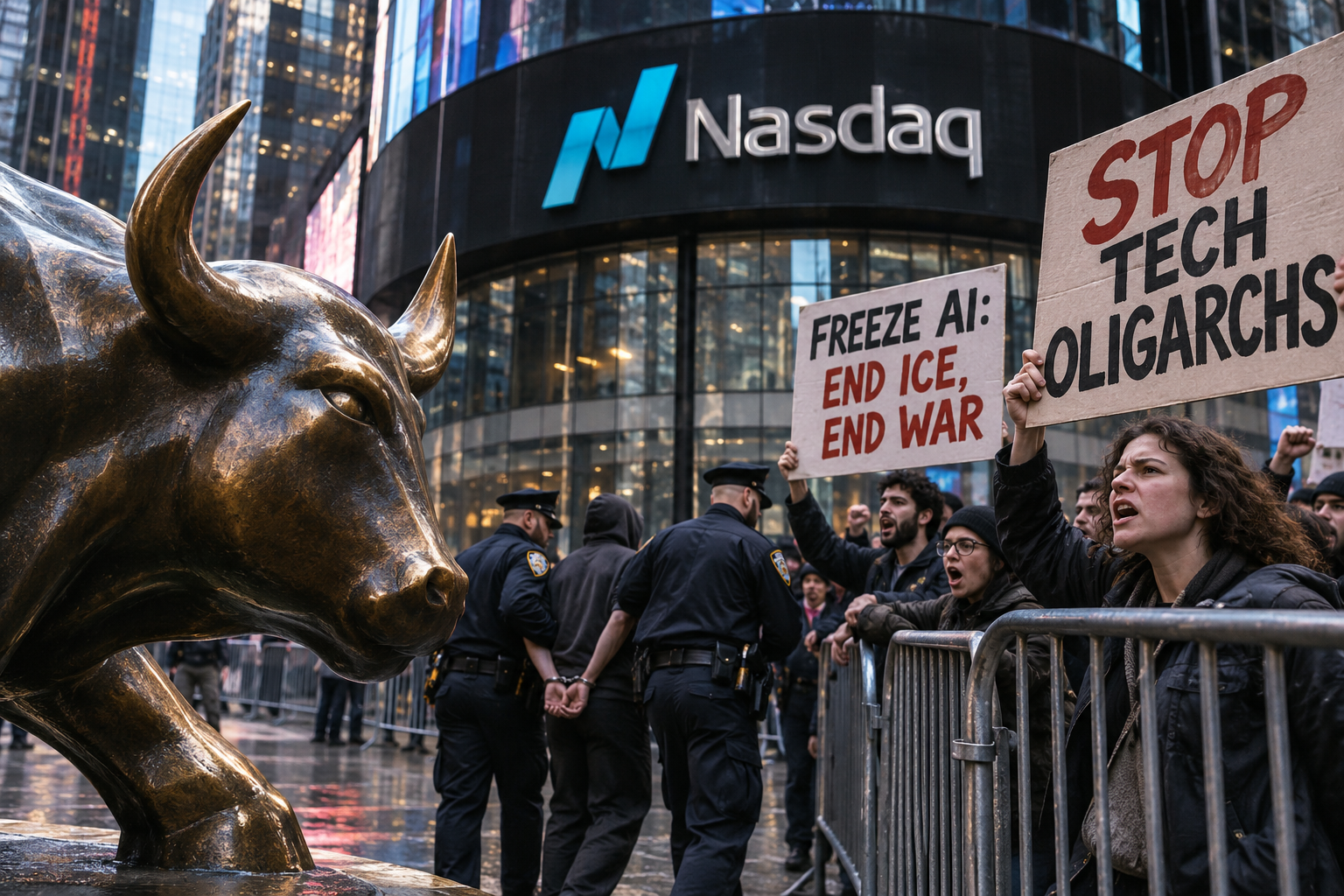
Anthropic entered public markets at a reported $2tn valuation while protesters rallied outside Nasdaq in New York and the company’s San Francisco headquarters. Several demonstrators were arrested.
That collision is the story. Anthropic’s debut matters not just as a financing milestone, but as an early legitimacy test for an AI industry moving from private capital toward broad public ownership.
Anthropic Is Now a Public-Market Bet on AI
Anthropic became the first purely AI company to list publicly, according to the BBC. Its debut immediately placed it among the world’s most valuable public companies.
That gives public-market investors a direct stake in a company built around the future of advanced AI. The valuation signals exceptional confidence in Anthropic’s importance—and in the commercial promise investors see in the category.
But a public listing expands the audience that can judge the company. It is no longer only a story for founders, venture firms, and enterprise buyers.
Protesters Challenged the Moment Outside Nasdaq
As trading began, anti-AI groups gathered outside Nasdaq in Times Square. The Guardian also reported demonstrations outside Anthropic’s San Francisco headquarters.
Roughly 30 protesters were reported in New York, carrying messages including “STOP TECH OLIGARCHS” and “FREEZE AI: END ICE, END WAR.” Their objections were broader than the mechanics of an IPO: they tied AI’s growth to concerns about concentrated power and social harm.
Al Jazeera separately reported that three people were arrested during the protest outside Nasdaq. That corroboration matters because it establishes the demonstrations as a visible public event accompanying the listing, not a passing online reaction.
The $2tn Debut Meets Street-Level Rejection
The enduring image is a sharp contrast: a $2tn market valuation on one side, protests and arrests on the other.
Investors treated Anthropic as a major economic force. Protesters treated its ascent as a reason for resistance. Neither side disputes that the company now has influence; they disagree over what that influence represents and who should be accountable for it.
This is the constraint that comes with AI becoming a public-market category. Market capitalization can measure investor expectations. It cannot, by itself, settle questions of public acceptance.
Public Status Raises the Stakes
Anthropic’s listing does not yet tell us how its products, pricing, customers, or competitive position will change. The available reporting does not support conclusions on those points.
The next evidence will come from decisions, not symbolism: whether public-market expectations shape product rollouts, how customers and developers respond, and whether partners see new opportunity or new risk.
For now, Anthropic’s debut has made one thing clear: AI’s commercial ascent and its public legitimacy will be tested at the same time.