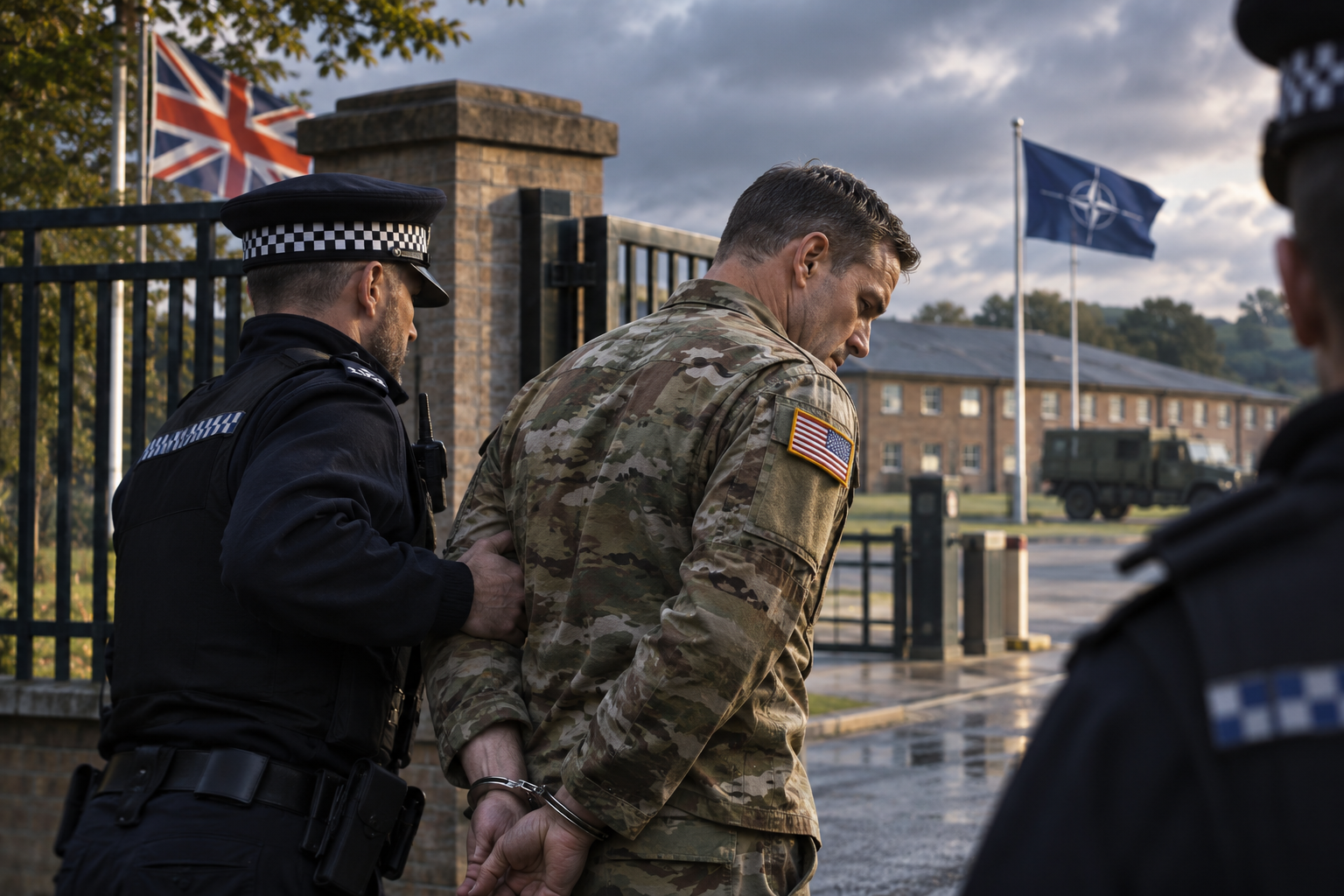
Senior US Soldier Arrested in UK on Suspicion of Russia-Linked Spying
Senior US Soldier Arrested in UK on Suspicion of Russia-Linked Spying
A confirmed arrest is not the same thing as a proven spying operation.
UK authorities have arrested a 41-year-old man near Gloucester on suspicion of offences under the National Security Act. He is being questioned in London. Multiple outlets identify him as a senior US Army soldier, but the public reporting so far does not establish the conduct at issue, the information allegedly involved, or whether any material reached Russia.
That distinction matters. The military context makes this a potentially serious national-security case; the evidence publicly available still makes it an investigation.
An Arrest With Major Unknowns
Al Jazeera reported that the man was arrested near Gloucester. CNBC and the BBC similarly reported that he is being detained and questioned under the UK’s National Security Act.
The confirmed facts are narrow: an arrest, a senior US military connection, and an active UK national-security investigation.
There is no public charging document in the source pack describing an alleged transfer of information, a recruitment effort, payments, communications, or damage to US, UK, or NATO interests. Until those details emerge, descriptions of a completed espionage operation run ahead of what has been established.
Imjin Barracks Makes the Context Sensitive
A US official told CBS News that the suspect was a senior officer based at Imjin Barracks in Gloucestershire.
That detail matters because Imjin Barracks hosts the headquarters of NATO’s Allied Rapid Reaction Corps, a multinational command designed for rapid military deployment. A soldier connected to that environment could plausibly raise concerns about access, relationships, planning processes, or operational information.
But location is not proof of access, and access is not proof of disclosure.
The constraint in cases like this is simple: a sensitive posting raises the stakes, but only evidence can connect a posting to an alleged compromise.
Russia Is Still an Allegation, Not a Finding
BBC News and CNBC describe the case as involving suspicion of spying for Russia or Russia-linked national-security offences. That is the allegation drawing global attention.
Yet the available reporting does not identify:
- the alleged Russian recipient or intermediary; - the information or material at issue; - the timeframe of the suspected conduct; or - how investigators established any Russian connection.
Those gaps are not minor. They determine whether the case concerns attempted contact, improper handling of information, a foreign-influence allegation, or an alleged espionage arrangement with a defined counterpart.
The First Charge Is the Real Proof Point
The next meaningful development is not another headline about the arrest. It is a formal UK charging decision or an official statement that specifies the legal basis for the case.
Three facts would materially change the assessment: the soldier’s exact role and access, what was allegedly passed or sought, and the evidence tying the conduct to Russia.
Until then, the responsible read is narrower than the dramatic framing: UK authorities have detained a senior US soldier in a sensitive NATO-linked setting on suspicion of national-security offences. The alleged Russia link—and the underlying case—remain to be substantiated.