What the Arrest of a U.S. Soldier in Britain Establishes—and What It Does Not
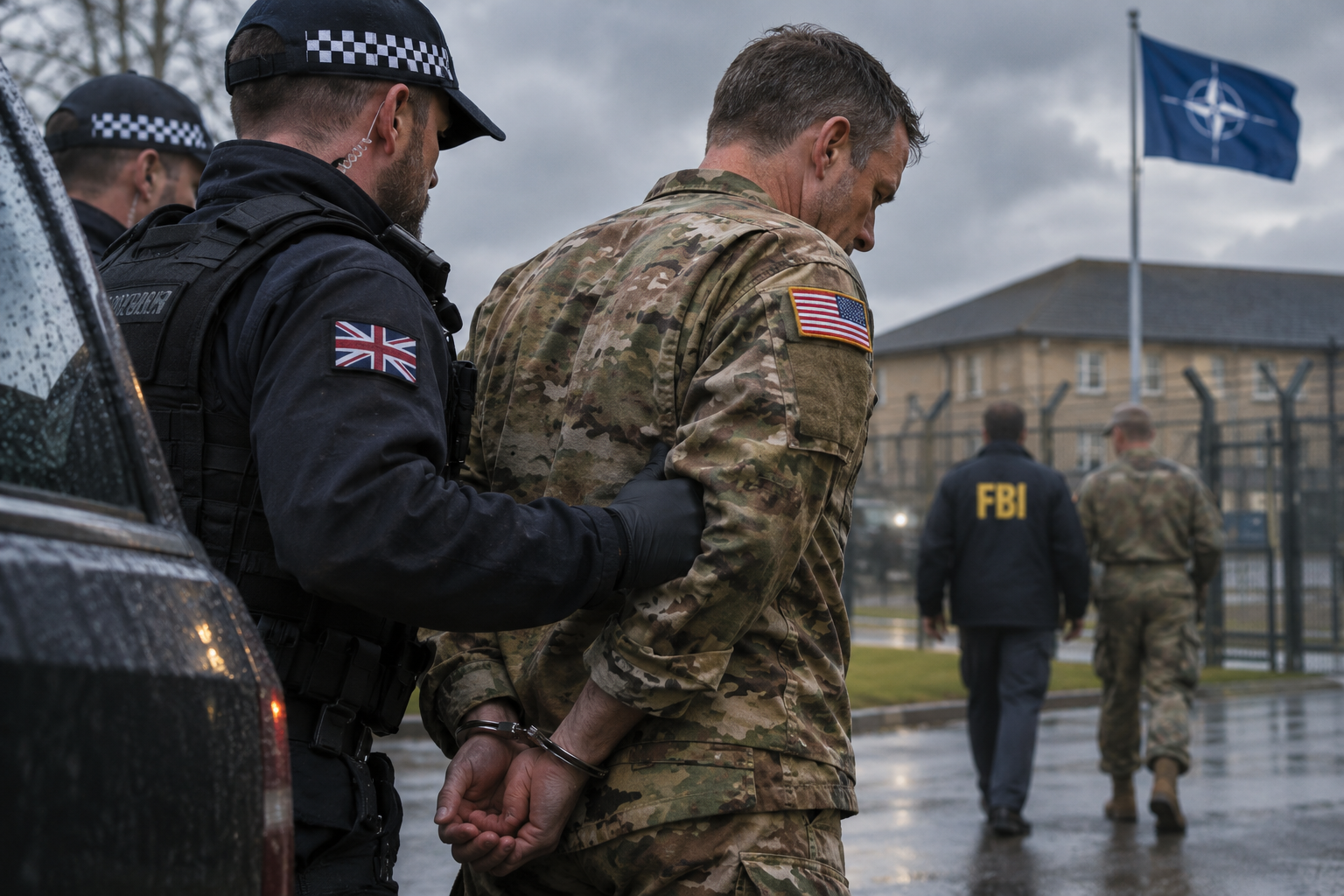
A 41-year-old U.S. soldier has been arrested in Britain after an investigation involving British counterterrorism police, the FBI, and the U.S. military. That establishes a serious inquiry—not yet a proven espionage case.
The central allegation is that the soldier spied for Russia. Public reporting, however, does not yet show formal charges, an official account of the alleged conduct, or evidence demonstrating a Russian connection. The distinction matters: an arrest confirms that authorities believe there is a case to investigate; it does not resolve that case.
An Arrest, Not an Espionage Finding
The unnamed soldier was arrested near Gloucester on suspicion of spying for Russia and was being held pending possible charges, according to reporting from The New York Times, Al Jazeera, and The Guardian.
Those are substantial facts. But “on suspicion” is the operative phrase. There is no public finding of guilt, and the available reporting does not describe evidence authorities say ties the soldier to Russian intelligence or espionage activity.
That is the constraint for reading the headline: detention is confirmed; the accusation remains unproven.
Why the Investigation Carries Weight
London’s Metropolitan Police said its counterterrorism officers worked closely with the FBI and the U.S. military. The reported involvement of U.S. military intelligence adds another signal that the inquiry has serious national-security implications.
Institutional coordination is meaningful because it suggests the matter crosses jurisdictions and security systems. Britain is handling an arrest on its territory while U.S. agencies are participating in an investigation involving one of their service members.
But the presence of major agencies is not a substitute for disclosed evidence. It raises the stakes without answering the core public questions: What information was allegedly sought or passed? Who allegedly received it? What specifically connects the case to Russia?
The NATO Location Adds Context, Not Proof
CBS News reported that a U.S. official identified the suspect as a senior officer based at Imjin Barracks, home to NATO’s Allied Rapid Reaction Corps headquarters.
If accurate, that posting helps explain why an alleged espionage inquiry would receive swift attention from British and American authorities. A senior officer at a NATO-linked location could potentially have proximity to sensitive operational or institutional information.
Still, access is not action. A job title, location, or rank may define potential stakes; none establishes that classified information was mishandled or shared.
The Claim-to-Verification Test
The case now moves through a simple sequence: claim, countermove, verification.
The claim is an alleged Russia-linked espionage offense. The countermove is the arrest and cross-border investigation. Verification requires public evidence that can survive legal and independent scrutiny.
The next durable facts would be formal charges, a British or U.S. official statement describing the alleged conduct, and evidence linking the suspect both to espionage activity and to Russia. Until then, this is a significant arrest with an unresolved allegation at its center.