Bolsonaro’s Party Accepts Brazil’s Election Loss. Flávio Bolsonaro Still Won’t Concede.
Brazil’s opposition party has accepted Luiz Inácio Lula da Silva’s election victory. Flávio Bolsonaro has not—and his planned move to the United States is turning a political refusal into a more consequential test of legal and institutional authority.
The central split is clear: the party has acknowledged the result, while Bolsonaro continues to reject it. That does not erase the formal outcome, but it keeps the dispute alive through a figure closely tied to Brazil’s conservative opposition.
The Party Has Accepted the Result. Bolsonaro Hasn’t.
Acceptance by the opposition party creates an institutional endpoint to the election. Lula’s victory is no longer being formally contested by the party itself, according to NPR.
But Flávio Bolsonaro’s refusal to concede leaves a separate political fight in motion. His stance can sustain distrust among supporters even when the organization most capable of mounting a formal challenge has moved on.
That distinction matters. A defeated party can accept an outcome while a prominent candidate or family figure continues to contest its legitimacy. The result is political noise without, so far, evidence of an organized institutional reversal.
A Visa Creates an Exit Route
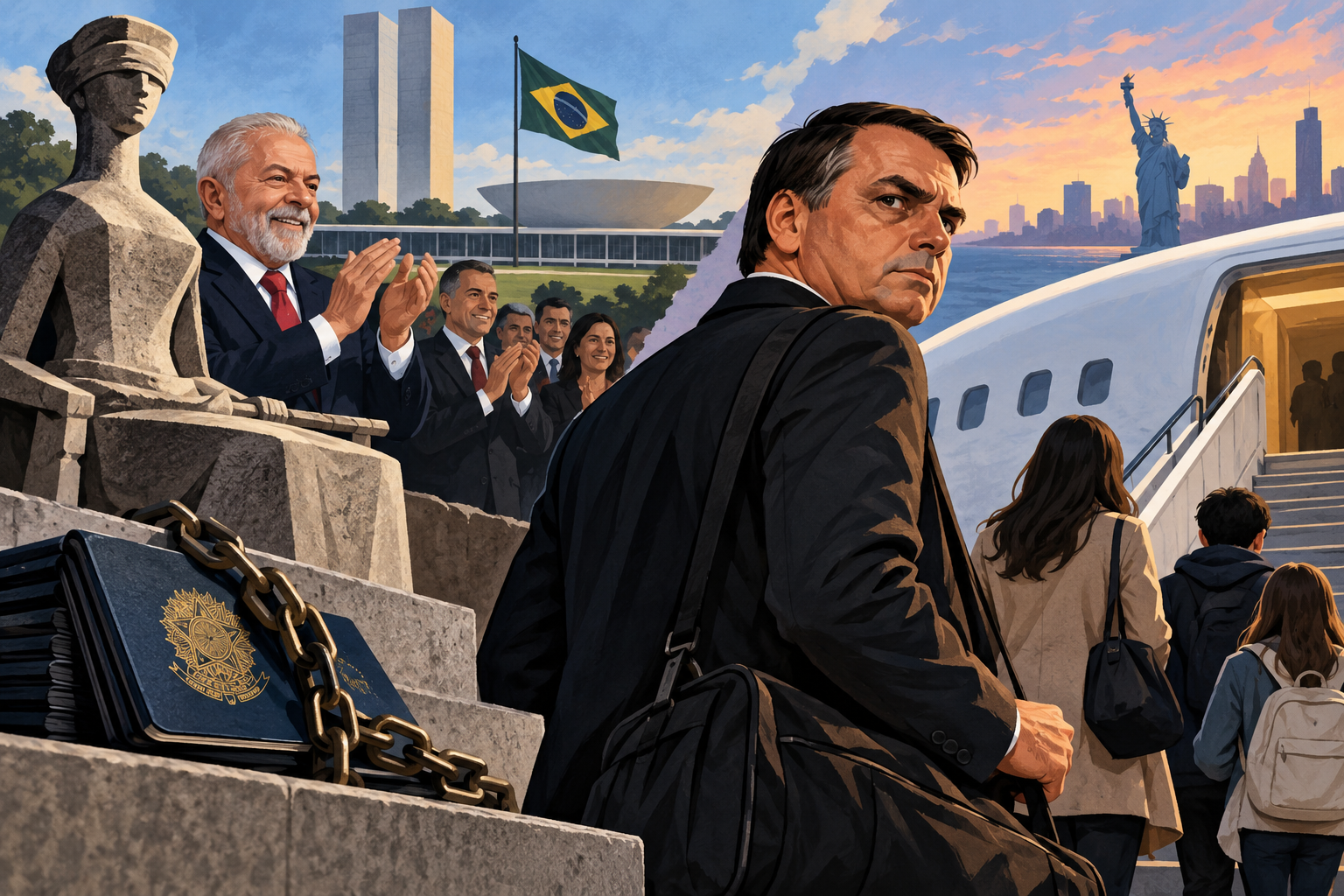
The U.S. plans to issue visas to Bolsonaro and his family, a State Department official told CBS News. The New York Times similarly reported that a U.S. official said a visa would be issued.
That decision changes the story from post-election rhetoric into a question of movement and jurisdiction. A politician who rejects a result while leaving the country is no longer only shaping the domestic narrative; he is also testing how another government’s actions affect a live Brazilian political and legal situation.
The visa decision does not establish wrongdoing, nor does it prove that Bolsonaro is evading authorities. It does establish that the United States is prepared to offer him and his family a route out of Brazil immediately after the loss.
The Passport Order Is the Constraint
The timing is especially significant because Brazilian authorities had sought Bolsonaro’s passports over links to an investigation, according to the Times. Al Jazeera reported that Brazil’s Supreme Court ordered him to hand over passports in a money-laundering probe.
Those reports make the practical question narrower and more important: what legal force does the passport action have, and does it affect his departure?
This is the constraint to track. Political defiance is largely rhetorical until it meets enforcement. A visa can be issued; travel still depends on whether Brazilian court or police actions impose a binding restriction and how those authorities enforce it.
The Exit-and-Accountability Test
Three pieces of evidence will determine what this episode becomes:
- A clear Brazilian court or police statement on the passport order and its immediate effect. - A formal response from Bolsonaro or his party clarifying whether refusal to concede is personal defiance or an organized opposition position. - Independent confirmation of his departure circumstances and how they intersect with the investigation.
For now, the verified story is specific: Lula’s victory has been accepted by Bolsonaro’s party, Flávio Bolsonaro has not conceded, and the U.S. visa decision arrives amid reported Brazilian efforts to secure his passports.