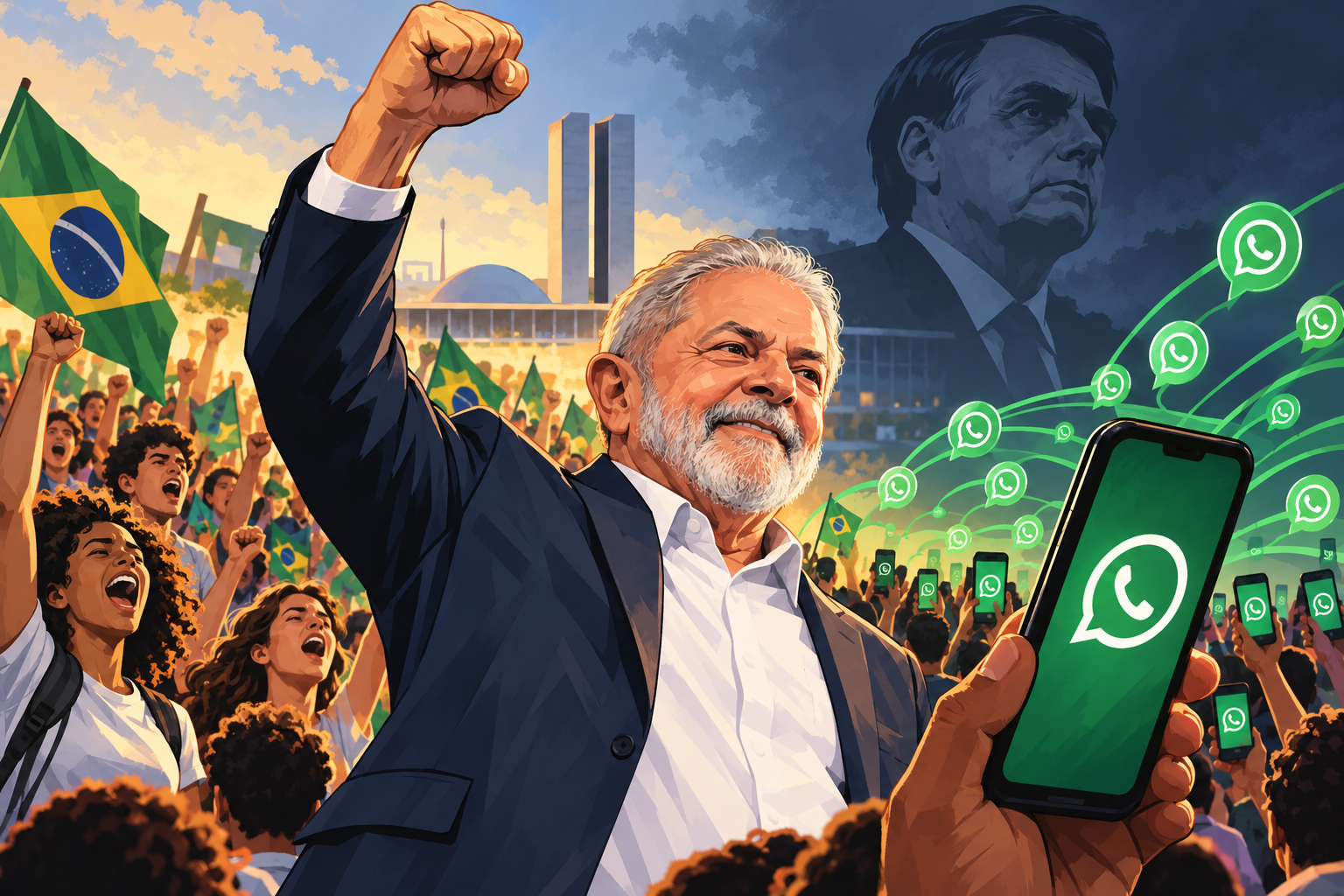
How Lula Turned a First-Round Defeat Into a Historic Comeback
Lula lost Brazil’s first round. Three weeks later, he won the presidency—and made history in the process.
His fourth-term victory over Flávio Bolsonaro was not a routine runoff result. CNBC reported it was the first time since Brazil returned to direct elections in 1989 that a candidate lost the first round and then won the final vote. The reversal is confirmed; the precise weight of the forces behind it is still being measured.
The deficit that changed the runoff
Lula entered the runoff after finishing behind Bolsonaro, despite leading a government he reportedly regarded as the strongest of his three terms.
The initial outlook was grim for Brazil’s left. Reporting from The Guardian noted that roughly 9 million first-round voters backed other candidates, all on the right, and many analysts expected those votes to flow largely to Bolsonaro.
That did not happen cleanly enough to hold Lula off. The runoff became a contest over whether Bolsonaro’s apparent first-round advantage could be defended—and whether Lula could expand beyond his existing coalition.
A 10-million-person distribution network
More than 10 million Lula supporters reportedly joined a WhatsApp channel used to boost his campaign.
That number matters because it describes a campaign asset with unusual speed and reach. A channel of that scale can circulate messages, coordinate volunteers, reinforce talking points, and respond quickly to attacks in the compressed window between rounds.
But membership is not the same as persuasion. The test is conversion: did the network shift undecided voters, improve turnout among Lula supporters, or help his campaign compete for voters who had backed eliminated candidates?
The New York Times characterized Lula’s social-media operation as a major force in persuading Brazilians to reject Bolsonaro. That supports the view that digital distribution was central to the runoff campaign, even if the final causal breakdown remains unclear.
The streets supplied visible pressure
The comeback was not confined to phones. The Guardian linked student-led protests to the effort that reshaped the race.
That combination matters. Street action signals public energy that can make a campaign feel larger than its formal organization, while messaging networks can carry the event beyond those physically present. Protests create moments; WhatsApp extends their lifespan, reach, and coordination.
The campaign’s strength, then, was not simply “social media” or “the streets.” It was the overlap between public mobilization and private distribution.
The runoff-transfer test
The historic claim is straightforward: Lula lost the first round and won the presidency.
The more ambitious claim—that protests and WhatsApp activity caused the reversal—requires harder evidence. Large channels and visible demonstrations establish reach and momentum, not a complete explanation of voter behavior.
The decisive evidence would show three things:
- Where voters for eliminated candidates moved in the runoff - Whether turnout changed in places where Lula’s campaign mobilized most intensely - How those shifts related to the final margin
Until that data is clear, the disciplined conclusion is narrower: Lula’s campaign paired street-level protest with an enormous digital network during a successful reversal.
A comeback whose mechanism will be contested
Lula’s win was historic because it overcame a first-round loss that many observers treated as decisive. The reporting also makes clear that a massive WhatsApp operation and student-led protests were important parts of the runoff environment.
What remains unsettled is the share of credit each deserves. The campaign had reach. The protests had visibility. Lula had a winning result.
The next layer of reporting must connect those facts to voter transfers and turnout.