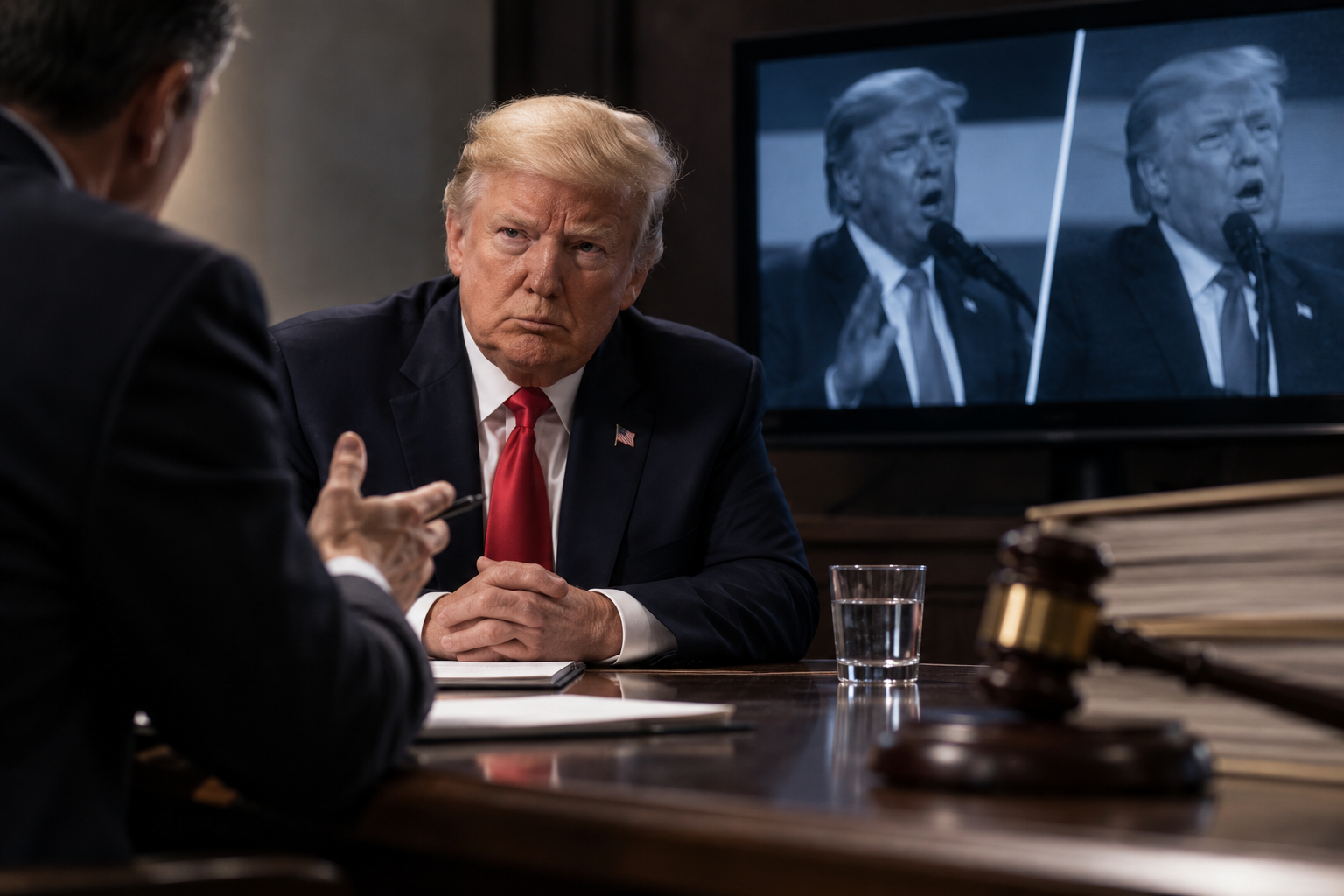
Judge Orders Trump to Give Deposition in BBC Defamation Case
Trump’s lawsuit against the BBC has crossed into a more consequential phase: a judge has ordered him to answer questions under oath.
That does not resolve the defamation claim. But it moves the dispute beyond public arguments over a television edit and into compelled testimony from the plaintiff himself.
The BBC Lawsuit Has Entered the Testimony Phase
A magistrate judge ordered President Trump to sit for a deposition with BBC lawyers in his defamation lawsuit against the broadcaster.
The shift matters because a deposition is an enforceable legal obligation. Trump is no longer only advancing allegations through filings and public statements; he must answer questions under oath in a discovery process that can shape what both sides argue next.
The strongest confirmed development is narrow but significant: the case now requires Trump’s direct testimony.
The Edited 2021 Speech Is Still at the Center
Trump is suing over a BBC Panorama episode that edited together two separate portions of a speech he delivered in 2021, according to BBC News.
That edit remains the legal fault line. The available reporting confirms the underlying dispute over the footage, but it does not establish how the court will assess the elements of a defamation claim or whether either side holds the stronger legal position.
A deposition could bring sharper definition to the alleged harm: which portions of the program Trump’s team considers defamatory, what it says the edit conveyed, and how it connects those claims to damages.
A Court Order Changes the Operating Reality
The important sequence is decision → enforcement → response.
The decision is the judge’s ruling. Enforcement is the deposition requirement. The response—Trump’s testimony, the BBC’s questioning, and subsequent court filings—is still ahead.
That distinction keeps the development in proportion. A court order compelling testimony is meaningful because it creates a deadline-backed legal event. It is not, by itself, a finding that the BBC defamed Trump or that Trump will prevail.
What the Reporting Confirms—and Leaves Open
NPR reported that a magistrate judge ordered Trump to sit for a deposition in the case. CBS News likewise reported that a federal judge required Trump to be deposed by BBC lawyers. BBC News independently reported that Trump was ordered to answer questions under oath and identified the Panorama program at issue.
The reports converge on the core fact: Trump must give testimony.
They do not establish the full scope of questioning, a precise deposition date, or what the testimony will reveal. Those details matter because discovery can change litigation leverage without deciding the case outright.
The Next Filing Will Matter More Than the First Reaction
The next proof point is the court record: a written order or later filing that spells out timing and conditions for the deposition.
After that, the meaningful signal will be whether testimony produces disputed facts, admissions, or new arguments that alter the case’s trajectory.
For now, the durable conclusion is procedural rather than predictive: Trump has been compelled to answer BBC lawyers’ questions under oath.