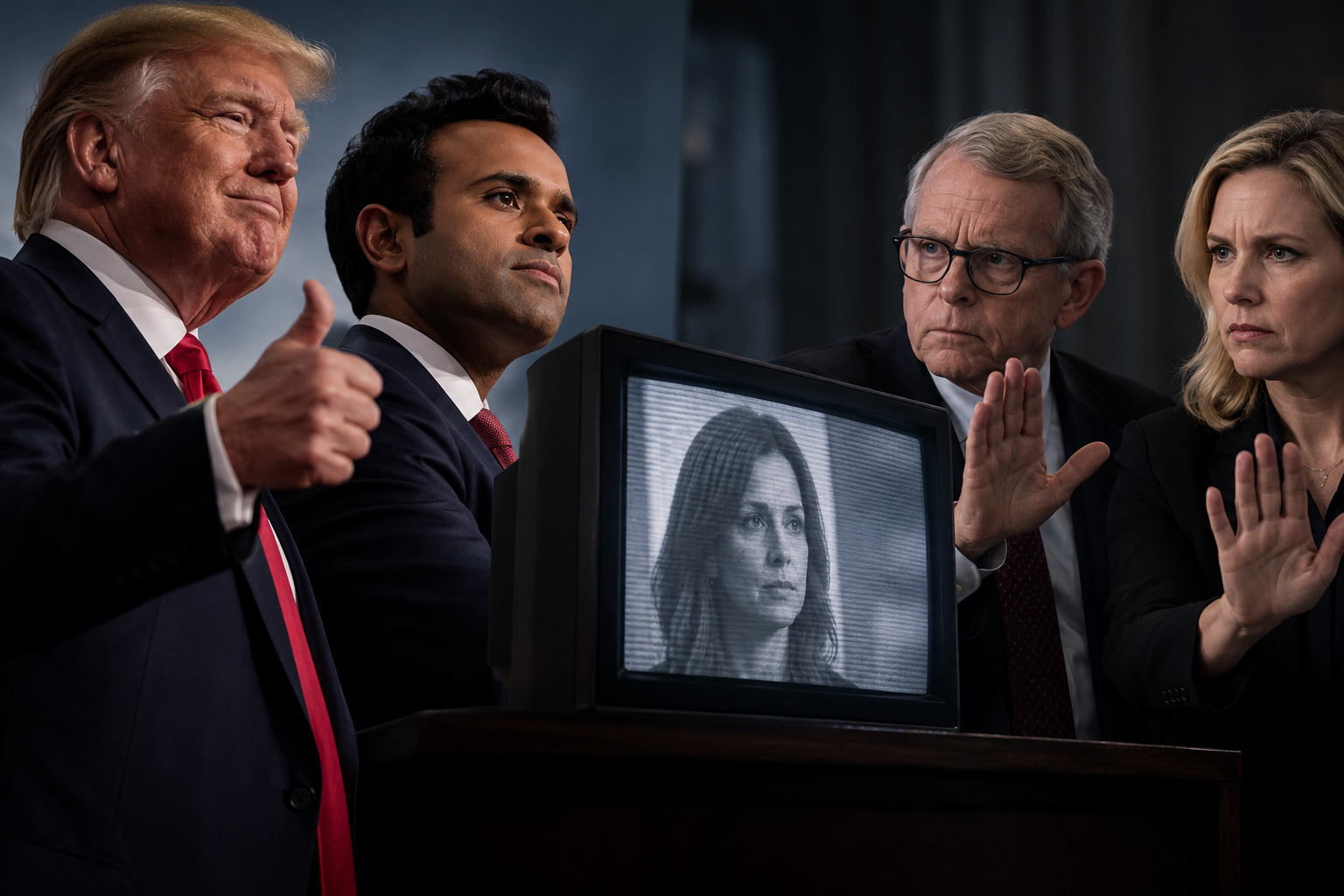
Trump Backs Ramaswamy Ad as Republicans Urge Him to Pull It
Trump has given Vivek Ramaswamy permission to keep fighting with an ad that prominent Republicans want off the air. His praise of the spot—"Who wouldn’t use such an Ad?"—puts him directly at odds with Ohio Gov. Mike DeWine and Rep. Ashley Hinson, who have urged Ramaswamy’s campaign to stop running it.
The story is not a broad Republican policy dispute. It is a visible fight over one campaign tactic, with Trump backing it and other Republican leaders asking for its removal.
Trump Backs the Attack
The ad targets Amy Acton through her estranged mother. Trump called it “powerful” and publicly defended using it.
That makes his role more than passive. Ramaswamy is no longer facing criticism over an ad without cover from the party’s most influential figure. Trump has made clear that he sees the attack as worth using.
DeWine and Hinson Want It Gone
DeWine called the ad “deeply troubling” and urged the campaign to pull it. Hinson, an Iowa Republican Senate candidate, likewise said Ramaswamy’s campaign should cease airing it.
Their objection is specific: not simply disapproval, but a demand that the campaign change course.
The divide is stark. Trump is validating the message. DeWine and Hinson are arguing that it should disappear from the airwaves.
The Air-Time Test
The meaningful signal now is not another round of condemnation. It is whether the ad keeps running.
That is the air-time test:
- If Ramaswamy keeps the spot up, Trump’s endorsement has outweighed the pushback. - If the campaign pulls or changes it, the objections from DeWine and Hinson have imposed a real constraint.
The available reporting confirms the opposing public positions. It does not establish that the ad has been withdrawn, that Trump has taken action beyond his public endorsement, or that the dispute has changed the race.
Watch the Next Buy
The next evidence checkpoint is simple: whether Ramaswamy’s campaign says the ad remains on air, pulls it, or revises it. Until then, this is a documented Republican split over a single attack ad—not proof of its electoral effect.