Kyiv Hit by Missiles Hours After Moscow Says Ukraine Talks Can Resume
Russia said it was ready in principle to resume Ukraine talks. Hours later, missiles struck Kyiv.
That sequence does not prove the attack was designed to sabotage negotiations. But it does make Moscow’s diplomatic signal harder to treat as evidence of progress. A willingness to talk is not the same as a willingness to de-escalate.
Talks in Principle, Missiles in Practice
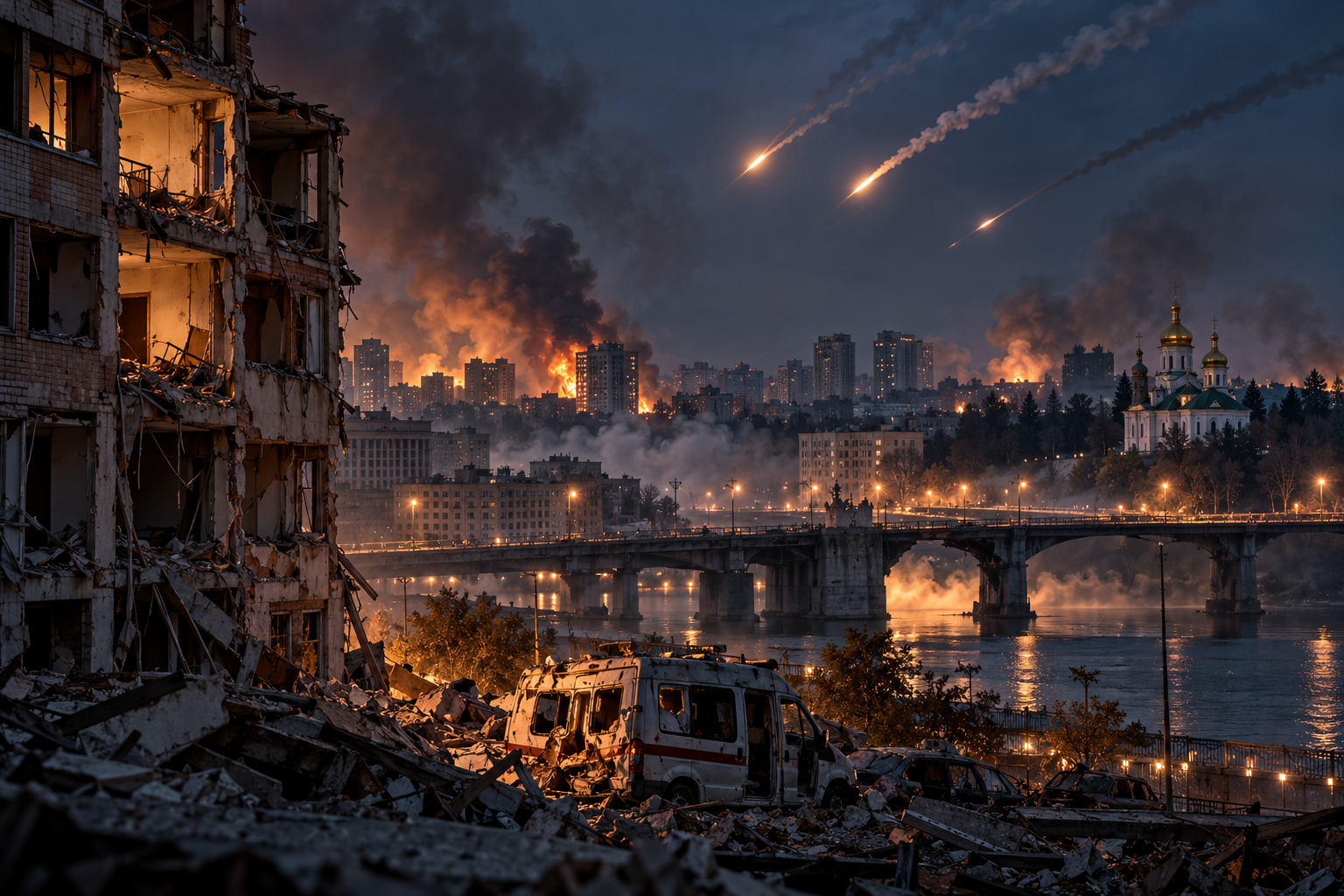
The reported overnight attack killed at least two people and wounded 22 in Kyiv, according to The Guardian. Four children were among those injured.
The diplomatic language came after talks involving US envoy Steve Witkoff, with Moscow describing itself as ready “in principle” to resume trilateral negotiations. US President Donald Trump said the world was closer than it had been to ending the war.
Then came the counterpressure: ballistic missiles over the Ukrainian capital.
The central fact is not that diplomacy and war can coexist; they have throughout this conflict. It is that this attack immediately tested whether the renewed language carried any operational weight.
The Strike Reached Beyond a Single Target
Reported targets included energy infrastructure, civilian homes, the southern bridge over the Dnipro River, an ambulance station, office buildings, and a monastery.
That matters because attacks on infrastructure and urban services impose costs beyond the immediate casualty count. They can disrupt mobility, emergency response, power supply, and civilian life as winter approaches.
Al Jazeera reported a broader overnight exchange: 15 people injured in Kyiv, while Russia said it intercepted 163 Ukrainian drones. The casualty figures are not yet fully aligned across reports, but the basic picture is clear: military pressure continued on both sides.
There is no evidence in the available reporting that directly links the Kyiv attack to the negotiation announcement. The timing is politically consequential; the intent remains unproven.
Readiness Is Not a Peace Offer
“Ready in principle” is deliberately limited language. It does not establish a meeting date, a negotiating agenda, concessions, enforcement terms, or a pause in strikes.
That distinction is the constraint on every optimistic reading of the announcement. A diplomatic channel can be useful without signaling a change in war aims.
BBC reporting also noted that Vladimir Putin does not appear to feel under immediate pressure to end the war. If that assessment holds, renewed talks may be an option Moscow is prepared to use, rather than a commitment to a settlement.
The relevant signal is not rhetoric alone. It is whether rhetoric survives a countermove.
The Paper Trail Will Decide What Changed
The next durable evidence would be concrete and public:
- A scheduled meeting with named participants. - An official proposal or defined agenda. - Specific terms acknowledged by Russia, Ukraine, or the United States. - A measurable change in attacks tied to negotiations.
Until then, the clearest reading is narrow: Moscow has left the door open to talks while the war continues at full political and human cost.