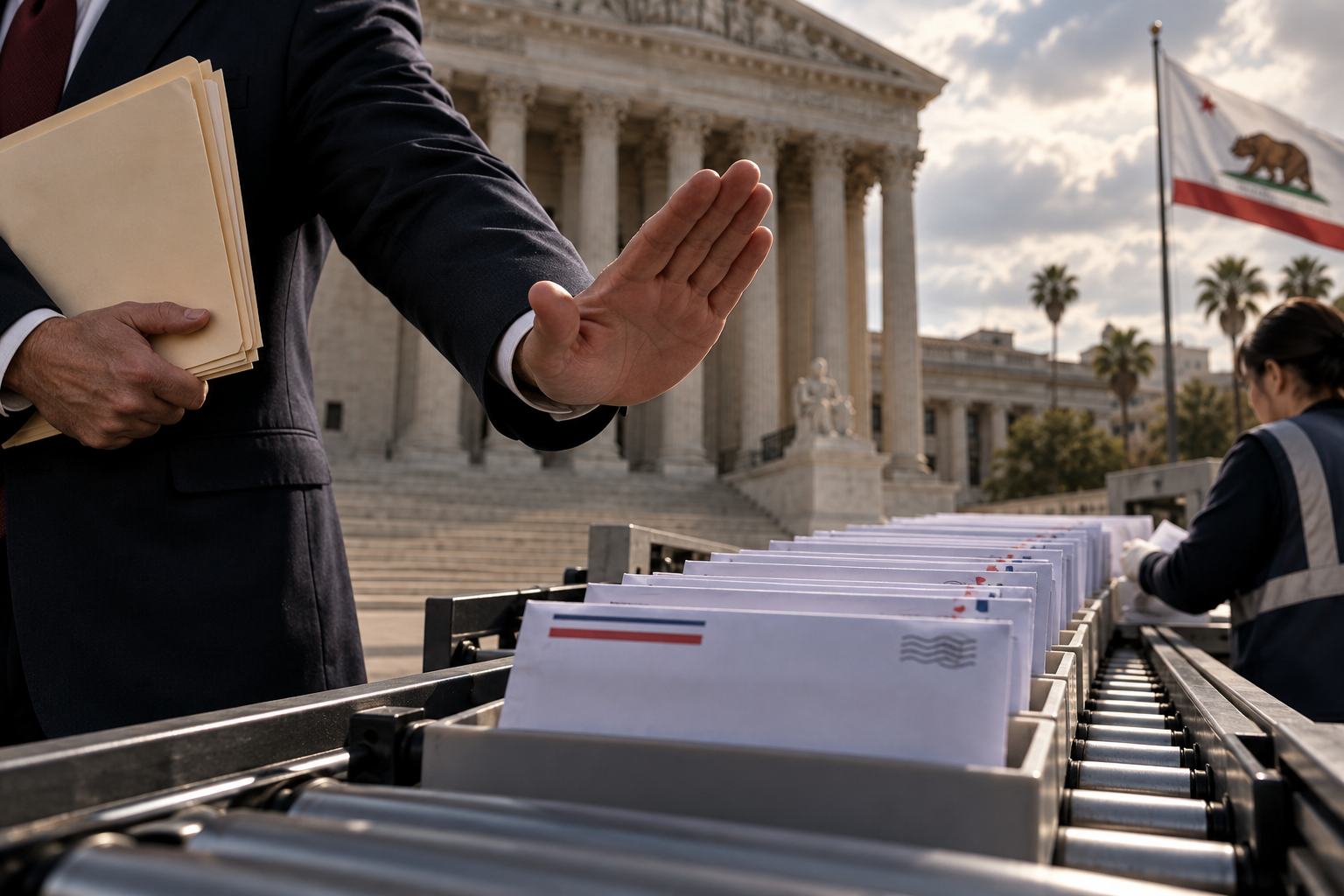
DOJ Charges 28 in California as Election-Day Enforcement Escalates
The DOJ’s California action is not just a set of 28 election-related criminal charges. It also includes an emergency request to stop the state from processing ballots tied to voters the federal government describes as likely noncitizens.
That puts federal enforcement on two tracks at once: prosecuting alleged voting crimes and seeking to intervene directly in ballot administration. The charge count matters, but the court’s response will determine whether the effort changes what California election officials can actually do.
Twenty-Eight Charges, Plus a Bid to Halt Ballot Processing
The Justice Department has charged 28 people in California with unlawful voting and other election-related offenses as Election Day approaches, according to NPR and ABC News.
Separately, NPR reported that the department asked a federal court for emergency relief to halt processing of ballots returned by people on voter rolls whom the federal government says are “likely noncitizens.”
Those are distinct actions with distinct consequences. Charges target named individuals and remain allegations to be resolved through the legal process. A court order affecting ballot processing could reach into the operating system of the election itself.
The Ballot-Processing Line
ABC News reported that the DOJ did not rule out prosecuting election workers who are “processing the ballots” in California.
That raises the stakes beyond the people already charged. Election workers are responsible for carrying out established procedures, and the department’s posture could place routine ballot handling under added legal pressure.
But a warning is not yet an operational restriction. The source material does not establish that California officials have been ordered to change procedures, nor that any election worker has been charged in connection with ballot processing.
The Emergency Request Is the Hinge
The key test is simple: Decision → Enforcement → Response.
The DOJ has made its decision through charges and an emergency court request. The enforcement question is whether a judge gives the ballot-processing request legal force. The response question is whether California election officials must alter how they handle the affected ballots.
If the court grants the request, the federal position could have immediate operational consequences. If it denies the request, the criminal cases would continue, but the requested intervention in ballot processing would not take effect on the terms sought.
The available reporting does not establish the request’s legal standard, its precise scope, or its likelihood of success. Those details matter because “likely noncitizens” is the federal government’s characterization, not a documented judicial finding in the material provided.
The Ruling That Separates Threat From Action
The next evidence should be more concrete than rhetoric or the number of charges.
Watch for the court’s ruling, filings defining which ballots are covered, and official statements from the DOJ or California election offices describing any actual directive to workers.
That is the line between an aggressive enforcement posture and a change to election administration. Until the court acts, the confirmed story is a set of criminal charges paired with an unresolved bid to halt processing of certain ballots.