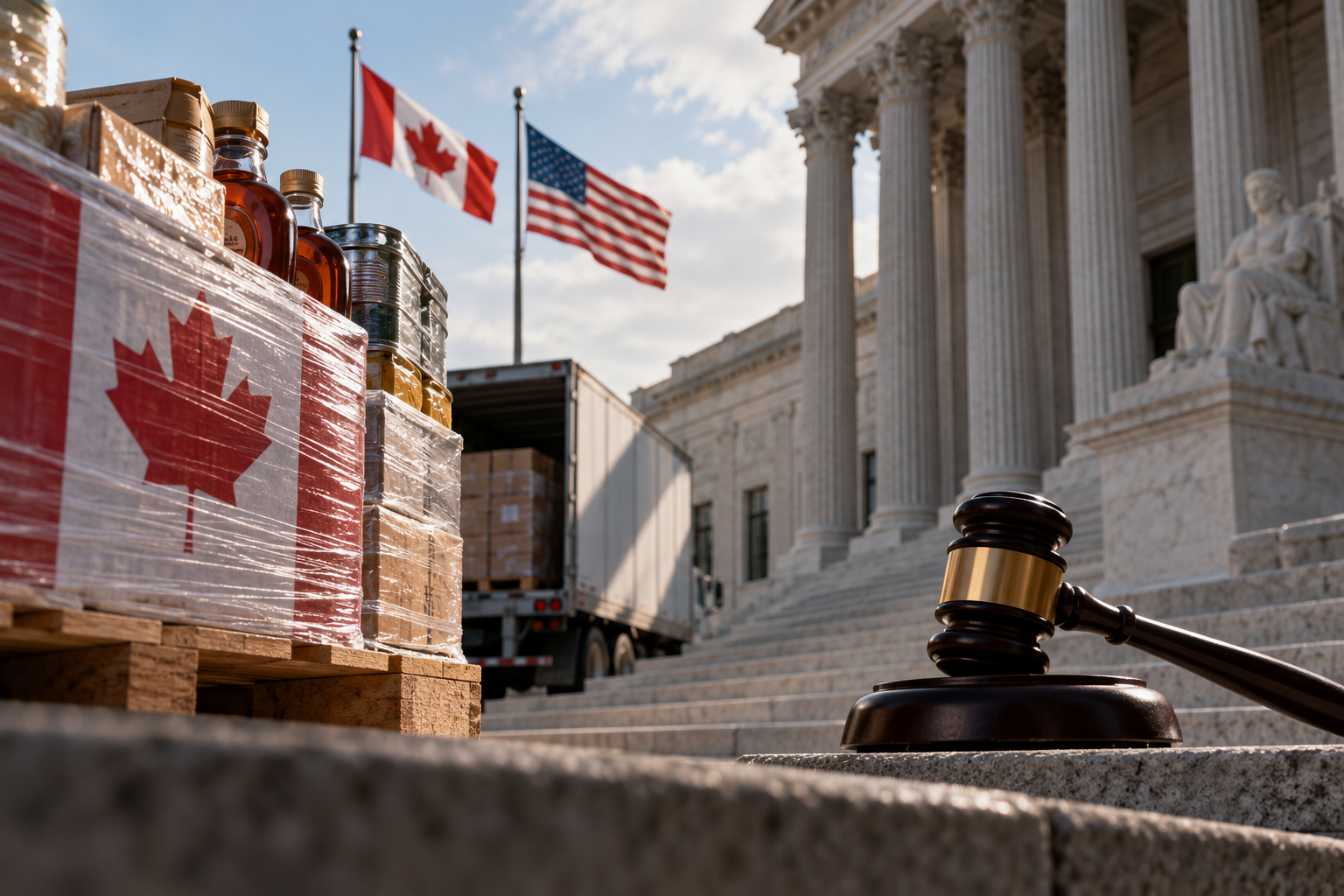
A New Jersey Importer Is Challenging Trump’s 50% Canada Tariffs in Court
A 50% tariff on Canadian goods is no longer just a White House trade decision. It is now a court test of whether the president can impose it without Congress.
A New Jersey food importer filed suit challenging the tariffs, arguing that the administration exceeded its authority by relying on Section 338 of the Tariff Act of 1930. The immediate fight is over Canadian imports. The larger question is how much unilateral tariff power an old statute can give a modern White House.
The Tariff Fight Is Now a Power Fight
The importer’s complaint targets the legal authority behind the tariffs, not simply their size.
That distinction matters. Trade policy often begins with an announcement, but its real consequences start when customs enforcement forces companies to pay, reroute supply chains, raise prices, or absorb losses. The lawsuit argues that this enforcement followed an unauthorized presidential action.
If the court agrees, the case could constrain this tariff order and establish a narrower boundary for similar uses of executive trade authority.
Section 338 Is the Narrow Gate
The administration invoked Section 338, a Depression-era provision in the Tariff Act of 1930, to levy the duties.
That puts the statute’s scope at the center of the dispute. The court will not merely assess whether tariffs are politically defensible or economically wise. It will have to consider whether Section 338 reaches a modern, broad-based action against Canadian goods at this scale—and whether Congress authorized that result.
Old laws can retain force. But the more consequential the action, the more important the statutory fit becomes.
A $20 Billion Commercial Test
ABC News reported that the tariffs cover roughly $20 billion worth of Canadian goods. That scale gives the legal argument immediate commercial weight.
The importer alleges “immediate harm to American businesses,” according to reporting on the case. That claim is central because a plaintiff must connect a government action to a concrete injury before a court can provide relief.
CNBC likewise reported that the challenge is aimed at tariffs imposed under Section 338, reinforcing that the litigation is focused on the administration’s chosen legal mechanism.
Enforcement Is the Pressure Point
The key sequence is simple: decision, enforcement, response.
The White House made a tariff decision. Enforcement turns it into an operational cost for importers. The lawsuit is the response seeking to test whether that cost can legally be imposed.
The next durable signal will come from the complaint, any request for immediate court relief, and the administration’s defense. Those filings should show whether the importer can tie the tariffs to specific losses—and whether the White House claims a sweeping or limited reading of Section 338.
For now, the case has narrowed a major trade announcement into a specific constitutional and statutory question: can a president use this 1930 law to tax Canadian imports at 50% without Congress?