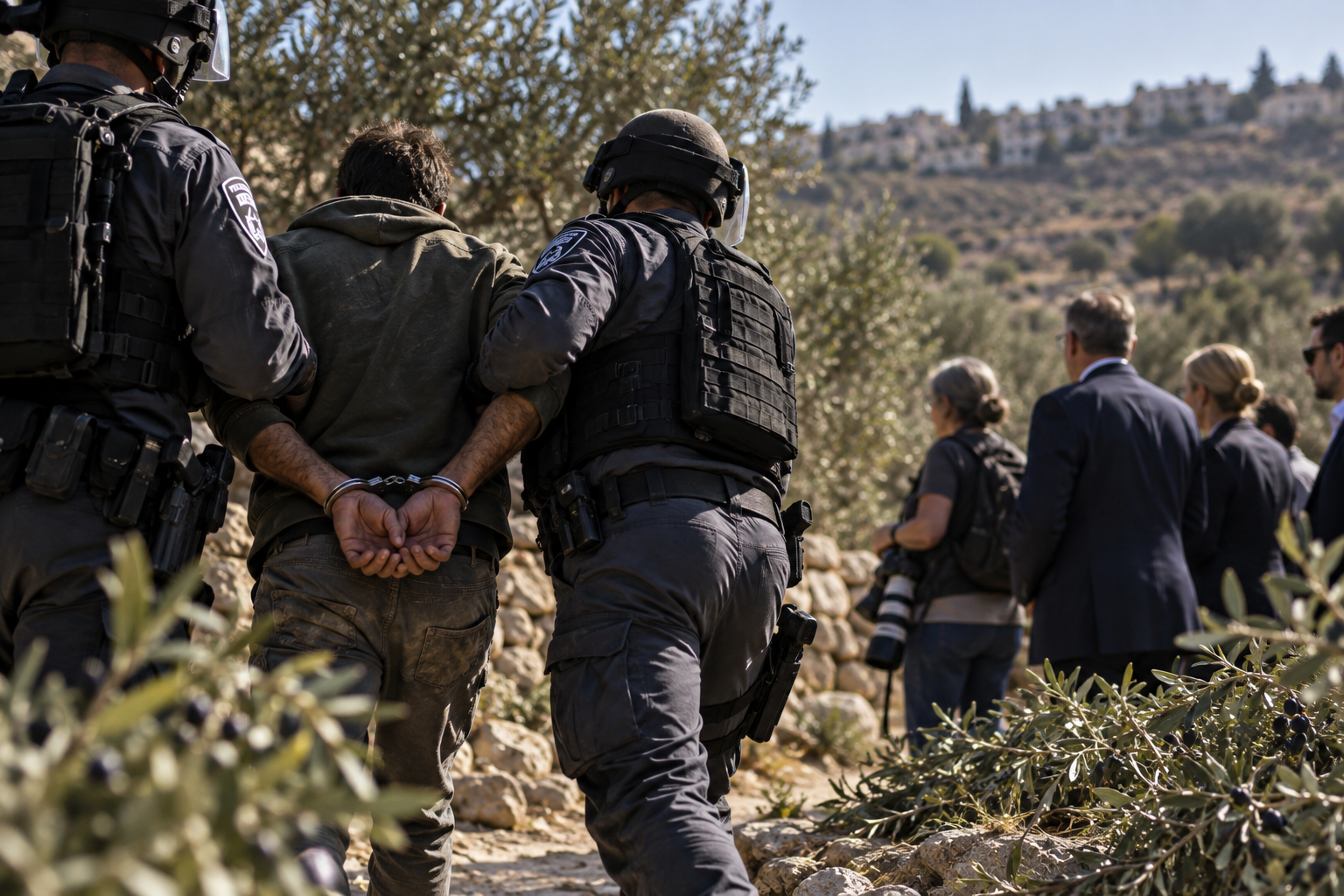
Israeli Police Arrest 10 After Settler Attacks on Journalist and Diplomats
Israeli police have arrested 10 people after attacks involving a US journalist and European diplomats, turning a diplomatic rupture into a test of whether authorities pursue the case beyond detention.
The arrests are a concrete response. But the available reporting does not establish the suspects’ charges, the evidence police say they hold, or whether prosecutors will take the case forward. The meaningful measure is no longer the arrest count. It is whether authorities build a public, enforceable legal record.
Ten Arrests, Unclear Legal Ground
Police arrested 10 suspects after settler attacks that included an assault on Washington Post photojournalist Heidi Levine and incidents involving European diplomats.
That action answers the immediate call for intervention. It does not yet show what alleged conduct is being investigated, which suspects are tied to which incident, or whether any will be formally charged.
Arrest is the countermove to a public allegation. Prosecution is the verification point. Until police or prosecutors specify the case, the legal significance of the detentions remains limited.
Why Washington’s Response Raised the Stakes
Levine, 63, was hospitalized after an assault that left her needing surgery. She reported being attacked for more than 10 minutes after masked Israeli settlers used clubs and other weapons against Palestinians attempting to harvest olives in West Bank towns.
US Ambassador Mike Huckabee called the beating a “despicable act of terror” and urged the arrest and prosecution of those responsible. After the arrests, he described them on X as “a very positive development.”
That unusually sharp intervention made the response more than a local policing matter. It put Israeli authorities under pressure to demonstrate not simply that they had detained people, but that the investigation could withstand scrutiny.
Official Ambiguity Is Still Part of the Record
Prime Minister Benjamin Netanyahu condemned “violence against anyone,” while referring to the assault as “alleged” and saying the circumstances remained unclear.
That language preserves uncertainty at the political level even as the arrests indicate a police response. It also makes it premature to treat the reported account, or the government’s accountability posture, as fully settled.
The gap between a broad condemnation and a defined criminal case is where this story now sits.
The Test Is a Court Record
Three things would move this from an arrest headline to a documented accountability case:
- A police or prosecution statement identifying charges and the alleged conduct behind them. - Court filings, remand decisions, or indictments showing that the suspects face formal legal action. - Independent reporting that confirms or challenges the sequence of the attacks and the basis for the arrests.
The claims are serious, the diplomatic pressure is real, and the police action is tangible. But the decisive signal will be whether the case advances into a transparent legal process—or whether the 10 arrests remain the fullest public response.