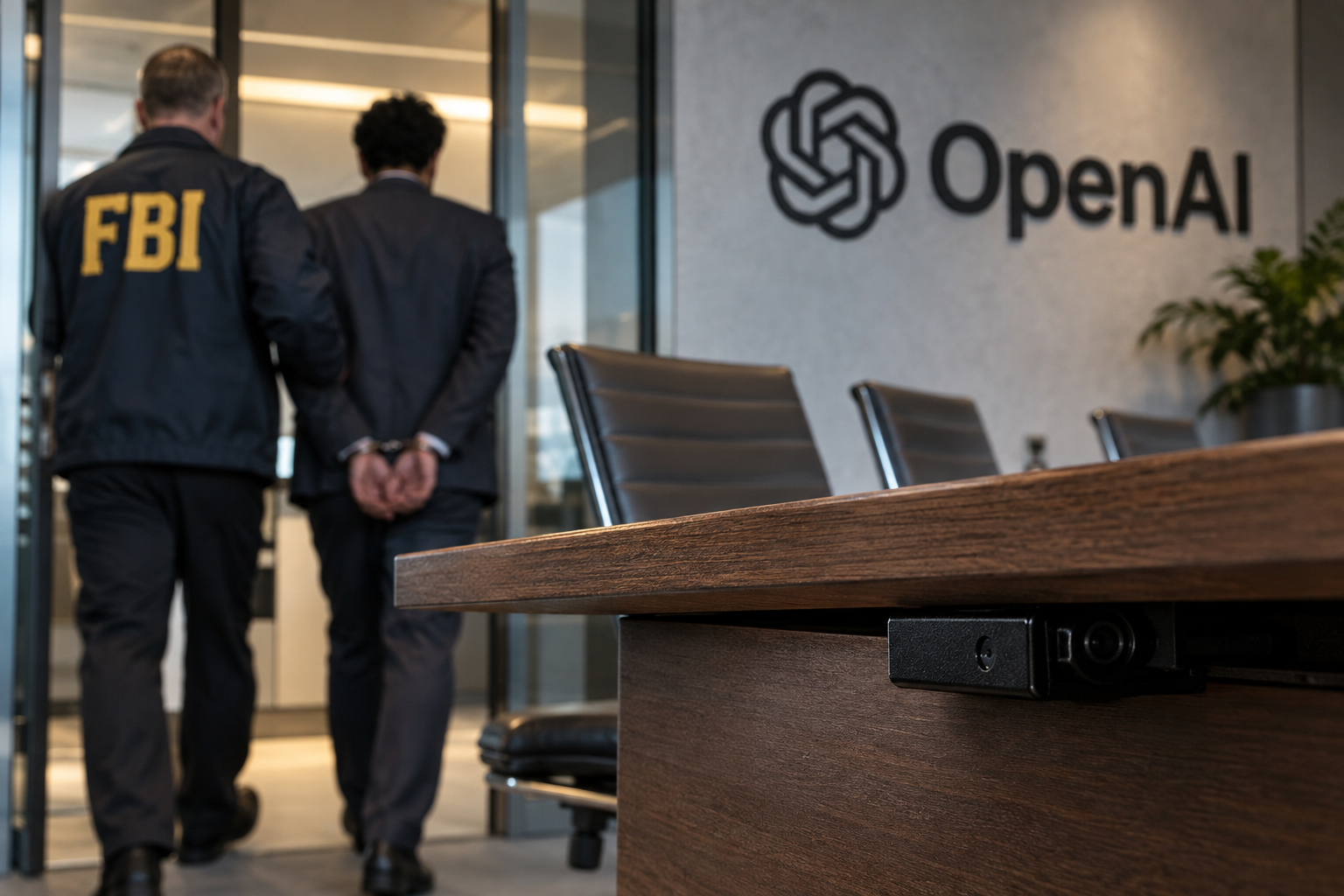
FBI Arrests OpenAI Employee Over Alleged Hidden Recording Device
A hidden recorder inside OpenAI is a serious alleged insider-security incident. It is not, on the public record so far, proof that OpenAI’s sensitive research or communications were captured.
The FBI arrested a Saudi OpenAI employee accused of planting a recording device in a conference room. OpenAI said it found a “sophisticated recording device” in one of its offices. The key constraint is simple: discovery is not disclosure.
A Device Was Found Inside OpenAI
The arrest and OpenAI’s reported discovery establish the core event: authorities allege an employee placed a concealed recording device inside the company.
That puts the incident beyond a routine workplace-security concern. A device in a conference room could target conversations that are not available through ordinary system access.
But the confirmed facts stop short of a demonstrated loss. There is no public finding that recordings were successfully made, recovered by another party, or used.
The Alleged Target Raises the Stakes
FBI Director Kash Patel said the alleged scheme sought to capture sensitive communications about OpenAI’s superintelligence technology.
That allegation explains why this has drawn wider attention. It does not answer the questions that determine the incident’s real impact:
- Did the device capture usable audio? - Which meetings, if any, were within its reach? - Was anything retrieved, transmitted, or shared? - What did investigators recover from the device and related accounts?
Until those answers emerge, the strongest description is an alleged attempt to access sensitive communications—not confirmed compromise of OpenAI research.
The Next Proof Is Forensic
The next evidence checkpoint is the technical record: whether investigators find recordings, transmission activity, or a destination for any captured material.
OpenAI’s response may offer a second signal. Changes to conference-room security, sensitive-meeting protocols, physical sweeps, or insider-risk monitoring would show the company identified a broader vulnerability.
For now, the story is serious because the alleged access point was inside OpenAI. Its larger significance depends on whether the forensic evidence shows that access became disclosure.