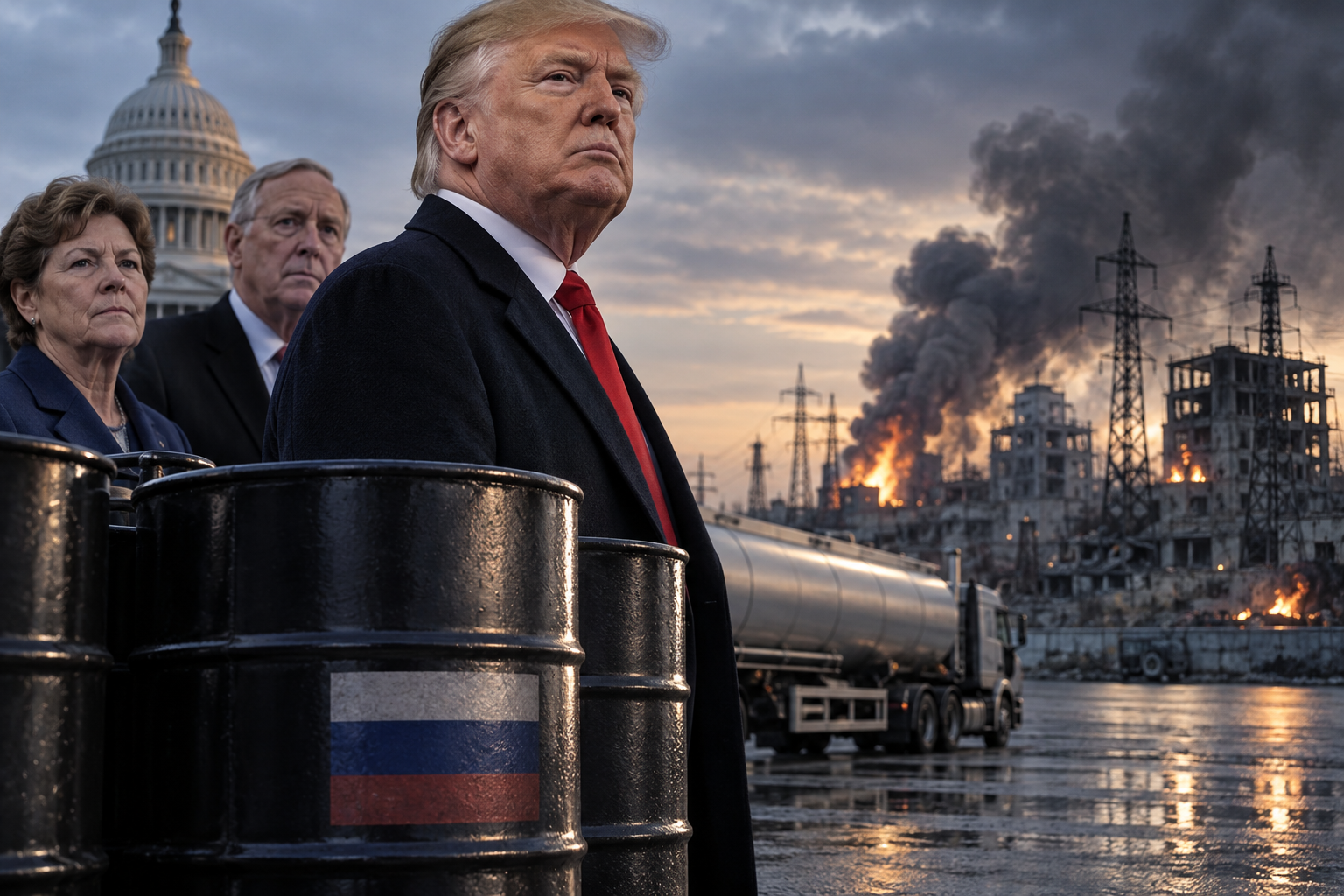
Trump’s Russia Diesel Deal Meets Bipartisan Backlash and a Failed Energy Ceasefire
Trump is defending a plan to import Russian diesel just as a claimed energy ceasefire between Russia and Ukraine is being challenged by reported strikes on Ukrainian energy infrastructure.
The political problem is no longer just whether the administration can justify the diesel arrangement. It is whether either initiative produces verifiable action—or merely asks allies, lawmakers, and Ukraine to accept an announcement without enforceable terms.
A diesel deal with bipartisan liabilities
The proposed Russian diesel deal has drawn criticism from both parties, according to BBC reporting. Democratic Sen. Jeanne Shaheen also criticized the arrangement in an NPR interview.
That matters because the objection is broader than fuel pricing or supply. Critics see eased pressure on Moscow as a strategic concession: a transaction that could provide Russia economic benefit while its war against Ukraine continues.
Zelenskyy made the point directly in comments cited by CNBC, saying that U.S. sanctions relief for Moscow “plays into Russia’s hands.”
The deal therefore carries a built-in political liability. Any promised domestic energy benefit has to be weighed against the signal sent to Russia, Ukraine, and U.S. lawmakers who view sanctions as leverage.
Trump’s defense creates a higher proof burden
Trump has said he made the right choice despite the backlash. But a defense is not an implementation plan.
The public record described in the source pack does not establish the deal’s final terms, timeline, volume, safeguards, or enforcement conditions. Those omissions are central, not technicalities. They determine whether the arrangement is a limited energy measure or a more consequential easing of pressure on Moscow.
The first test is concrete: can the administration show measurable energy benefits while preventing the deal from expanding Russia’s political or economic leverage?
Without that evidence, the administration will be arguing intent while critics argue effect.
An energy ceasefire without visible machinery
The same credibility problem appears in Trump’s announcement that Russia and Ukraine had agreed to an “energy ceasefire.”
NPR reported that Trump offered no details about what the ceasefire covered. There was no publicly described list of protected sites, start date, monitoring arrangement, reporting channel, or consequence for violations.
That turns the distinction between a decision and an agreement into the story. A declaration can change headlines immediately. An operational ceasefire requires terms that let observers identify a breach and impose a response.
The signal to watch is simple: documented enforcement. Until there is a mechanism that defines protected infrastructure and verifies compliance, the ceasefire remains a claim rather than a demonstrated constraint on military action.
Six reported strikes widen the credibility gap
The ceasefire claim was quickly challenged by events on the ground. BBC reported that Ukraine said six energy sites had been hit by Russia since Trump’s announcement. NPR also reported Ukrainian claims of attacks on energy facilities after the statement.
Those reports do not settle every factual question about each strike. But they narrow the dispute to evidence that can be tested: which sites were hit, when, by whom, and whether Washington treats the incidents as violations.
That response now matters as much as the original announcement. If reported attacks continue without a defined U.S. reaction, the gap between energy diplomacy and battlefield reality will become harder to dismiss.
The diesel deal and ceasefire should be judged on the same sequence: decision, enforcement, response. The administration has announced decisions. The unanswered question is whether it can show enforcement—and respond when the facts contradict the message.