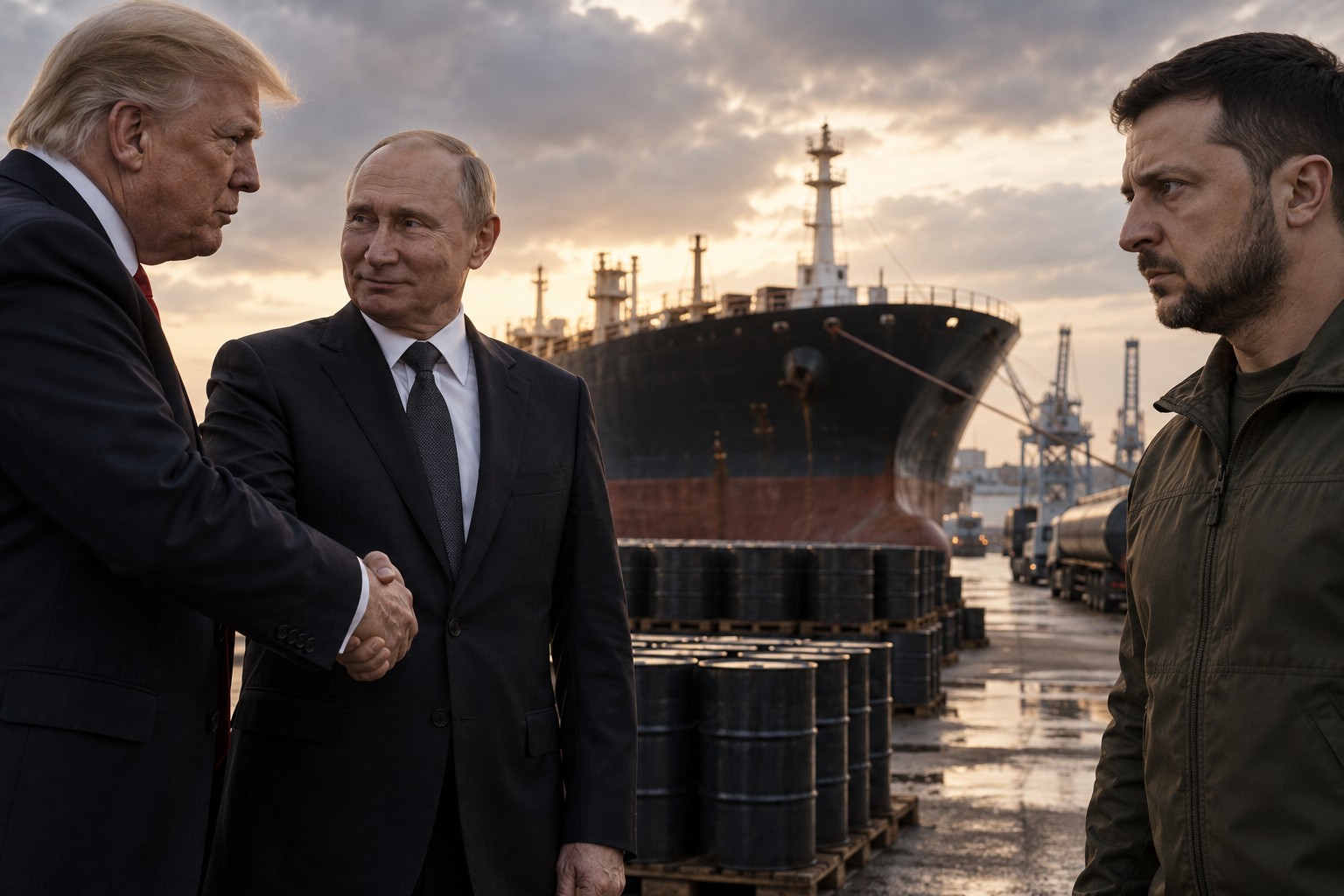
Zelenskyy Calls Trump’s Russian Diesel Deal ‘Weak’ as 300,000 Tons Are Promised
Trump’s Russian diesel deal is already producing the response that will define its political weight: Volodymyr Zelenskyy says easing Russia’s petroleum sales is weakness that could prolong the war.
The immediate commitment is concrete. Trump said Vladimir Putin would release 300,000 tons of diesel onto the market immediately to help address soaring fuel costs, with much larger volumes expected afterward. But the agreement also turns a fuel-price intervention into a decision about economic pressure on Russia.
The 300,000-Ton Promise Makes Fuel Relief a War-Policy Choice
The deal is presented as a response to high diesel prices. That is the consumer-facing case: more supply could ease a tight market.
But Russia’s ability to sell petroleum products is inseparable from the wider sanctions and war debate. Reopening or easing that channel gives Moscow access to commercial activity that Ukraine has sought to constrain.
The announced follow-on deliveries make the stakes larger than one emergency shipment. CBS reported “millions more” tons over coming months; Al Jazeera reported 1.5 million additional tonnes.
Zelenskyy’s Warning Targets the Tradeoff
Zelenskyy’s objection is not mainly about the first cargo. It is about the signal behind it.
He argued that allowing Russian petroleum sales would prolong a war that must be ended, describing the decision as weak. His position challenges the idea that lower fuel costs and continued pressure on Moscow can be cleanly separated.
That is the core conflict: immediate relief for fuel buyers versus preserving economic leverage against Russia. Neither side has to dispute the need for lower prices to disagree sharply on whether this deal is the right mechanism.
The First Number Is Clearer Than the Full Commitment
Multiple reports converge on the initial 300,000-ton release. That consistency makes the first promised volume the strongest confirmed element of the announcement.
The later supply picture is less settled. One report specifies 1.5 million additional tonnes, while another uses the broader description of millions more. Until delivery terms are documented, the total commitment should be treated as an announced intention rather than a fixed supply schedule.
The Shipment Test Comes Next
The diesel deal now moves through a simple sequence: decision, enforcement, response.
The decision has been announced. The enforcement question is whether official terms clarify sanctions treatment, buyers, timing, transport, and payment. The response question is whether Ukraine, Russia, the United States, or affected institutions take formal action.
Most importantly, a promise is not yet a shipment. Evidence that the first 300,000 tons actually moved will show whether this is a real market intervention—and whether Zelenskyy’s warning becomes a broader diplomatic fight.