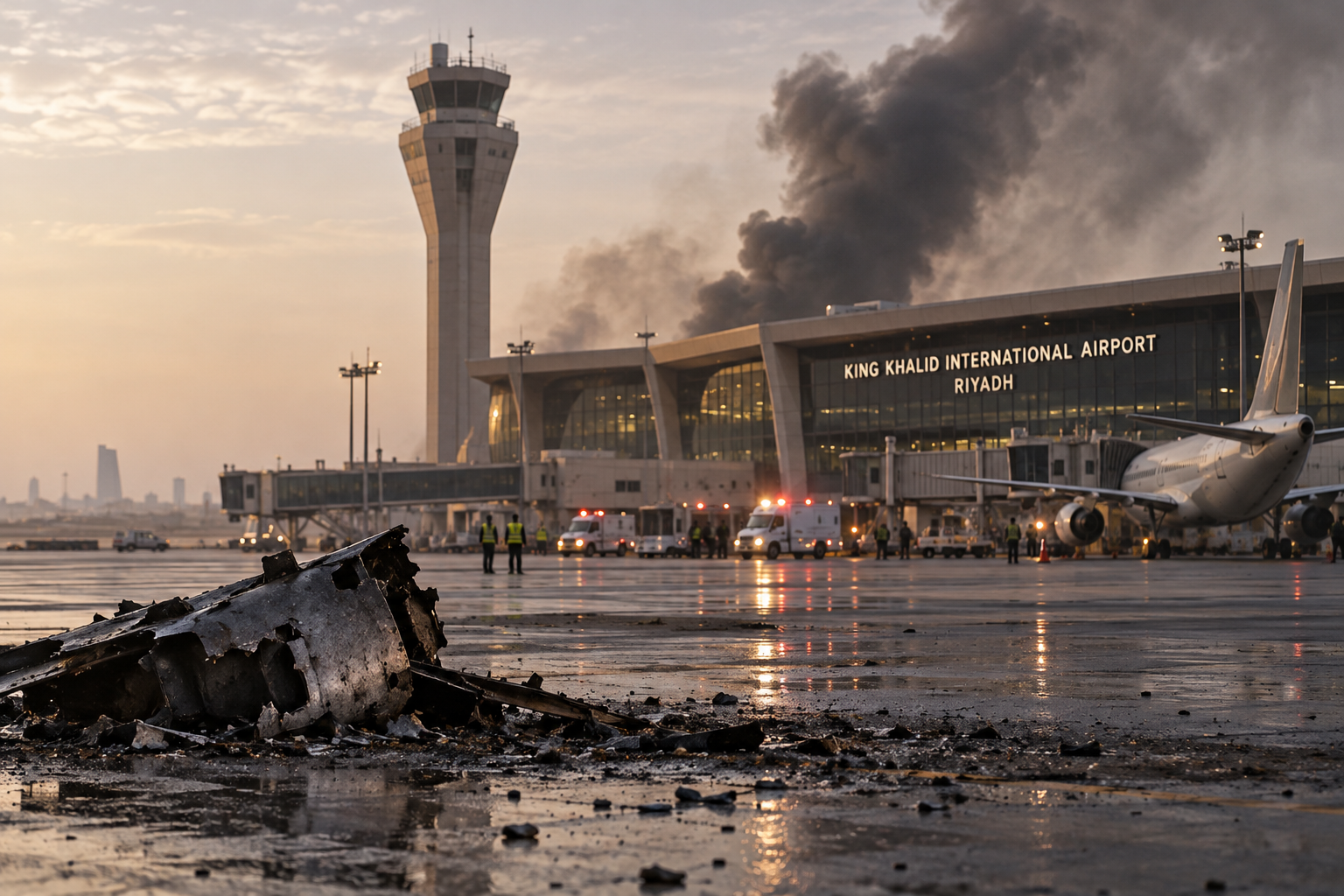
Three Saudis Killed in Houthi Attacks on Riyadh Airport
Three Saudi citizens were killed when attacks hit Riyadh’s King Khalid International Airport on Thursday, turning a critical civilian hub into the clearest symbol yet of a widening confrontation.
The basic event is now well established. The next consequential fact is not the coalition’s promise of a “firm” response, but whether Saudi Arabia follows that pledge with a specific, independently verifiable action.
Riyadh’s Airport Is Now a Deadly Front
Saudi officials said two attacks targeted King Khalid International Airport. Three Saudi citizens were killed and several others wounded.
Yemen’s Houthis claimed responsibility. The strikes were reported as the deadliest attack inside Saudi Arabia since the kingdom and allied forces began their latest major offensive against the group in Yemen.
That changes the immediate stakes. An airport attack is not only a military signal; it tests a country’s ability to protect daily movement, commercial confidence, and a highly visible piece of national infrastructure.
The Core Facts Have Been Corroborated
The casualty count and attribution are not resting on a single account.
BBC News separately reported that three Saudi nationals were killed in Houthi attacks on the airport. CNBC reported that officials described two attacks. The Guardian reported the deaths, injuries, and the Houthi claim of responsibility. CBS News also cited Saudi statements on missile strikes that killed three people.
That does not resolve every detail of the attack, including the full extent of damage or the weapons used. But it narrows the central uncertainty: Riyadh airport was struck, people were killed, and the attack has moved beyond a claim competing for attention.
A Reopened Airport Is Not a Resolved Crisis
Riyadh airport has reopened, according to Al Jazeera. That matters because it limits the evidence for a lasting shutdown or nationwide disruption.
But reopening is a resilience signal, not proof that the threat has passed. Al Jazeera reported that Saudi airports have appeared to be primary targets in several recent Houthi attacks.
The distinction is important. One attack that briefly interrupts operations is different from a sustained campaign that repeatedly raises the cost and risk of using Saudi aviation infrastructure. The latter would pressure security planning and public confidence even if each individual airport returns to service quickly.
The Response Must Move From Claim to Evidence
Saudi officials and the Saudi-led coalition have vowed a firm response. For now, that is a stated intention, not a completed outcome.
The test is simple: Claim → Countermove → Verification.
- The claim: the Houthis can strike a major Saudi airport and impose real human costs. - The countermove: Saudi Arabia or its coalition takes a defined action. - The verification: independent reporting establishes what happened, its scale, and whether it reduced or intensified the threat.
A broad warning will not answer the strategic question. A concrete action, followed by evidence of its effects, will.
The near-term signal to watch is whether further attacks hit airports or disrupt operations again. If they do, the Houthis will have demonstrated an ability to sustain pressure after a deadly strike. If Saudi action materially changes that pattern, the escalation may prove more contained than the initial headlines suggest.