FlyDubai Captain Says He Opened the Cockpit Door During Midair Attack
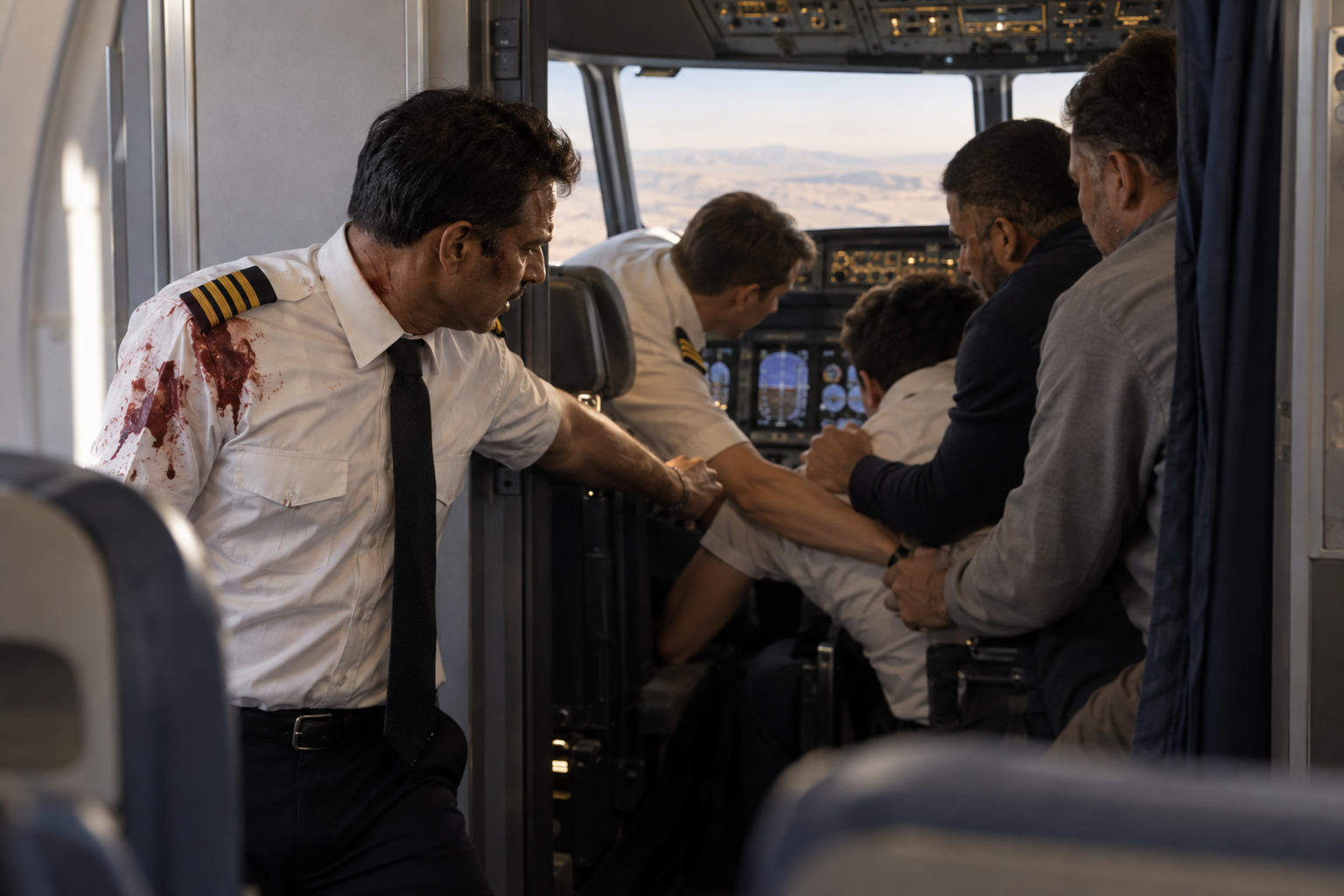
Capt. Smit Machchhar’s defining account from the FlyDubai attack is not about why his co-pilot stabbed him. It is what he says he did next: opened the cockpit door so others could get in and help keep the aircraft safe.
That is the clearest public signal in a story still crowded with allegations. The reported assault and emergency response are corroborated. The co-pilot’s motive is not settled.
The decision that widened the response
Machchhar says he was stabbed by his co-pilot on the Dubai-to-Tel Aviv flight. Despite serious injuries, he said he acted to prevent a crash.
The New York Times reported that Machchhar said he “had to act.” BBC News reported that he told Indian Prime Minister Narendra Modi he opened the cockpit door to let others enter. Al Jazeera also reported his account of the attack.
Call it the open-door signal: a decision that turned an isolated cockpit confrontation into a response others could join.
Control returned through more people
Reports say passengers intervened to restrain the co-pilot while reserve crew helped stabilize the aircraft. The flight landed safely in Saudi Arabia.
That sequence is the operational center of the event. Machchhar’s action enabled help; passengers and reserve crew reportedly joined the response; the aircraft was brought down safely.
It is more concrete than the broader claims now surrounding the attacker.
The explanation is still behind the evidence
Israeli Prime Minister Benjamin Netanyahu said the co-pilot had undergone “radical Islamist indoctrination” and was suicidal. The Guardian reported those claims alongside an account of an apparent attempt to crash the plane.
Those statements do not yet establish motive or prove intent. Public reporting supports an attack on the captain and an in-flight emergency. It does not yet resolve whether the co-pilot intended to crash the aircraft, why he acted, or what factors shaped his conduct.
That distinction matters because motive should follow evidence, not lead it.
The next checkpoint: the official reconstruction
The next meaningful evidence is an official account of the attack’s sequence: cockpit access, aircraft movements, crew communications, injuries, and the actions that preceded the safe landing.
Investigators will also need to establish the co-pilot’s intent, mental state, and any evidence supporting or contradicting ideological claims.
Until then, the narrow conclusion is also the strongest one: Machchhar says he was stabbed, opened the cockpit door to enable help, and a wider response helped the flight land safely.