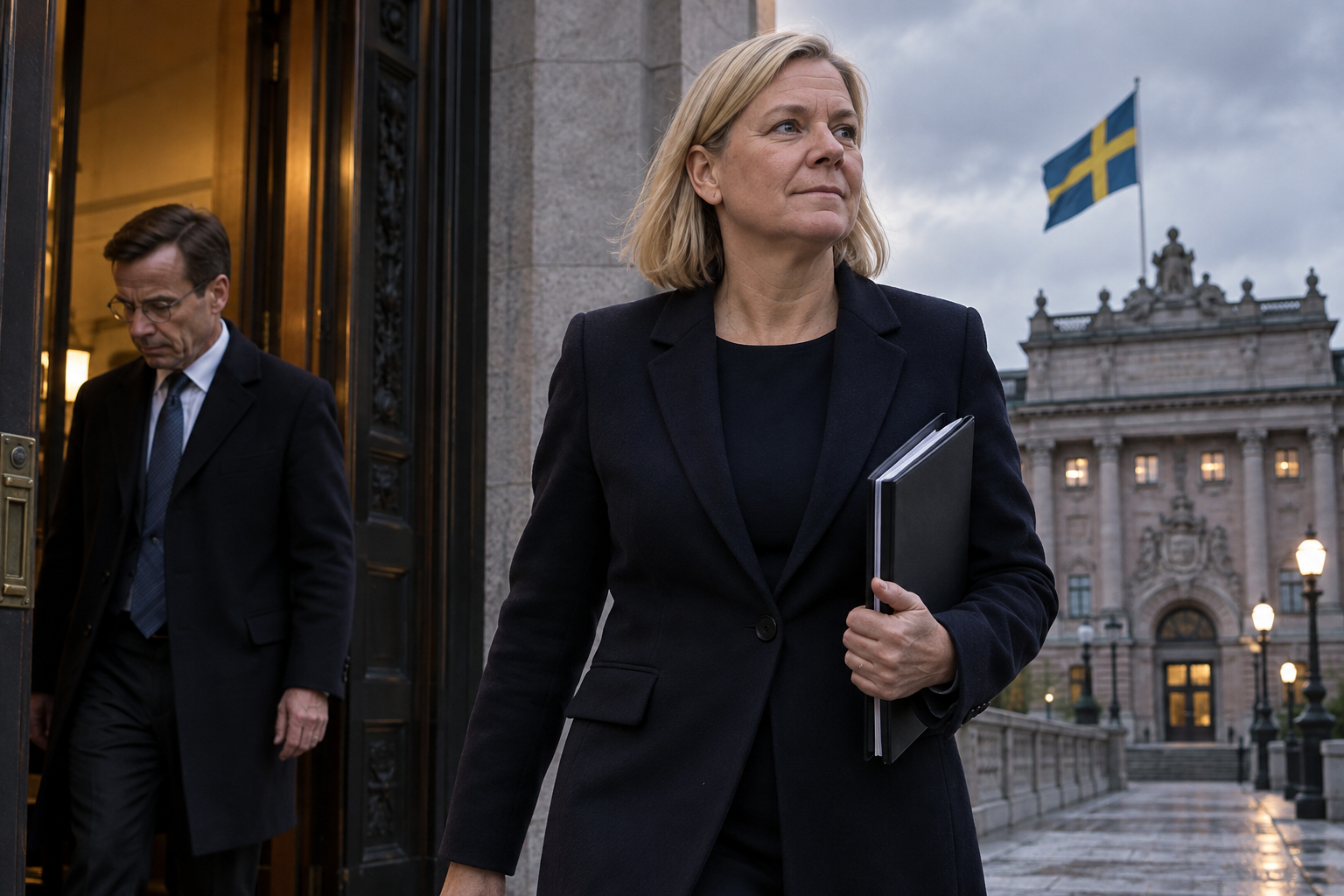
Sweden’s Narrow Election Win Clears the Way for Andersson to Form a Government
Ulf Kristersson’s resignation opens the door for Magdalena Andersson. It does not, by itself, complete Sweden’s change of government.
The centre-left bloc’s slim election victory has shifted the governing initiative to Andersson, leader of the Social Democrats. But the real test begins after the result: whether a narrow parliamentary edge can become a stable arrangement for governing.
The Resignation Starts the Transition
Kristersson has stood down after the centre-left bloc won a narrow majority, according to The Guardian. That clears the immediate political obstacle to Andersson attempting to form a government.
Andersson framed the vote as a choice for “a new direction” and for unity over division. The message is politically useful because a narrow win demands cooperation, not merely celebration.
The confirmed change is straightforward: the centre-right government lost, and its prime minister is resigning. The unconfirmed part is equally important: the shape and durability of the government that follows.
A Slim Majority Is a Constraint, Not a Blank Check
A narrow majority can be enough to change leadership while still making every governing decision more demanding.
Andersson will need to turn electoral alignment into practical parliamentary support. That can mean bringing parties into government, securing outside backing, or managing both. The source reporting does not establish which route she will take.
This is the critical constraint: a bloc can win the election yet still face difficult negotiations over its governing programme, ministerial roles, and day-to-day legislative support.
The election result creates an opportunity to govern. It does not remove the need to assemble a workable majority behind specific decisions.
The Transfer of Initiative Is Corroborated
Al Jazeera independently reports that Kristersson will resign after the centre-right lost the parliamentary election.
That corroboration sharpens the immediate sequence: electoral defeat, resignation, then a centre-left effort to form the next government.
It does not settle the next stage. Neither report, as summarized in the source pack, confirms the final composition of an Andersson-led administration or the commitments that would sustain it in parliament.
The Formation Test Begins Now
The next meaningful signals are formal and concrete:
- whether Andersson is officially tasked with forming a government; - which parties join her government or commit to support it; - whether that support holds when legislation and budgets require votes.
Those are the points where a narrow electoral outcome becomes a governing reality.
Sweden has a new governing possibility, not yet a confirmed new government.