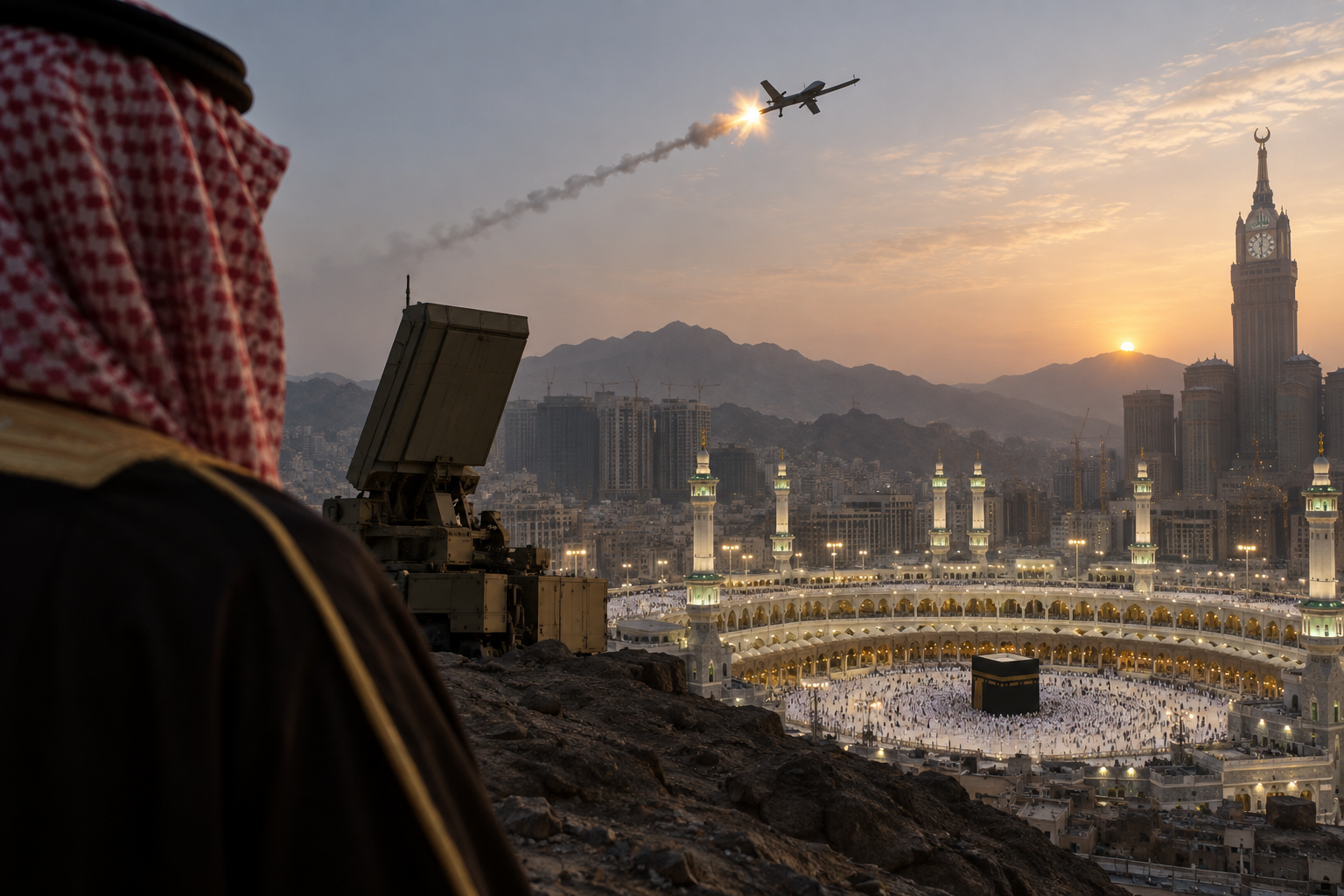
Saudi Arabia Calls Mecca a Red Line After Accusing Houthis of Drone Attack
Saudi Arabia has turned a disputed drone interception into a red-line moment for Mecca. It says Houthi forces tried to target Islam’s holiest city; the Houthis deny that claim. Until the drone’s route and intended target are independently established, this is an allegation with major regional consequences—not a confirmed attack on Mecca.
The allegation that changed the stakes
Saudi authorities say air defenses intercepted and destroyed a Houthi drone close to or over Mecca. The Saudi-led military coalition said the city’s security is a “red line” and promised necessary measures.
That language matters because it puts the reported incident in a category far beyond a routine cross-border drone threat. Riyadh is presenting it as a challenge to the security of a site central to the Muslim world.
The Houthis, the Iran-aligned group based in Yemen, reject the assertion that Mecca was their target. Available accounts do not independently establish the drone’s intended destination.
A red line creates its own pressure
Saudi Arabia’s warning raises the political cost of leaving the allegation unanswered. A red line can point to stronger air defenses, diplomatic pressure, military action, or a mix of all three—but Saudi Arabia has not yet publicly defined the response its warning requires.
The location also broadens the audience. An alleged attack on Mecca can draw regional condemnation even while the underlying facts remain contested.
Condemnation stops short of military backing
The Organization of Islamic Cooperation condemned what Saudi Arabia described as a “heinous” attack. NPR reported condemnation from countries in the region, but no sign of military support.
That is an important boundary. The response signals diplomatic alignment around Mecca’s security; it does not confirm the drone’s target or show that a new military coalition is forming against the Houthis.
The Guardian reported the accusation as Saudi warplanes continued strikes in Yemen, placing the episode inside an already escalating conflict rather than apart from it.
The flight-path test
The next evidence checkpoint is the drone’s flight path: where it was launched, where Saudi forces intercepted it, and what target its route indicates.
A detailed Saudi account, physical evidence, radar data, or credible independent reporting could clarify the allegation. A more specific Houthi account of its intended operation could also narrow the dispute.
For now, the durable fact is narrower than the rhetoric: Saudi Arabia says Mecca was threatened, the Houthis deny it, and regional institutions have responded to the Saudi account. Whether Mecca’s “red line” produces a larger confrontation depends on what the evidence shows next.