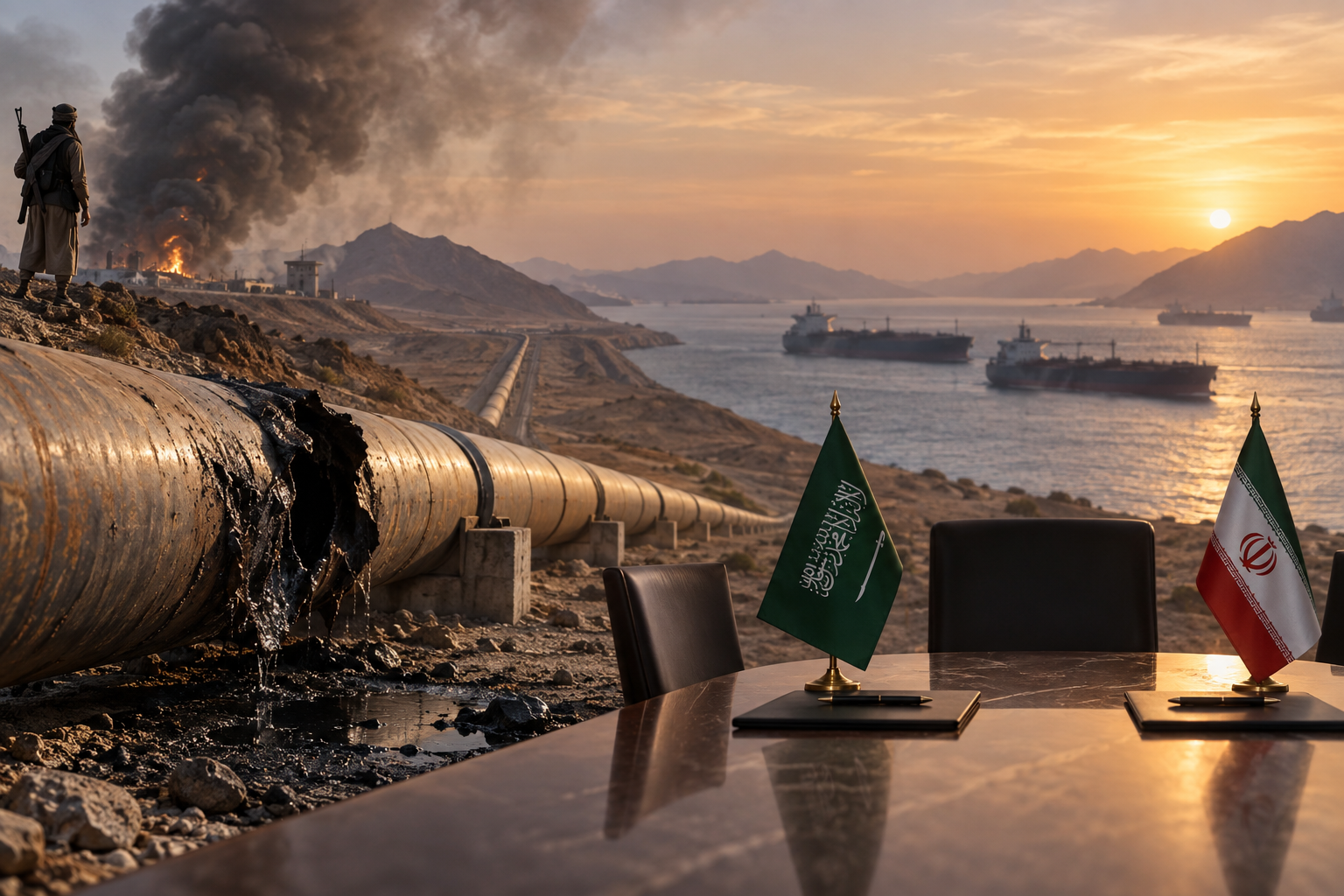
Hormuz Talks Stall as Saudi Pipeline Damage Raises the Stakes
The Hormuz talks did not just slip on the calendar: they stalled as attacks hit Saudi targets and temporarily shut an oil pipeline built to bypass the strait.
That makes the dispute more than a diplomatic delay. The postponed meeting now sits at the intersection of Yemen’s fighting, competing claims over responsibility, and a more immediate risk to Gulf energy exports.
A Hormuz Meeting Becomes a Yemen Bargaining Chip
Gulf states postponed talks with Iran on the future of the Strait of Hormuz amid a lack of Arab consensus and rising Saudi anger over Houthi advances and attacks, according to the Guardian.
Iran has offered a sharply different account. Foreign Ministry spokesperson Esmaeil Baghaei said the postponement was due to events in Yemen and maintained that Iran does not interfere in Yemeni affairs.
That gap is central. Saudi concerns link the talks to Iranian support for the Houthis; Iran denies the premise. Until those competing accounts are tested, the meeting is best understood as stalled under pressure, not as a settled diplomatic break.
The Bypass That Was Supposed to Buy Time
Saudi Arabia temporarily shut its roughly 750-mile East-West pipeline after attacks, CNBC reported. The route matters because it carries oil across the kingdom to the Red Sea, avoiding the Strait of Hormuz.
A disruption at Hormuz is already a global energy concern. Damage to a route designed to reduce dependence on the strait narrows the region’s margin for absorbing another interruption.
The constraint is physical: exporters have fewer reliable alternatives when both the waterway at issue and a major bypass route are under pressure.
Satellite Damage, Market Anxiety
CNBC reported that satellite imagery showed the extent of damage to the pipeline. That does not resolve responsibility for the attacks, but it supports the view that the shutdown reflected an operational problem rather than a purely political signal.
Markets responded to the wider risk. Brent crude rose above $106, while CBS News described prices as near a four-month high as the delayed talks and fighting raised concerns about regional supply.
The price move is not proof of a lasting supply loss. It is evidence that traders see the disruption as more than a local battlefield event.
The Test Is Verification, Not Rhetoric
The next phase turns on Claim → Countermove → Verification.
Iran’s denial is a claim. The Houthi attacks and Saudi shutdown are the counterpressure. Independent confirmation of damage, repair timelines, and official commitments from Gulf states, Iran, or Oman will determine whether this remains a temporary postponement.
A resumption of talks with clear terms would indicate that diplomacy still has room to operate. A prolonged pipeline outage or further confirmed attacks would show that the security dispute is constraining energy infrastructure as well as negotiations.