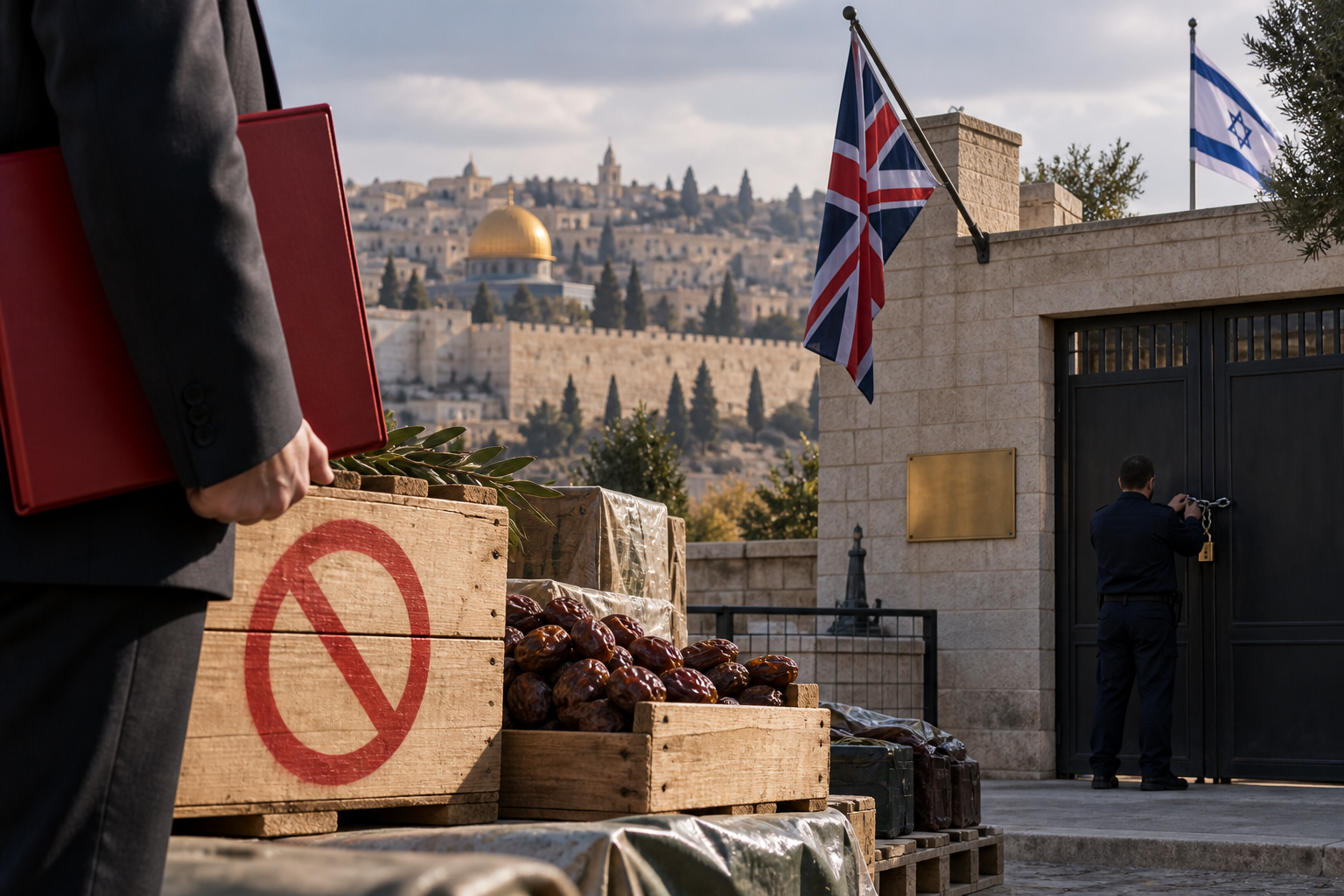
UK Sanctions West Bank Settlements as Israel Shuts Its East Jerusalem Consulate
Britain’s settlement sanctions have already triggered a concrete response: Israel says it will close the UK consulate in East Jerusalem. That makes this more than a policy announcement. It is now a bilateral confrontation whose economic force has yet to be demonstrated.
The Sanctions Have Already Changed the Diplomatic Field
The UK moved ahead with measures targeting Israeli settlements in the West Bank despite warnings from U.S. officials of possible economic consequences for Britain.
Israel’s response was immediate and diplomatic: the closure of the UK consulate in East Jerusalem, according to BBC News and Al Jazeera reporting.
That is the confirmed shift. The sanctions have altered the operating relationship between London and Jerusalem. What remains unconfirmed is whether they will significantly change trade, settlement commerce, investment, or the trajectory of settlement construction.
The Consulate Closure Is the First Retaliation Signal
Closing a consulate is not evidence that settlement-linked businesses are already under material economic pressure. It is evidence that Israel regards the UK action as serious enough to answer directly.
That distinction matters. Diplomatic retaliation can arrive quickly because governments control it. Commercial effects take longer: restrictions must be defined, enforcement must begin, and companies must determine whether particular goods or counterparties fall within scope.
The first visible consequence, then, is escalation in official relations—not a verified disruption of economic activity.
From Diplomatic Shock to Goods on the Ground
The policy carries both commercial and political weight. BBC reporting from the West Bank found Palestinian date farmers supporting restrictions on settlement goods, while Israel’s government described the action as a “big mistake.”
That split points to the practical test. A ban or sanction only becomes economic pressure when it reaches identifiable products, companies, supply chains, and buyers.
The relevant questions are narrow:
- Which settlement-origin goods are covered? - Which businesses export them to the UK? - How will origin and compliance be verified? - Do trade volumes or commercial contracts change?
Without answers supported by enforcement or trade data, broad claims about the sanctions’ economic impact would run ahead of the evidence.
A Territorial Dispute With a Defined Target
The dispute is tied to more than a general argument over settlements. BBC reporting also highlighted a proposed West Bank settlement site opposed by the UK.
That gives the confrontation a concrete implementation test. Britain’s policy can be judged not only by the language of its announcement, but by whether restrictions affect the commerce and institutional support surrounding settlement expansion—and whether they influence decisions connected to specific projects.
Official detail on the legal basis, covered goods, named entities, and enforcement mechanism will determine how far the measure reaches.
The Signal Needs Transmission and Confirmation
The sequence to watch is simple: signal, transmission, confirmation.
The signal has arrived: UK sanctions and an Israeli consulate closure. Transmission would mean the policy reaches actual trade and business decisions. Confirmation would require evidence such as enforcement actions, affected companies, changed import flows, further UK measures, or additional retaliation.
For now, the clearest result is diplomatic. The larger economic and political consequences depend on whether both governments turn this first exchange into sustained action.
Reporting cited: CNBC; BBC News, BBC News, and BBC video report; Al Jazeera.