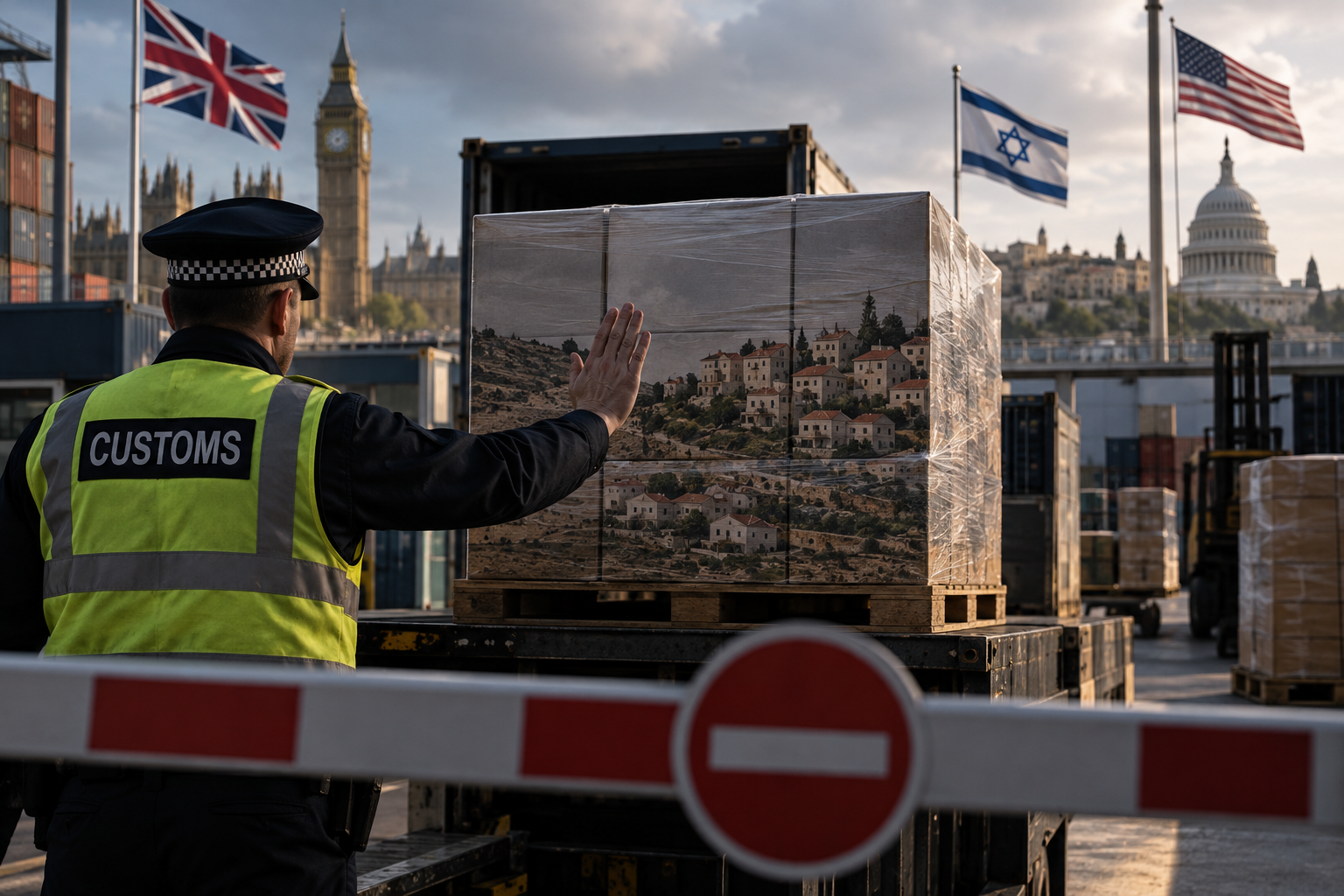
UK Announces Ban on Trade in Israeli Settlement Goods
Britain has turned criticism of Israeli settlements into a concrete trade restriction: a ban on goods from settlements in the occupied West Bank.
The confirmed policy action matters less for any proven immediate commercial impact—none is established in the source pack—than for the diplomatic line it crosses. London is testing whether trade enforcement can sustain pressure where statements and condemnations have not.
Britain Makes Settlement Policy Enforceable
The UK’s foreign secretary announced the ban on trade in goods from Israeli settlements in the occupied West Bank, according to Al Jazeera.
Britain’s stated rationale is settlement-related violence against Palestinians. The New York Times reported that Britain accused Israel of turning a blind eye to violence by extremist settlers.
For Palestinian communities, including West Bank date farmers, the policy has immediate symbolic value as well as possible commercial consequences. The BBC reported strong Palestinian backing for a ban on settlement goods.
The Measure Is Clear; Its Economic Weight Is Not
A trade ban can be politically consequential without yet being economically large.
The available reporting does not establish the value of affected trade, the number of settlement producers involved, or how quickly enforcement will begin. Those omissions matter. Without customs guidance, product definitions, and trade data, it is too early to describe the ban as materially damaging to settlement commerce.
Its immediate signal is firmer: the UK is treating goods from settlements differently from goods associated with Israel more broadly. That makes the policy a potential template for other governments—not proof that they will adopt one.
Washington Raises the Stakes
U.S. officials have warned the UK of potential economic consequences if it proceeds with sanctions targeting Israeli settlements, CNBC reported.
That warning turns implementation into the central constraint. London must now show whether the ban is a narrowly defined import restriction or the opening move in a broader policy shift that it is willing to defend amid pressure from Washington.
The key test is simple: announced restrictions become durable policy only when enforcement rules, commercial compliance, and diplomatic backing all hold.
Israel Signals a Wider Dispute
Israel’s government has rejected the measure. Israeli officials described it as a serious mistake, while Foreign Minister Gideon Saar accused Britain of working systematically against Israel, according to The Guardian.
The same reporting pointed to possible retaliation involving the UK consulate in Jerusalem. That response will determine whether the dispute remains centered on settlement goods or expands into a broader rupture in UK-Israel relations.
Follow-Through Is the Decisive Signal
Three developments will show what this announcement becomes:
- UK implementation rules and evidence of enforcement. - Israel’s official diplomatic response and any retaliatory measures. - Whether other governments adopt comparable restrictions.
The ban is confirmed. Its broader force remains contingent on transmission: pressure on trade, sustained political backing in London, and a response from allies that either isolates Britain’s move or turns it into a wider coalition.