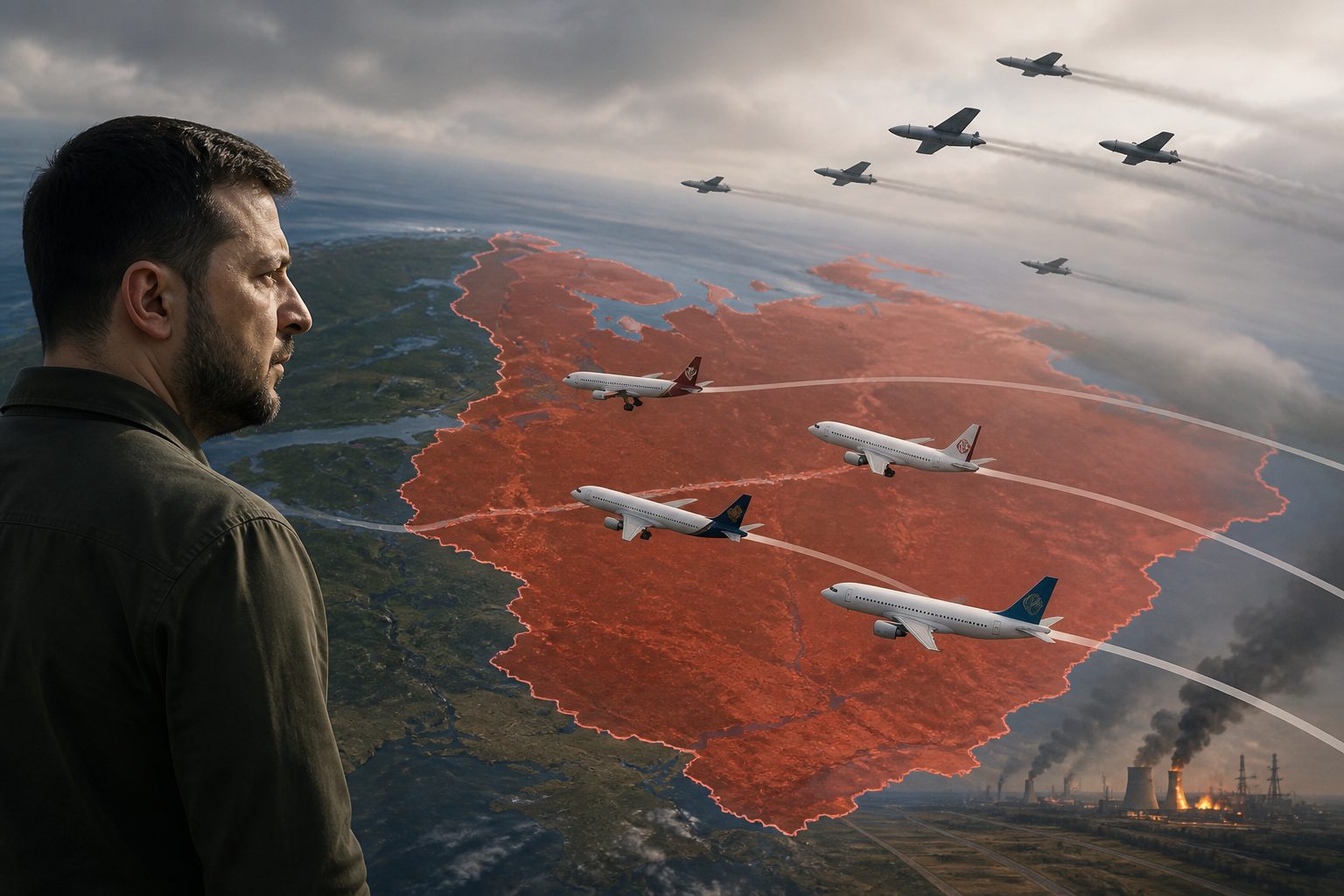
Zelensky Warns Airlines Away From Russian Airspace as Ukrainian Drone Activity Grows
Zelensky’s warning has put Russian airspace back into focus, but the decisive signal is still absent: airlines have not collectively changed their routes.
Ukraine’s president says growing Ukrainian drone activity inside Russia should factor into aviation safety decisions. That is not a confirmed airspace ban or a new operating restriction. The story is whether the warning changes how carriers assess the risk.
The warning is broader than a ban
Zelensky said Russian airspace was becoming unsafe for commercial airlines and urged the aviation industry to account for the growing number of Ukrainian drones operating in Russia.
He also said Ukraine had no intention of directly threatening civilian aircraft. The concern he raised is therefore indirect: expanding military drone activity can alter the safety calculation even without a stated plan to target commercial flights.
No formal closure, enforceable restriction, or official operational directive is established by the reporting.
Airlines have not delivered the confirming signal
Chinese and Gulf state airlines are among those still using Russian airspace, the BBC reports.
That continued traffic is the central constraint on the warning. It does not settle the underlying risk, but it shows there is not yet a broad, visible commercial response to Zelensky’s assessment.
For airlines, avoiding Russian airspace can mean longer routes and changed schedules. Until carriers accept those costs or authorities require them, the warning remains a warning rather than a demonstrated shift in aviation operations.
Aerial activity is rising; civilian-flight disruption is unproven
The Guardian links Zelensky’s comments to increased Ukrainian drone operations in Russia. It also reports Russia’s pledge to intensify strikes on Ukrainian energy facilities ahead of winter.
Those facts point to a more active cross-border air war. They do not establish a specific imminent threat to a civilian flight, and they do not show that commercial routes are already being disrupted.
That distinction keeps the event in proportion: the risk narrative has escalated, while the aviation evidence has not caught up.
The route-map test
The next evidence checkpoint is simple: do airlines or aviation authorities change what they do?
Watch for:
- Official aviation notices or enforceable restrictions - Safety statements from carriers using Russian airspace - Reroutings, cancellations, or schedule changes - Sustained declines in commercial traffic through Russian airspace
If those signals appear, Zelensky’s warning becomes an operational aviation story. If flights continue as they are, it remains a high-profile warning about drone activity—not proof of a changed airspace regime.