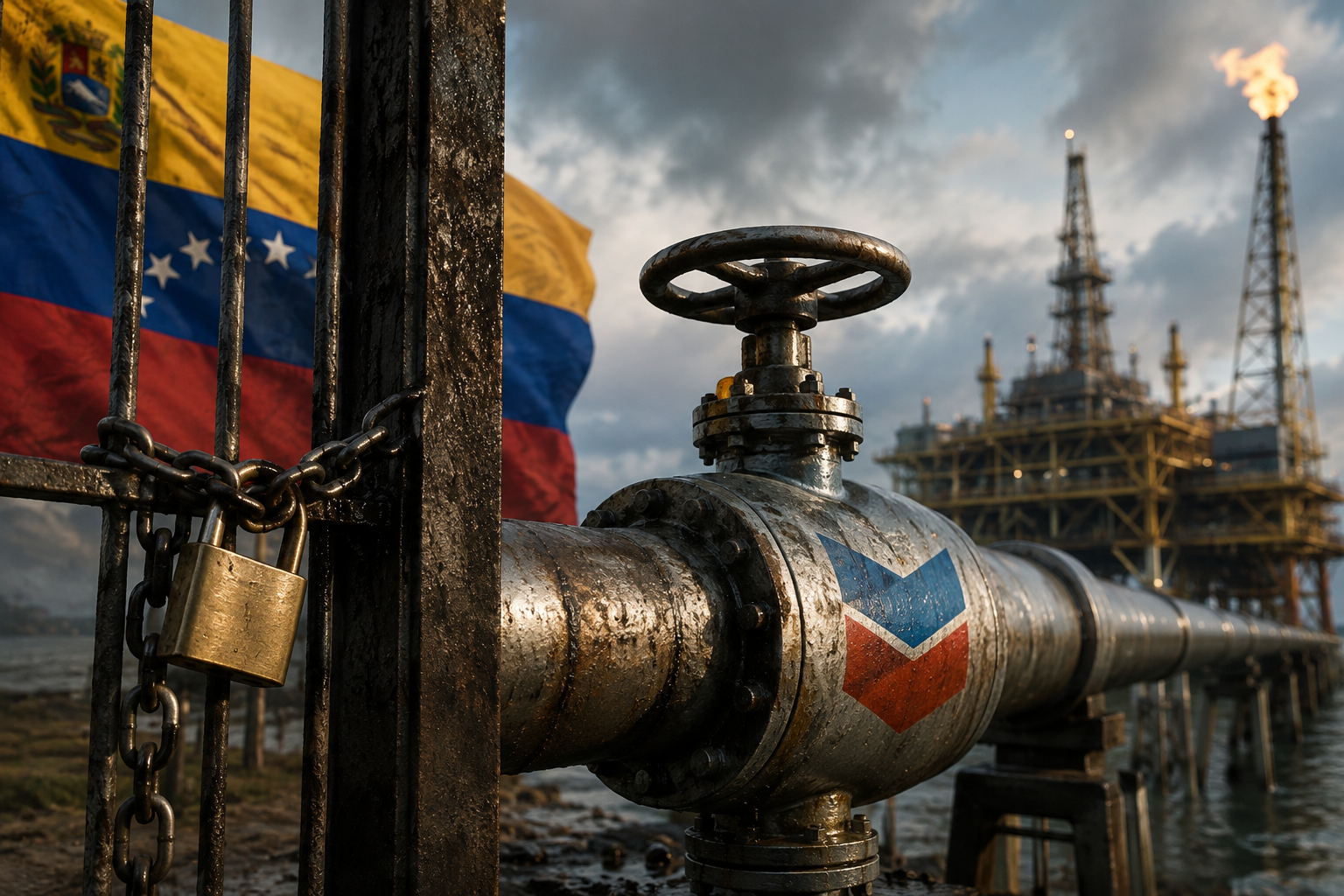
Venezuela Oil Deal Faces a Credibility Test as Chevron Expands
Washington says its Venezuela oil arrangement marks a transformed relationship. Chevron’s expansion is the first concrete test of whether that claim has substance beyond a disputed political deal.
Energy Secretary Chris Wright has rejected the allegation that the United States is trying to “take” Venezuelan oil. In comments reported by The Guardian, Wright called that characterization “absolutely not” and framed the arrangement with Venezuela’s interim leaders as a transformation of relations.
At the same time, NPR reports that Chevron—the largest foreign oil operator in Venezuela—will expand its footprint while the country faces political and economic uncertainty.
That combination is the story: a forceful official denial alongside a commercially meaningful move by the company best positioned to benefit. The terms, scale, legal basis, and long-run effects of the deal have not been established in the source reporting. That makes follow-through more important than rhetoric.
The argument now turns on control
Critics describe the arrangement as “gunpoint diplomacy”: pressure that could sidestep Venezuela’s constitutional limits and turn national resources into a US-backed concession.
Wright’s response does not resolve that concern by itself. Calling the deal a new relationship is a political claim. Whether it is one depends on operational details: who retains authority over the oil, what Chevron is permitted to do, what obligations accompany its access, and how any benefits are allocated.
A deal can increase foreign investment without becoming an oil grab. It can also use the language of cooperation while shifting leverage decisively toward Washington and a favored operator. The dividing line is not the announcement. It is the governing structure underneath it.
Chevron is the first transmission channel
Chevron’s expansion matters because it turns diplomatic positioning into an operating decision.
The company’s move suggests that the arrangement is already changing incentives for at least one major participant. But expansion alone does not establish the deal’s legitimacy, durability, or economic value to Venezuela. It establishes that commercial access is becoming more tangible.
The key signal-to-confirmation test is straightforward:
- Signal: US officials describe a transformed relationship. - Transmission: Chevron gains greater ability to operate in Venezuela. - Confirmation: documents and implementation show reciprocal, lawful, and durable terms.
The first two stages are visible. The third is still unproven.
The paper trail will decide the claim
The administration’s framing will be more credible if official documentation clarifies the arrangement’s legal authority, ownership terms, operating limits, and safeguards.
It will also matter whether subsequent US and Venezuelan statements align on those points. A durable policy shift should be legible to both governments, not dependent on one side’s characterization after the fact.
If Chevron’s access grows while the legal and institutional terms remain vague, critics will have a stronger case that the relationship is being transformed mainly through pressure and commercial leverage. If the terms show clear Venezuelan authority and enforceable limits, Washington’s account will have more support.
A commercial move is not yet a settlement
Chevron’s expansion is not proof that the United States intends to commandeer Venezuela’s oil. Wright’s denial is not proof that the arrangement avoids that outcome.
For now, the confirmed picture is narrower: Washington disputes the oil-grab allegation, and Chevron is expanding during a period of Venezuelan uncertainty. The next evidence that matters is whether policy safeguards expand alongside corporate access.
That is the credibility test. Without visible follow-through, “transformation” risks becoming a label for an oil concession backed by unequal power.