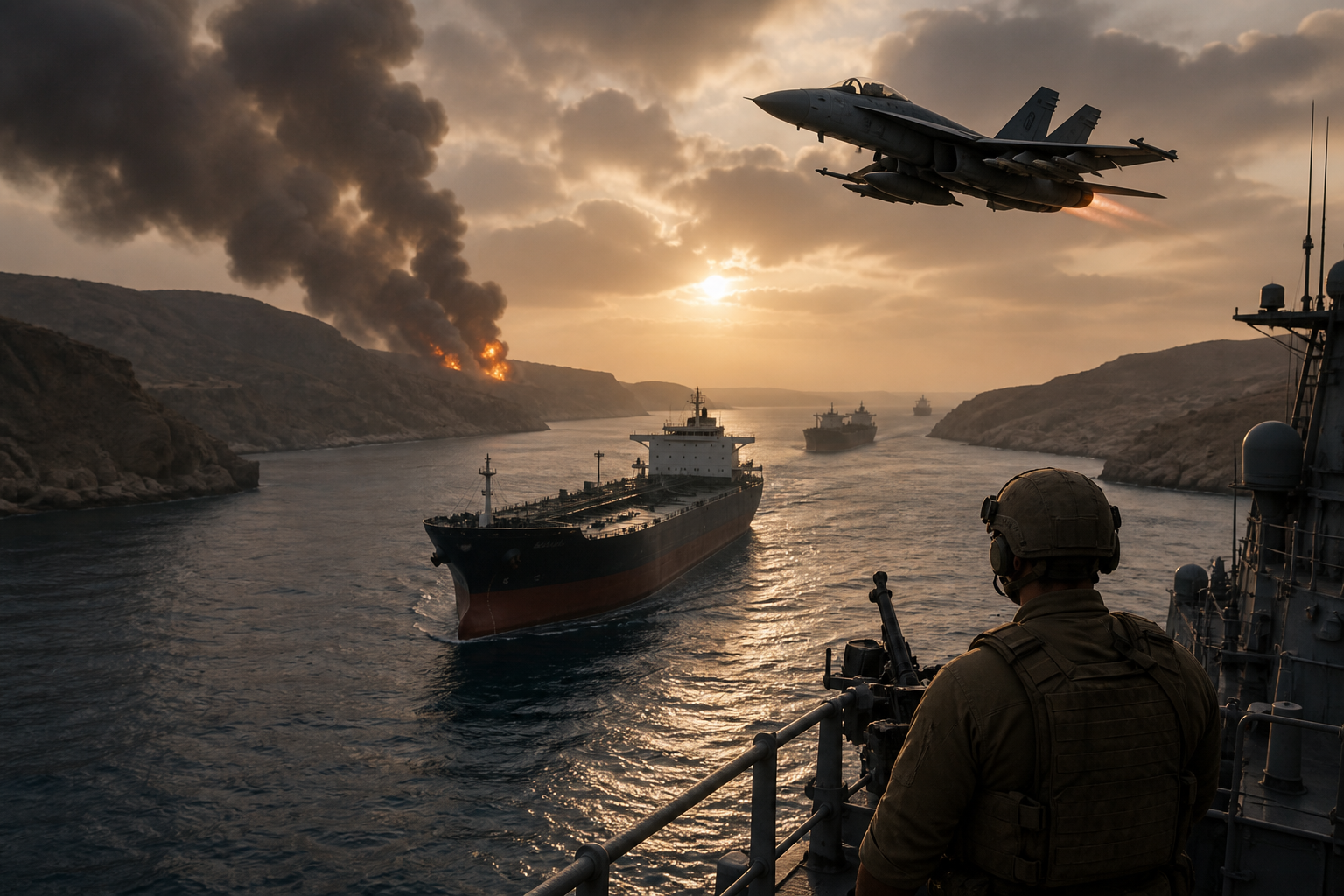
U.S. Strikes Iran After Ships Are Hit Near the Strait of Hormuz
The Strait of Hormuz has become the immediate link between attacks on shipping and new U.S. strikes on Iran. Whether that link holds under pressure will determine if this remains a military exchange or becomes a sustained disruption to a critical shipping corridor.
U.S. Central Command says Iran targeted commercial shipping and American service members deployed in the region. BBC News, CNBC, and CBS News reported Tuesday that the United States launched new strikes after attacks involving ships or tankers near the strait.
The confirmed story is narrow but consequential: the U.S. has tied a new strike campaign to maritime attacks around Hormuz. The source pack does not yet establish the full damage from either the shipping attacks or the strikes.
The Strikes Follow a Maritime Trigger
CENTCOM’s stated rationale puts commercial vessels and U.S. personnel at the center of the action. That matters because it frames the strikes as a response to a specific operational threat, rather than as an open-ended declaration about the wider conflict.
Iranian state media reported explosions, according to the BBC. That corroborates that significant events occurred, but it does not independently settle which targets were hit, how extensive the damage was, or whether casualties resulted.
President Donald Trump described the strikes as “large and powerful” in a Truth Social post reported by NBC News. That is a presidential characterization, not an independently verified assessment of military effects.
Hormuz Is the Escalation Gauge
The Strait of Hormuz is not just a backdrop. It is the conflict’s most revealing constraint.
ABC News described the strait as the primary flashpoint. If attacks alter tanker movements, insurance decisions, port calls, or naval escorts, the consequences spread quickly beyond the immediate exchange of fire. Shipping behavior is therefore a more durable signal than official language alone.
A military response can be limited even when its rhetoric is forceful. Sustained rerouting or documented interruptions to tanker traffic would indicate that the conflict is imposing a broader economic and security cost.
Claims Need to Survive Countermoves
The near-term test is simple: claim, countermove, verification.
The U.S. claim is that Iranian attacks on shipping and American personnel prompted the strikes. A countermove could take the form of another attack, a formal Iranian response, or actions that make commercial transit less predictable. Verification requires independently documented vessel damage, casualty information, confirmed target effects, or observable changes in shipping operations.
Until those pieces emerge, the responsible conclusion is not that escalation is inevitable. It is that Hormuz has become the place where the next escalation—or the limits of this one—will be visible first.
The Next Ships Will Clarify the Story
Watch for concrete evidence rather than broader declarations:
- Further CENTCOM statements identifying targets or attacks. - Verified reports on damaged vessels, casualties, or interrupted transit. - Rerouting, delays, or added security measures by tanker operators. - An Iranian response that changes activity near the strait.
Those signals will show whether the U.S. strikes were a bounded response to a shipping flashpoint or the opening move in a wider confrontation.