Germany Accuses Russia Over Explosive Drone Found Near Ukrainian Planes
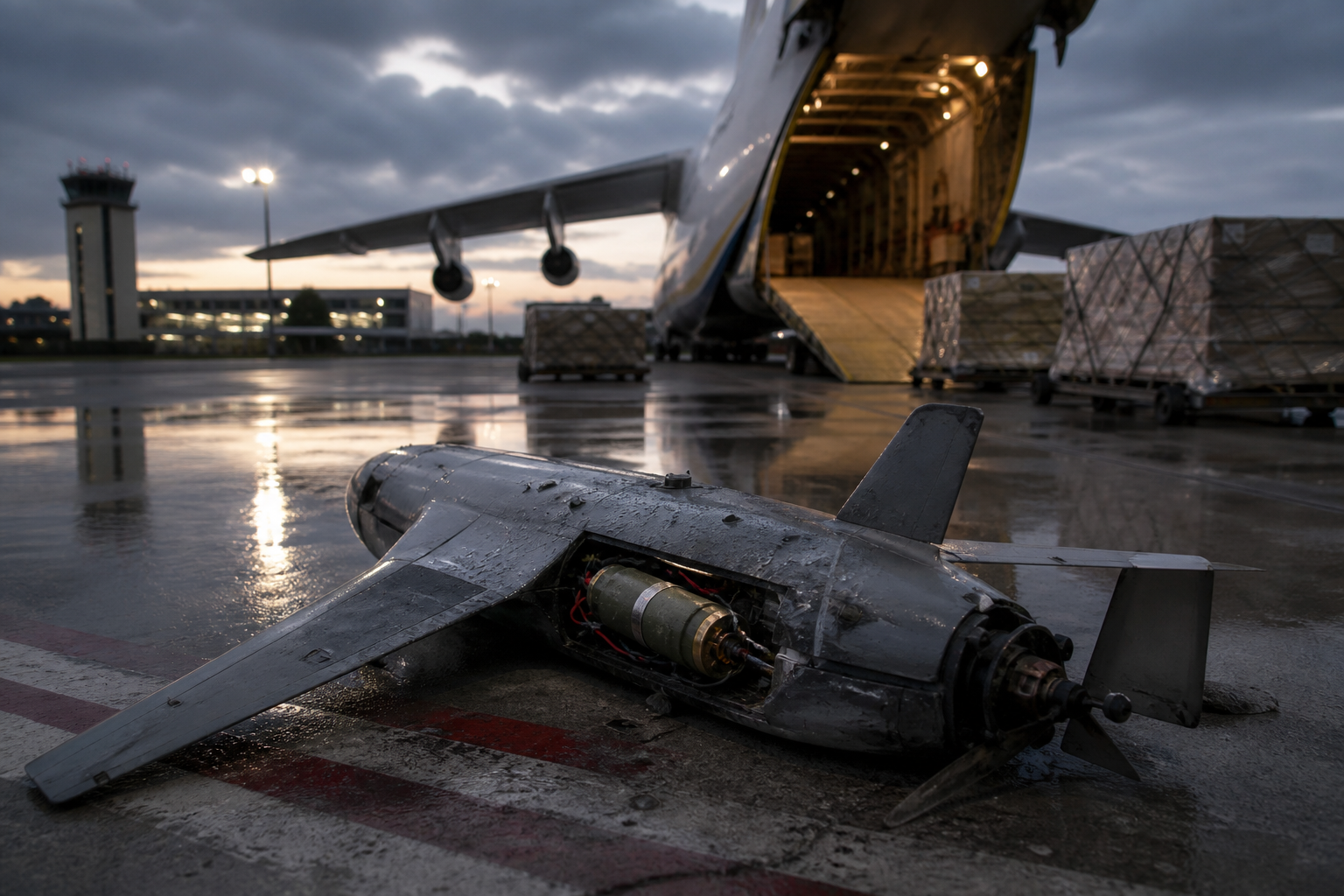
Germany has publicly linked an explosive-laden drone found near Ukrainian cargo planes at Leipzig airport to Russia, turning a failed August attack into a direct state-attribution claim.
The immediate fact is clear: on 4 August, authorities found a drone carrying an explosive device near the aircraft. The larger claim is more consequential—and less publicly documented. Berlin says Moscow supplied the knowhow and equipment for the operation; the strength of that accusation now rests on the evidence and action that follow.
The Leipzig incident now carries a state claim
A thwarted airport attack is serious on its own. But Germany’s decision to name Russia changes the category of the story.
Officials said the alleged operation involved Russian-provided equipment and expertise, with “low-level agents” recruited to carry it out. That description presents Leipzig not as an isolated act by an unknown attacker, but as a planned operation supported by a foreign state.
The target also matters. The drone was found near Ukrainian cargo planes, placing the alleged attack close to the logistics and aviation infrastructure supporting Ukraine during the war.
Berlin has ended weeks of public hesitation
Germany’s government had faced weeks of speculation before its briefing in Berlin. Interior Minister Alexander Dobrindt and Foreign Minister Johann Wadephul then made the accusation in a short public appearance, describing it as part of a systematic Russian effort to cause damage through hybrid attacks.
That wording is doing more than assigning responsibility for one device. It connects the incident to a broader security problem: covert activity that can disrupt infrastructure, raise protection costs, and create political pressure without crossing into an overt military confrontation.
A public attribution is therefore a policy move as well as an investigative conclusion. It signals that Berlin believes silence is no longer the safer posture.
The hybrid-attack pattern supports context, not proof
European countries have reported a rise in sabotage attacks and attempted attacks that they blame on Russia. That wider backdrop makes Germany’s framing plausible as a regional security concern rather than a stand-alone allegation.
But pattern is not proof.
The key constraint is the attribution threshold: a broader history of alleged covert activity can explain why officials take an incident seriously, but it cannot substitute for evidence connecting this drone, its handlers, and its equipment to Russian state support.
That distinction matters because the available reports describe Germany’s conclusion without laying out the underlying intelligence, forensic findings, or investigative chain in detail.
The evidence gap will determine the accusation’s force
For now, the reporting supports three things: an explosive-bearing drone was found at Leipzig airport; Germany has blamed Russia; and German officials describe the episode as part of a wider hybrid campaign.
It does not publicly establish the full case behind that conclusion.
The most meaningful next disclosures would be specific: how the device was sourced, who recruited the alleged operatives, what communications or financial trail investigators found, and how that trail reaches Russian state involvement. Each would turn a serious official allegation into a more demonstrable account.
The next signal is action tied to Leipzig
Germany’s claim will carry greater weight if it produces a concrete response connected to this incident—such as criminal charges, diplomatic steps, sanctions, or coordinated European security measures.
If supporting evidence and targeted action emerge, Leipzig may become a defining example of the hybrid-threat case Berlin is making. If they do not, the accusation will remain important but incomplete: a forceful warning about Russian covert activity without a public record sufficient to independently assess the specific charge.