Canada-U.S. Tariff Talks Restart as Three-Day Deadline Nears
The Canada-U.S. tariff story is still a negotiation, not a settled deal.
President Donald Trump said the countries effectively have an agreement after speaking with Prime Minister Mark Carney. But reporting indicates negotiators remain apart on several key issues, while the tariff threat has been delayed—not removed.
The Deal Claim Runs Ahead of the Negotiations
Trump described his conversation with Carney positively, calling it a “very good conversation,” and presented the pause as evidence of a deal.
That is not the same as an announced agreement with terms.
The New York Times reports that Canada and the United States remain divided on key issues. Until both governments identify what was agreed, which tariffs change, and what each side will do next, the more accurate description is active bargaining under pressure.
Three Days Buys Time, Not Certainty
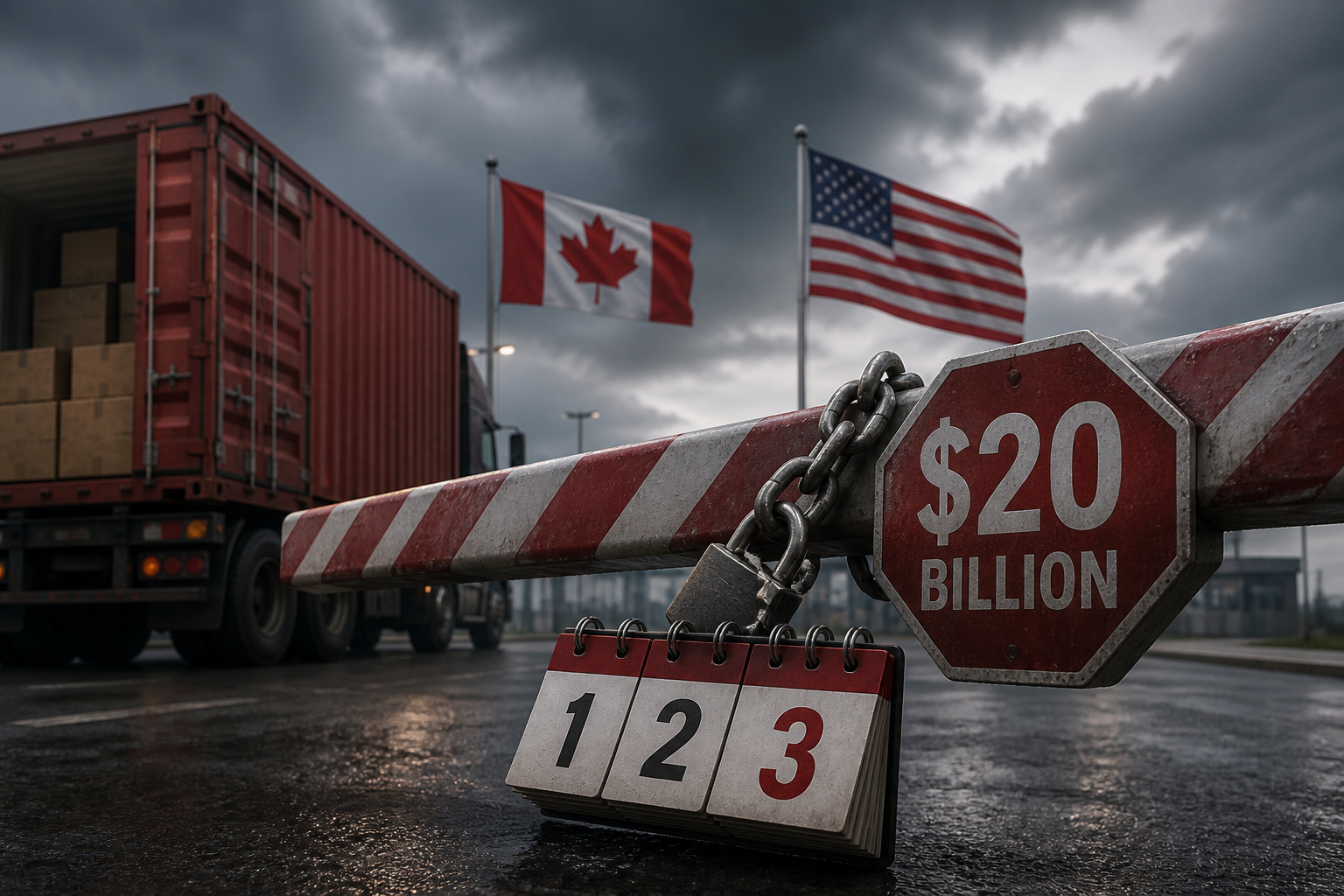
New U.S. tariffs on about $20 billion of Canadian goods had been set to begin Wednesday. They were postponed for three days.
That delay prevents an immediate escalation. It also preserves leverage: the tariff deadline is still close enough to force decisions, rather than becoming an open-ended diplomatic process.
A short pause can support a final agreement. It can also simply create room for negotiators to keep talking without triggering an economic penalty first. The available reporting supports the first step, not yet the conclusion.
The $20 Billion Switch Is the Proof Point
The clean test is policy follow-through.
- If the tariffs are formally withdrawn or replaced by published terms, the agreement claim gains substance. - If they stay paused with clear reciprocal commitments, the dispute may be moving toward resolution. - If the deadline is extended again without specific terms, the conflict has been deferred rather than settled. - If tariffs take effect, the claimed deal did not hold.
This is the signal-to-confirmation gap: a presidential announcement can move expectations, but the durable signal comes when it changes actual tariff policy and incentives for Canadian exporters and U.S. importers.
The Pause Is Corroborated; the Terms Are Not
CNBC also reported that tariffs on roughly $20 billion in Canadian goods were due to begin before the three-day postponement. ABC News similarly reported Trump’s account of his conversation with Carney.
Together, those reports confirm two things: direct diplomatic contact occurred, and the tariff action was temporarily paused.
They do not establish the contents of a final deal. No concrete concessions, numbers, or enforceable tariff terms appear in the source trail provided.
The Deadline Will Separate Truce From Agreement
The next three days matter because they force a binary policy question: do the tariffs take effect, remain suspended under stated conditions, or disappear?
Trump’s characterization may prove accurate. But the evidence currently supports a narrower conclusion: Canada and the United States have bought time to negotiate while a $20 billion tariff threat remains live.