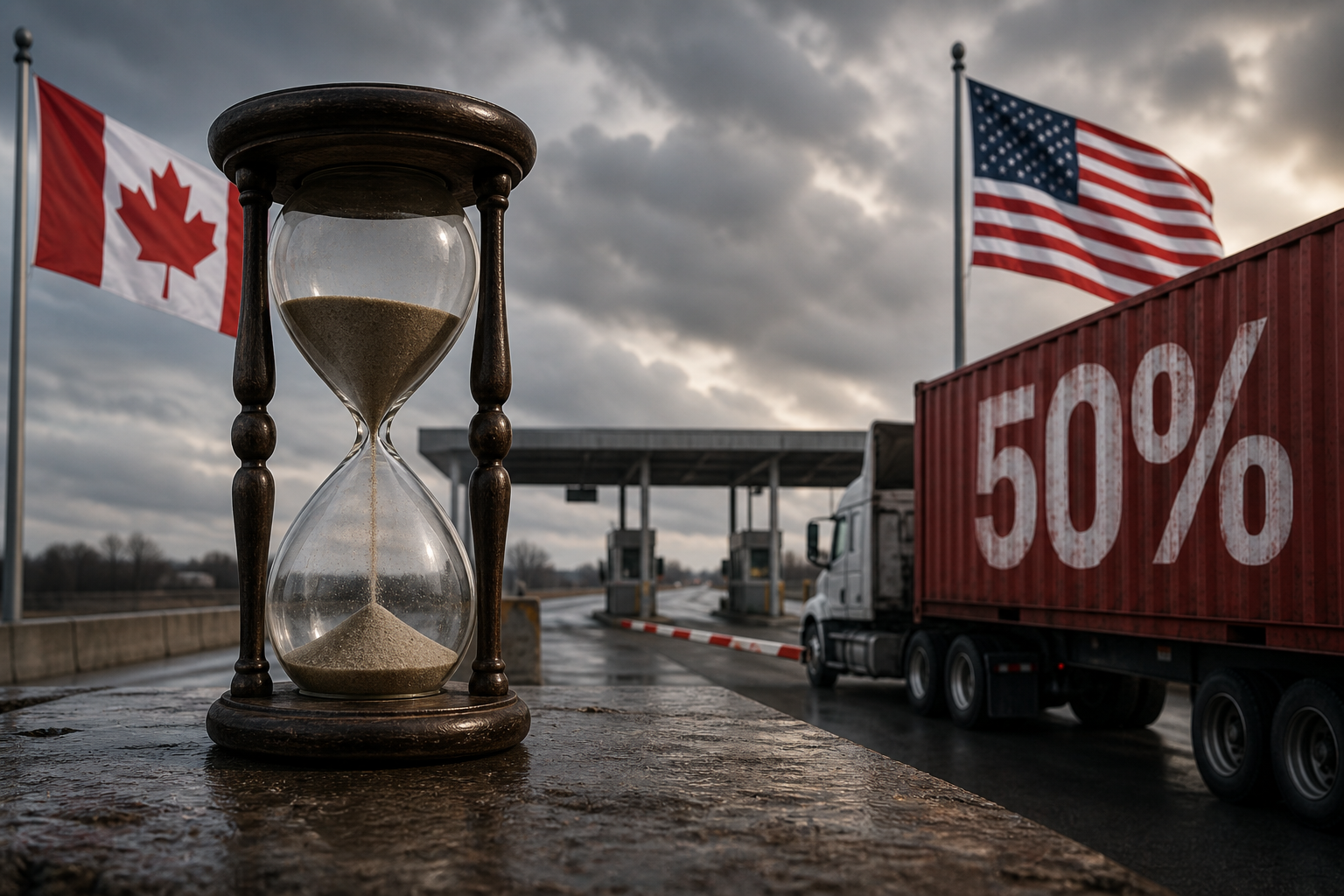
Three-Day Tariff Pause Leaves the Canada Deal Unfinished
A three-day delay is not a trade settlement. It is a deadline for proving one exists.
Trump postponed tariffs that were due to hit roughly $20 billion in Canadian goods while the two sides finalize documents. Reports describe the threatened measure as a 50% tariff. That gives Canada temporary relief from an immediate escalation, but it does not yet establish which tariffs are changing, for how long, or on what terms.
The deal should be judged by one constraint: the paper test. If the documents do not turn the announcement into clear operating terms, this was a reprieve—not a resolution.
Relief arrived; certainty did not
The immediate policy move is confirmed: tariffs scheduled for Wednesday were pushed back three days.
That matters for companies facing a near-term import-cost shock. But the public description remains conditional. Trump said the countries were finalizing documents, and the reported deal was explicitly subject to that finalization.
Those are not interchangeable outcomes. A pause changes the enforcement clock. An agreement changes the policy itself.
The missing terms are the real terms
The size of the threatened action makes the distinction hard to dismiss. About $20 billion in Canadian goods were in scope, while the reporting describes a 50% tariff threat.
Within the new three-day window, the documents need to show:
- which goods remain subject to tariffs; - whether the 50% measure is suspended, reduced, or withdrawn; - the effective dates and duration of any relief; and - what Canada committed to in return.
Until then, importers and exporters have a later deadline, not a reliable tariff schedule.
Keystone is a signal, not a term
Trump also raised the possibility of reviving the Keystone XL pipeline project. Its appearance suggests the talks may reach beyond import taxes into energy and cross-border investment.
But the available reporting does not show that Keystone is part of a final agreement. Treating it as a settled concession would outrun the evidence.
For now, it is better read as a clue to the bargaining environment: the tariff pause may sit inside a broader political negotiation, even if the eventual documents address only trade measures.
The next three days decide the headline
The next evidence checkpoint is simple: a signed document or joint statement with enforceable terms.
If it identifies the affected goods, tariff treatment, timing, and reciprocal commitments, the three-day pause becomes the bridge to an actual agreement. If those details do not appear—or the tariff threat returns—Canada’s win was temporary time under pressure.