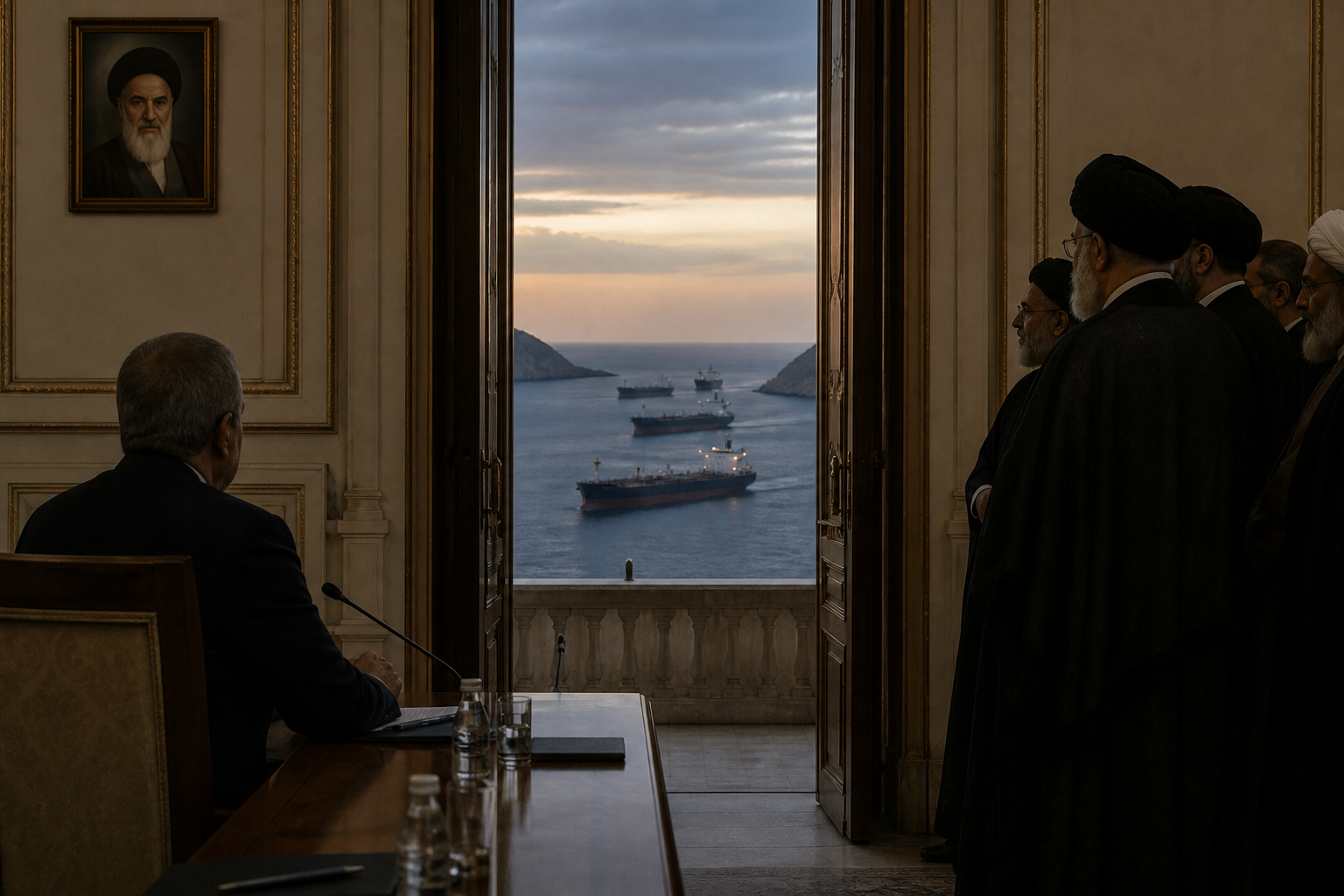
Pezeshkian Denies Resignation Threat as Hormuz Talks Expose Iran’s Internal Rift
Negotiators may be getting closer to reopening the Strait of Hormuz. Tehran is not getting closer to agreeing with itself.
President Masoud Pezeshkian’s denial that he repeatedly threatened to resign places that internal split at the center of the talks. US officials describe progress, but no final agreement exists—and Iran’s hardliners are publicly opposing a settlement with Washington.
The talks have momentum, not resolution. Any durable outcome must pass a three-lock test: Text, Traffic, Tehran. The parties need common terms, shipping must resume reliably, and Iranian institutions must allow the arrangement to hold.
Tehran Is the Political Lock
The Guardian reports that Pezeshkian denied claims he had repeatedly threatened to resign while battling factions opposed to a US settlement.
The denial does not establish what happened privately. It confirms that doubts about the president’s position have become public during a sensitive negotiation.
The resistance is also institutional. According to the same report, Iran’s Assembly of Experts called negotiations with Washington “futile.” That turns the internal dispute into more than routine bargaining pressure.
A tentative agreement could be announced and still face obstruction or reinterpretation inside Iran. Pezeshkian’s position matters because negotiators cannot deliver a durable reopening if powerful institutions reject the settlement behind it.
Progress Still Lacks a Text
US Secretary of State Marco Rubio said the Iran-Oman talks had made progress but produced no final agreement. Treasury Secretary Scott Bessent also pointed to movement toward resumed shipments, with the BBC reporting both officials’ statements.
That is credible evidence of momentum. It is not evidence of agreed operating rules.
No jointly acknowledged text in the provided reporting defines:
- The routes commercial vessels may use - The duration of the arrangement - The mechanism for monitoring and enforcement - The obligations accepted by Iran and the other parties
Until those terms appear, “close” describes the negotiation—not the settlement.
An Open Route Is Not Normal Traffic
CNBC reports that US Central Command said the strait’s southern route remained “free and open.” That narrows the immediate question: Hormuz is not uniformly sealed.
But technical navigability is only the traffic lock. The harder test is whether commercial shipping resumes reliably and at scale under terms the parties will uphold.
Markets are already pricing some reopening optimism. Al Jazeera reported falling oil prices as US officials promoted progress in the talks. That reaction reflects expectations, not proof that normal shipping has returned.
Oman Sees a Control Trap
The Guardian reports that the proposed temporary formula would route entering ships close to Iran and departing ships through Iranian and Omani waters.
Muscat reportedly fears that this arrangement could restore traffic while preserving near-permanent Iranian dominance over the channel. That is the central design constraint: a deal can improve passage without resolving who controls the waterway or how compliance will be enforced.
Oman’s formal position will therefore reveal whether the emerging plan is a regional compromise or a temporary workaround carrying the same underlying dispute.
The Next Evidence Checkpoint
The next meaningful signal is not another official prediction that a deal is near. It is a published or jointly acknowledged text, followed by reliable commercial traffic and observable support—or at least non-obstruction—from Iranian institutions.
Direct evidence about Pezeshkian’s alleged resignation threats would clarify the depth of the leadership dispute. Until then, the strongest conclusion is narrower: diplomacy is advancing, but the Tehran lock remains closed.