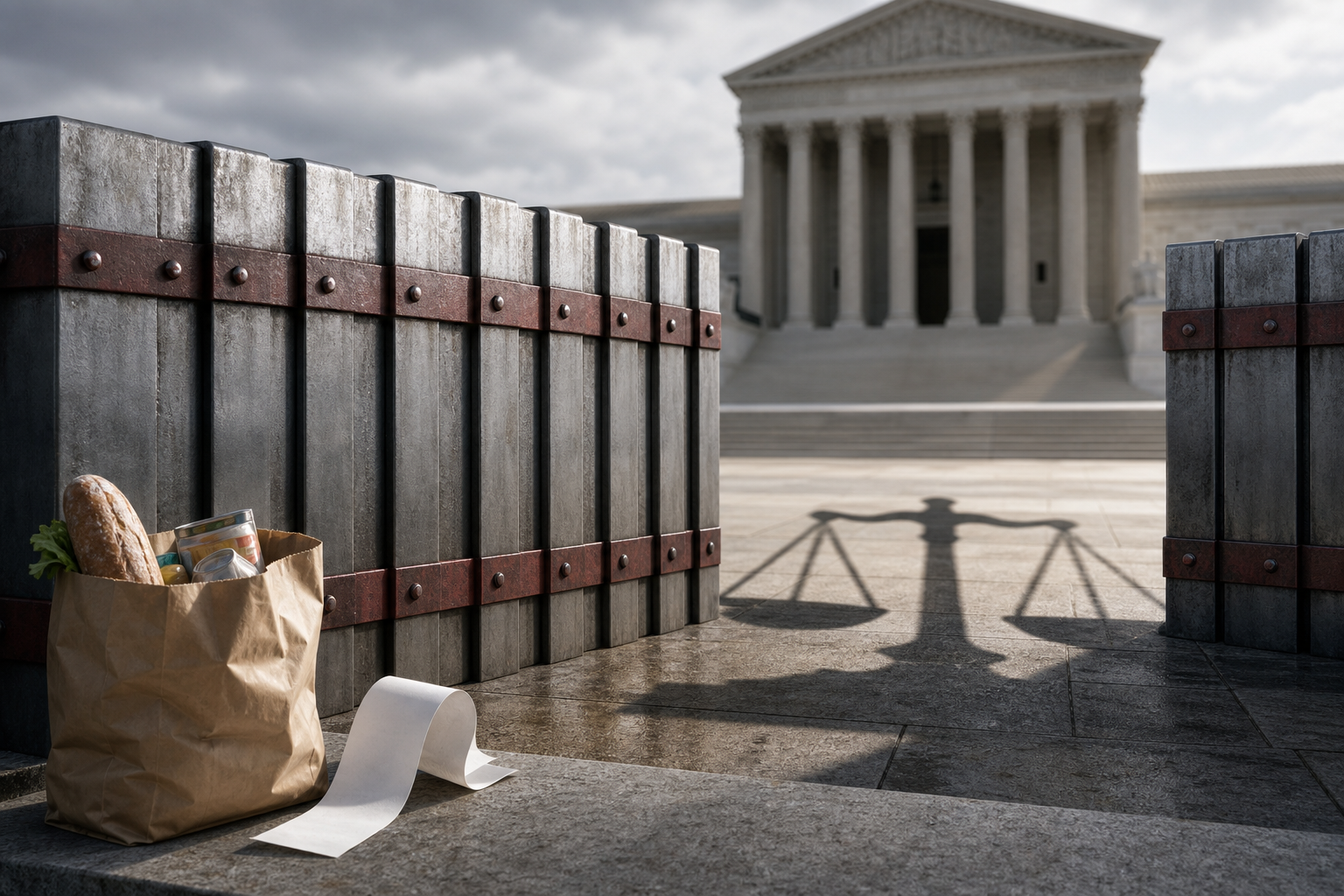
Trump Says New Tariffs Mirror Tariffs the Supreme Court Struck Down
Trump’s Tariff Defense Creates Its Own Legal Test
Trump’s strongest political line on tariffs may become opponents’ cleanest legal exhibit.
According to CNBC, President Trump said his new tariffs are “doing the same thing” as tariffs the Supreme Court struck down. He also dismissed fears that the measures could hurt the economy, even as affordability has become a key issue in the 2026 midterms.
That creates the central tension. Trump is selling continuity: same trade posture, same economic instinct, same promise of pressure. But if the new tariffs really mirror a policy the Court rejected, the administration now has to prove the legal machinery is different enough to survive.
Continuity Is the Pitch — and the Exposure
“Doing the same thing” is useful politics.
It tells supporters the new tariffs are not a retreat, a compromise, or a watered-down replacement. It frames the move as a return to familiar ground after a legal setback.
But the phrase also raises the obvious legal question: if the policy does the same thing as the one struck down, why should courts treat it differently?
That answer cannot come from a rally line or a media quote. It has to come from the tariff text, the cited legal authority, the agency process, and the enforcement structure.
Until those details are visible, the policy is not durable. It is a claim waiting for its paperwork.
The “Doing the Same Thing” Test
Trump’s own phrase gives the story its cleanest test.
The question is not whether the tariffs share the same political goal. The question is whether the administration has changed the legal foundation enough to matter.
Three details will decide that:
- What authority does the administration cite? - Which agency or process implements the tariffs? - How does this version differ from the tariff policy the Supreme Court struck down?
If the new tariffs are only a cosmetic rewrite, opponents get a direct argument: the administration is trying to repackage a rejected policy.
If the administration uses a different statutory route or enforcement mechanism, the fight shifts. Then the question becomes whether that new route actually supports the policy.
That is the constraint: political similarity helps Trump sell the move, but legal similarity could help challengers attack it.
Affordability Turns the Fight Into a Midterm Issue
CNBC also reports that Trump dismissed fears the tariffs could hurt the economy.
That matters because affordability is already shaping the 2026 midterms. Tariffs may be argued in legal briefs, but voters usually feel them through prices.
The political risk is straightforward. If companies absorb the costs, Trump can frame the tariffs as leverage. If companies pass costs to consumers, opponents can frame the policy as another price increase.
The current reporting does not prove either outcome. It confirms the collision: Trump is defending a legally sensitive tariff move while affordability pressure is already a campaign battlefield.
The First Checkpoint Is the Tariff Text
The next evidence checkpoint is concrete: the tariff text or implementation order.
That document needs to show more than intent. It needs to show the legal basis, the agency process, and the reason this version is not just the struck-down version under a new label.
After that, the signal moves to response:
- affected companies and industry groups - trading partners - legal challengers - any court filings testing the administration’s theory
For now, the cleanest read is conditional. Trump has turned continuity into the selling point. The next document will show whether continuity is also the vulnerability.