Democrats’ Cost-of-Living Message Meets Trump’s Election Claims
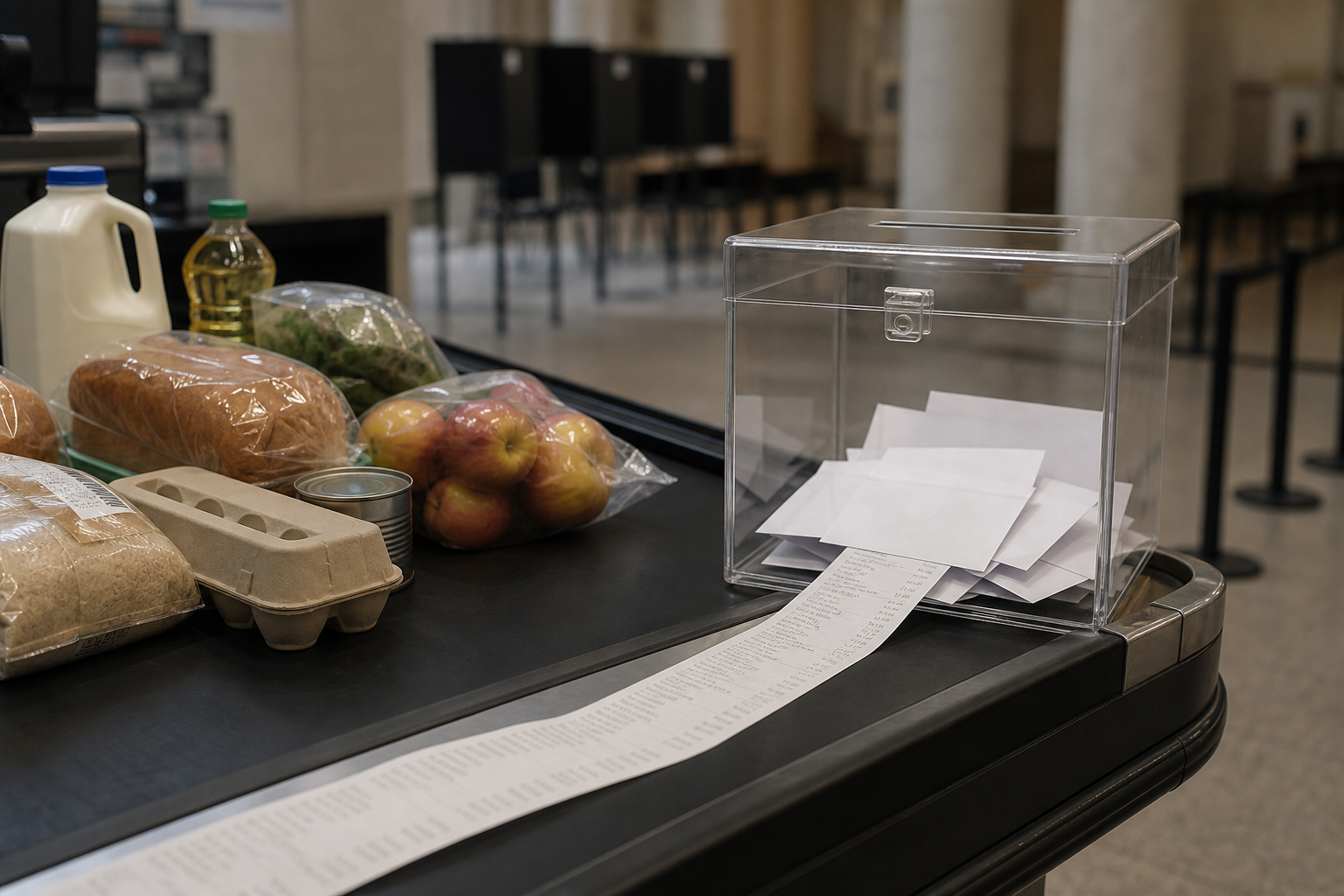
Democracy Has to Pass the Grocery-Receipt Test
Democrats have an affordability message voters can feel. President Trump’s unfounded election-fraud claims may force them to prove democracy is not a separate issue, but part of the same fight over power, money, and rules.
That is the strategic collision in NPR’s reporting: Democratic candidates are emphasizing cost of living, while some party leaders argue the party also has to talk about democracy if Trump keeps pushing claims of election fraud.
The risk is dilution. Affordability is direct. Democracy can sound abstract.
The opportunity is connection. If Democrats can make corruption the bridge, they can argue that high costs and democratic instability come from the same broken system: one that lets powerful people bend rules while voters absorb the consequences.
The Cleanest Door Is Still Cost of Living
Affordability gives campaigns the easiest voter entry point.
Prices, wages, housing, groceries, and health costs are concrete. They do not require a voter to start with an argument about institutions. They start with the bill.
That is why the economic message is hard to displace. It is repeatable. It is local. It fits a stump speech, an ad, or a doorstep conversation without much translation.
For Democratic candidates, the temptation is obvious: stay on the daily squeeze and avoid letting a broader democracy warning crowd out the cost-of-living pitch.
Trump’s Claims Force a Harder Choice
Trump’s continued election-fraud claims change the campaign math.
If those claims remain central, Democrats have to decide whether treating democracy as background context looks disciplined or evasive. Silence may protect the affordability message, but it also leaves the election-legitimacy argument unanswered.
The problem is that democracy messaging often fails the kitchen-table test.
A voter worried about rent, groceries, insurance, or wages may not respond to process language. The argument has to become material: who has power, who writes the rules, who profits, who pays, and what changes for ordinary people.
That is the constraint. Democracy has to show up as a lived economic issue, not only as an institutional warning.
Corruption Is the Bridge
A separate NPR Politics report points to the connective tissue: anti-corruption reform.
Democrats are making the case that now is the time to tackle corruption both as a check on Trump and as an overhaul of a system voters see as “co-opted against their interests.”
That phrase does real work.
“Democracy” can sound procedural. “Corruption” sounds transactional. It turns the argument into questions voters already understand: who gets favors, who gets access, who benefits from the rules, and why the system seems to work better for insiders than for everyone else.
That gives Democrats a possible way to keep affordability at the center while still answering Trump’s election claims. The message is not two separate lanes. It is one claim: the same abuse of power that threatens fair elections also shapes an economy where voters feel squeezed.
When the Bridge Becomes Real
The next evidence checkpoint is not whether Democratic leaders discuss democracy in interviews. It is whether candidates put the pieces together in voter-facing campaign execution.
Watch for three signals:
- Speeches and ads that connect cost of living to abuse of power. - Campaign statements that tie election-fraud claims to practical stakes: rules, money, power, and who government serves. - Ethics, corruption, or election-integrity reforms sold as part of a broader affordability agenda.
If those signals appear together, Democrats are not just adding democracy as a moral warning. They are trying to make it part of the economic case.
If they stay separate, affordability remains the main message and democracy stays a supporting theme.
The next test is simple: can Democrats make democracy feel as concrete as the grocery receipt without weakening the affordability message that got voters in the door?