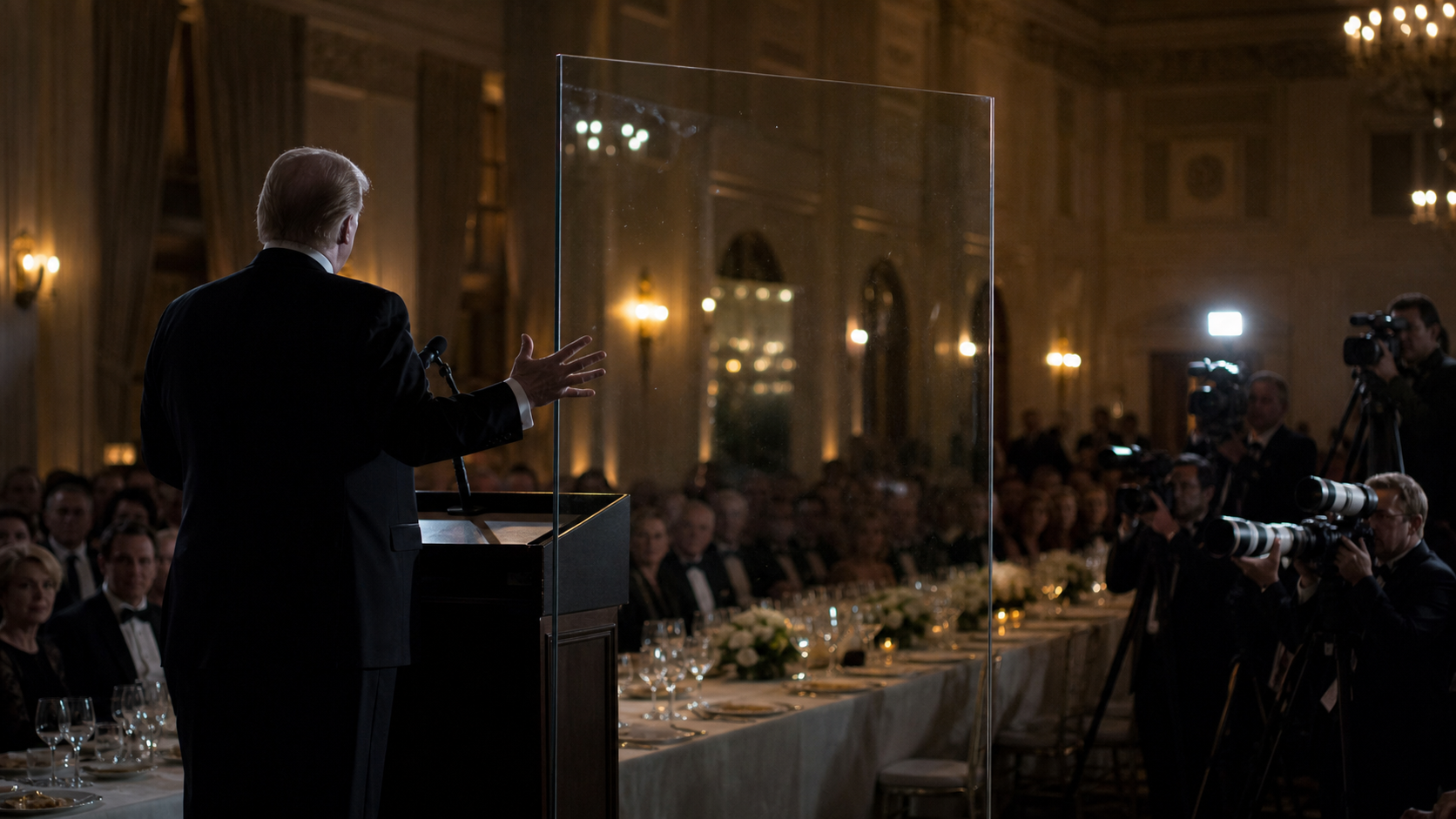
Trump Swipes at the Press at Rescheduled Correspondents’ Dinner
The Venue Was the Message in Trump’s Correspondents’ Dinner Clash
A dinner built to celebrate press freedom became a stage for Trump to criticize the press.
That is the confirmed story, and it is sharp enough without inflation: President Donald Trump returned to the rescheduled White House Correspondents’ Association dinner after the original event was cancelled because of an April shooting, then used the appearance to take swipes at the press.
The point is not that this proves a new White House action against the media. The point is the collision between venue and message.
The Press-Freedom Frame Made It News
BBC reports that Trump “took swipes at the press” during the White House Correspondents’ Dinner.
The setting is what gives the remarks weight.
This was not a campaign rally. It was a rescheduled dinner framed around press freedom after violence had already disrupted the original event.
That makes the venue part of the story. A president attacking the press is familiar. A president doing it inside a press-freedom event, after the first dinner was cancelled because of a shooting, is the sharper political signal.
The memorable frame here is simple: the room changed the meaning of the remarks.
The April Shooting Changed the Room
BBC says the first dinner was cancelled after a shooting in April.
That fact matters because it moved the rescheduled dinner out of ordinary Washington ritual territory. The event carried a heavier civic frame: press freedom, public risk, and the role of journalists in a charged political environment.
Trump’s criticism landed inside that frame.
That does not make every line of the speech historically significant. It does make the clash harder to treat as routine dinner banter.
NPR Adds Scale, Not the Missing Words
NPR confirms that Trump returned to the rescheduled White House Correspondents’ Association dinner on Friday night.
It also describes the speech as rambling and hour-long.
That detail helps define the appearance. This was not a quick drop-in or a single offhand line. It was a long presidential speech at an event already loaded by its press-freedom purpose and its rescheduled timing.
But the current source pack does not provide Trump’s exact language.
So the strongest supported version is narrow: Trump criticized the press during the dinner; NPR’s account adds timing, length, and tone around the appearance.
The Transcript Is the Constraint
The hard boundary is the missing transcript or full video.
Without it, the story should not rank the severity of Trump’s remarks or assign specific targets beyond what the reporting supports.
The current evidence does not establish:
- which outlets he targeted - whether the remarks were jokes, sustained criticism, or scattered asides - whether he made policy-adjacent claims - whether the White House Correspondents’ Association responded in the room
The useful test is: did the moment move from rhetoric to response?
For now, the confirmed facts show a confrontational appearance, not an enforceable decision or formal media policy move.
The Next Evidence Checkpoint Is Response
The story becomes larger only if new evidence shows organized reaction.
Three checkpoints matter next:
1. A full transcript or video This would show the exact language, targets, and tone of Trump’s criticism.
2. A statement from the White House Correspondents’ Association This would clarify whether organizers treated the remarks as routine, inappropriate, or politically significant.
3. Responses from named journalists or news organizations These would show whether the dinner remains a one-night clash or turns into a broader press-freedom dispute.
Until then, the durable fact is focused: Trump criticized the press at a rescheduled correspondents’ dinner built around press freedom after an earlier event was cancelled because of a shooting.
That is enough to matter. It is not enough to overstate.