White House keeps ICE traffic stops in place after fatal shootings
ICE Stops Continue. The Cameras Still Weren’t There.
ICE traffic stops are staying in place after two fatal shootings. The harder fact is that the federal officers involved were not wearing body cameras, according to NPR’s reporting and the agency account cited there.
That is the core contradiction: the White House is rejecting reported pause signals while a promised accountability tool for immigration agents still has not fully arrived.
The question is no longer just whether ICE can keep making traffic stops. It is what proof, restraint, and review exist when those stops end in lethal force.
The Pause That Didn’t Become Policy
NPR Politics reports that the White House says ICE traffic stops will continue after deadly shootings involving immigration agents.
That followed widespread reports earlier in the week that the stops would be paused after two immigrants were fatally shot by ICE agents in early July.
The public position is now clear: the tactic remains in place.
A pause would have signaled a review period. Continuing the stops signals that the shootings, by themselves, have not led the administration to suspend the practice.
What remains unclear is the operational rulebook underneath that decision.
Did agents receive new instructions? Are there added restrictions? Will traffic stops involving ICE now face different review standards after lethal force?
The White House has answered the continuation question. It has not answered the constraint question.
Fatal Encounters Without the Promised Visibility
A separate NPR Politics report says DHS had pledged body cameras for all immigration agents, but months later that rollout had not happened.
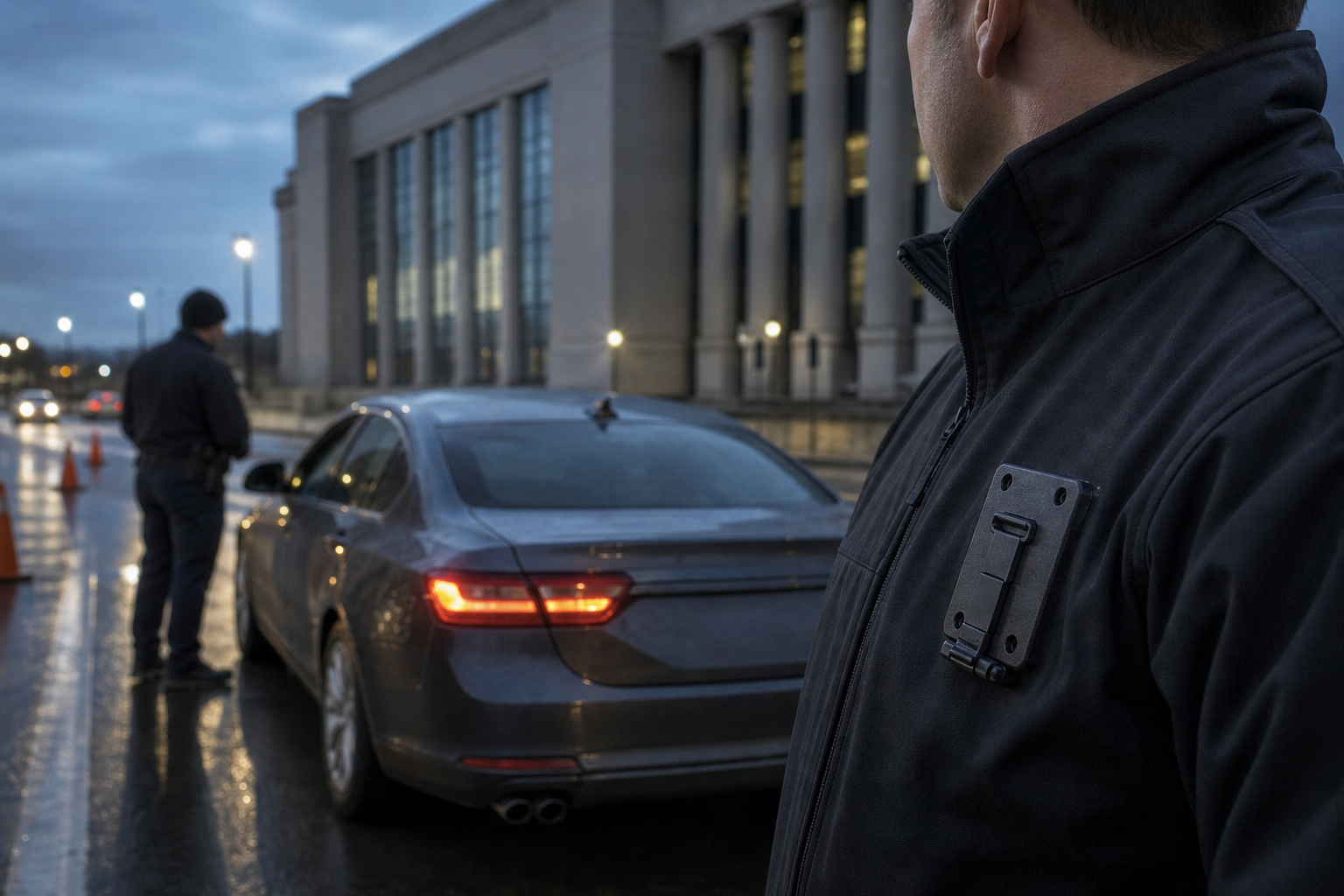
The key detail is narrow and important: according to the agency, none of the federal officers involved in the recent fatal shootings were wearing body cameras.
That turns the body-camera issue from a general transparency debate into an evidence problem.
Body cameras do not settle every dispute. They can miss angles, fail to capture context, or require interpretation.
But when they are absent, every other record carries more weight: radio traffic, witness accounts, surveillance footage, internal reports, and public records.
The public is being asked to accept continued enforcement before the clearest recording tool is consistently in place.
Continuation Is Not the Same as Control
Keeping traffic stops in place is a policy signal. It is not proof of operational control.
The missing layer is enforceable guidance: what agents are told to do differently, if anything, after two fatal shootings.
The relevant distinction is simple:
- A statement says what leaders want. - Field guidance says what agents must do. - Records show what happened. - Review determines whether the conduct met the standard.
Right now, the first piece is visible. The others remain the evidence gap.
That gap is more serious because DHS had already pledged body cameras for all immigration agents, and NPR reports that the rollout still had not happened months later.
The Paperwork Test
The next real signal is not another quote. It is paperwork.
If ICE traffic stops continue after fatal shootings, the stronger evidence will be written guidance or operational instructions from the White House, DHS, or ICE.
The test is practical:
- Is there a formal clarification of ICE traffic-stop policy after the shootings? - Did ICE issue new field guidance to agents? - Are there new restrictions, escalation standards, or review procedures? - Is DHS accelerating or documenting the body-camera rollout? - Will the agency explain why the officers involved were not wearing cameras?
Without written guidance, the public has a posture, not a standard.
The Next Evidence Checkpoint
The White House has made the policy direction clear: ICE traffic stops will continue.
The next checkpoint is whether that decision is matched by records the public can verify.
That means written guidance on traffic stops, a concrete update on the DHS body-camera rollout, and records that help explain the two fatal shootings.
Until those appear, the story is not only that ICE stops are continuing. It is that they are continuing while the central accountability question remains unresolved: what proves deadly enforcement is being recorded, reviewed, and constrained?