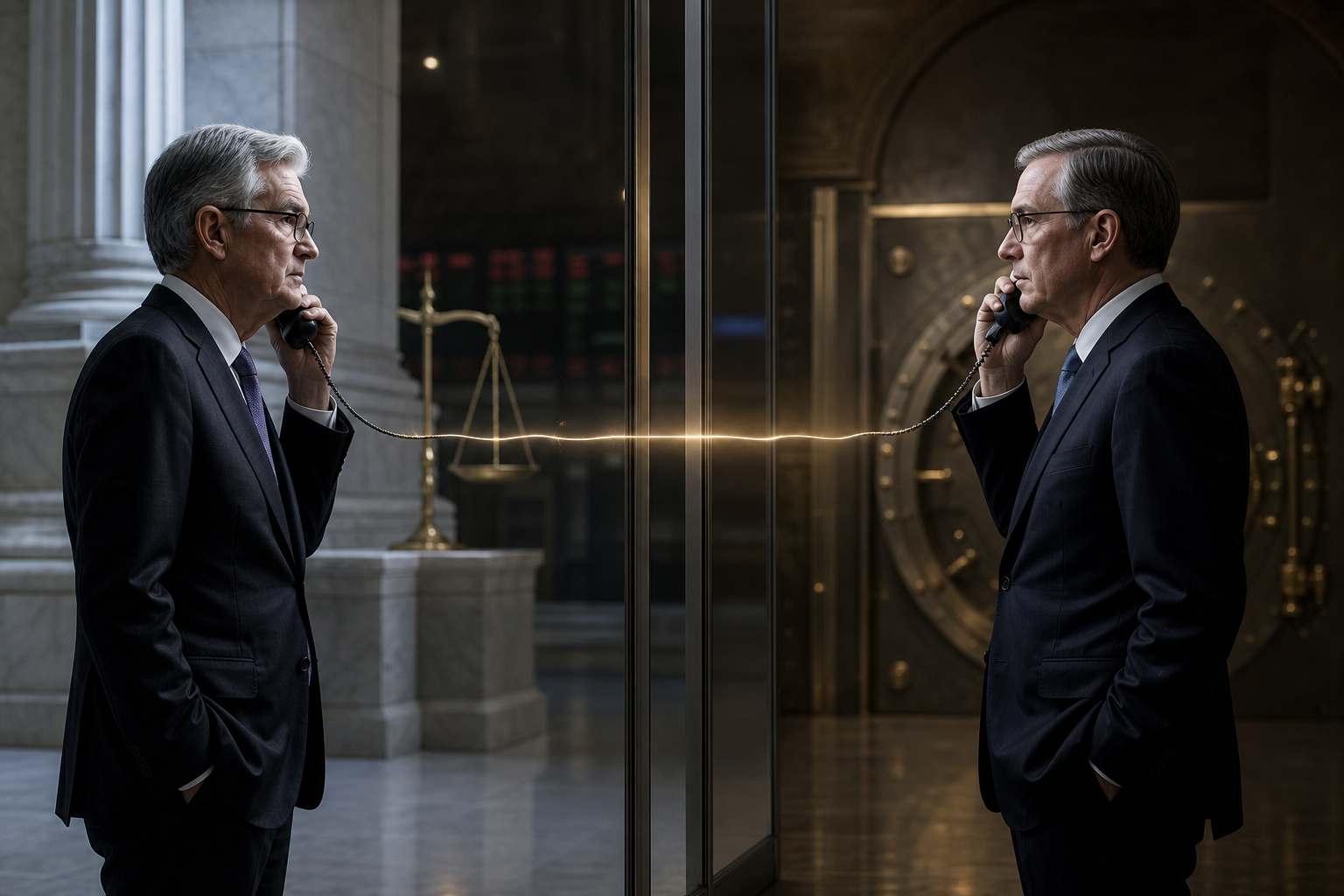
Warsh Discloses Frequent Bessent Talks, Defends Fed Independence
Warsh’s Contact Disclosure Has One Test
Frequent Fed-Treasury contact is not automatically a scandal. It becomes newsworthy when the contact starts to look like a policy channel.
That is the narrow line in Kevin Warsh’s Wednesday disclosure. CNBC reported that Warsh said he speaks frequently with Treasury Secretary Scott Bessent outside their regular weekly meetings, while also defending Federal Reserve independence.
The confirmed story is the contact channel. The unproven leap is that the conversations carried pressure, changed policy, or compromised the Fed.
The Confirmed Line Is Narrow
The available record supports three facts:
- Warsh said Wednesday that he speaks frequently with Bessent. - Those contacts occur outside regular weekly meetings. - Warsh defended Fed independence.
That combination is politically sensitive, but it is not proof of improper influence.
The story does not yet establish what Warsh and Bessent discussed, why the extra contact occurred, whether the frequency is unusual, or whether any Fed policy position changed as a result.
The Boundary Is the Signal
Fed chairs and Treasury secretaries need to communicate. Treasury represents the administration’s fiscal and financial-policy agenda. The Fed sets monetary policy. In periods of market or economic stress, coordination can be part of normal governance.
The constraint is credibility.
Markets need to believe rate decisions are driven by inflation, employment, and financial conditions — not by administration preference. That is why Warsh’s defense of independence matters. It places the contact inside a boundary question: is this channel ordinary coordination, or could it be read as a route for pressure?
For now, the answer is not established.
Evidence That Would Move It
This story changes only if the next record adds substance. The key signals are concrete:
- Details on the topics Warsh and Bessent discussed. - Evidence that the contact frequency is unusual compared with normal Fed-Treasury practice. - Follow-up statements from Treasury, the Fed, Bessent, Warsh, or the White House. - Fed policy language that appears aligned with administration demands. - Rates, equities, or currency moves explicitly tied to concern about Fed independence.
Without those signals, the disclosure should stay in its lane: sensitive, worth watching, but not evidence of compromised independence.
The Current Record Stops Short
The CNBC report supplies the central fact pattern: Warsh described frequent contact with Bessent outside regular weekly meetings and defended the Fed’s independence.
It does not, based on the provided material, supply the substance of those conversations. It also does not include a detailed response from Bessent, Treasury, the Fed, or the Trump administration.
The other items in the source pack address separate Trump-era political, legal, foreign-policy, and election developments. They do not corroborate any claim about Fed policy influence or the Warsh-Bessent channel.
That matters because this is the kind of headline where the political atmosphere can outrun the evidence.
The Next Evidence Checkpoint
The next checkpoint is simple: does anyone with direct visibility add facts?
A full CNBC transcript or interview clip would clarify Warsh’s wording and context. A statement from Treasury or the Fed could normalize the contact. A defensive or evasive response could intensify scrutiny.
The market test is just as important. If rates, equities, or currencies move and traders tie that move to Fed independence concerns, the disclosure becomes more than a governance-watch item.
Until then, the durable read is limited: Warsh said he speaks frequently with Bessent outside regular weekly meetings, and he defended Fed independence. The next evidence will decide whether that channel is treated as routine communication or a pressure point.