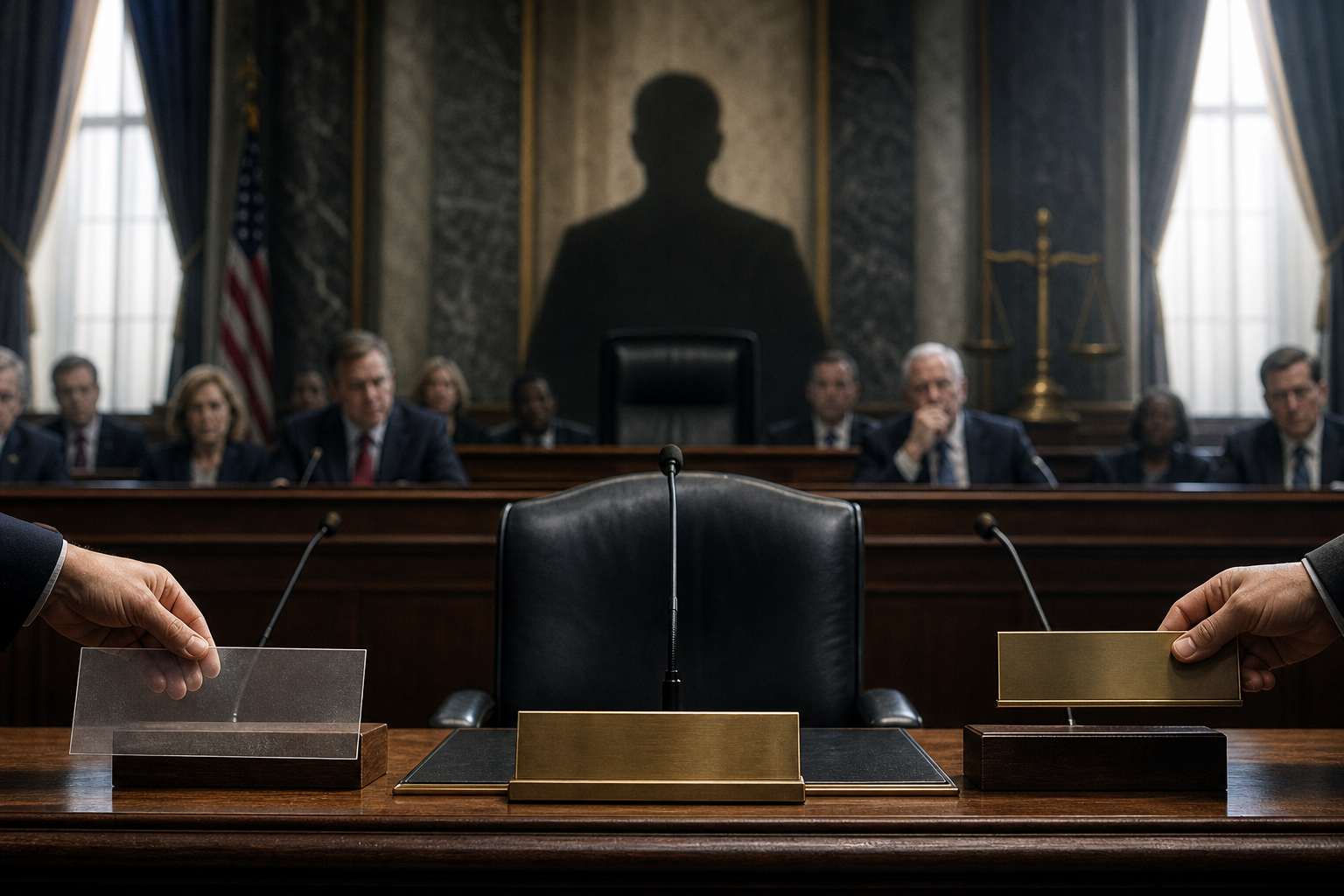
Todd Blanche’s hearing is about making acting DOJ leadership permanent
Todd Blanche’s Ratification Hearing
Todd Blanche is not asking the Senate for access to Justice Department power. He already has it.
That is why Wednesday’s confirmation hearing matters. NPR reports Blanche is acting attorney general, already Senate-confirmed as DOJ’s No. 2 early in President Trump’s second term, and now appearing on Capitol Hill to seek permanent control of the department.
The hearing is not a first audition. It is a ratification test: will senators convert temporary authority into settled leadership?
The Ratification Problem
Blanche enters the room with an unusual posture for a nominee.
He is not an outside candidate trying to prove he belongs inside federal law enforcement leadership. He is already part of DOJ’s top command structure and is currently serving as acting attorney general.
That changes the Senate’s job.
The question is not only whether Blanche has the résumé for the role. It is whether his current role makes him safer to confirm — or easier to scrutinize.
Supporters can point to continuity. The Senate has already approved him for senior DOJ leadership.
Critics can point to accountability. If he has been helping run the department, senators can press him on judgment, independence, and ownership of DOJ’s direction.
Prior confirmation lowers one barrier. It raises another.
The Earlier Vote Is Not a Shield
Blanche’s confirmation as DOJ’s second-ranking official gives his allies a clean argument: this is a promotion from within, not a leap into unknown territory.
But attorney general is a different job.
The No. 2 role can be defended as senior management. The top role requires direct public ownership of the department’s choices. That is where Wednesday’s hearing gets sharper.
Senators do not have to question Blanche only as a future attorney general. They can question him as someone already exercising acting authority.
That is the constraint Blanche faces: he has less room to answer in hypotheticals because the job is no longer hypothetical.
Schiff Puts Democratic Scrutiny on the Calendar
NPR also interviewed Sen. Adam Schiff, D-Calif., about what he plans to ask Blanche at the hearing.
That preview matters because it shows Democratic scrutiny is organized before the gavel falls. The hearing is unlikely to stay at the level of biography, credentials, or ceremony.
But the useful evidence is not the pre-hearing positioning.
The useful evidence is Blanche’s answers under oath.
A senator’s planned question can frame the fight. A nominee’s answer can change the vote path.
The Status-Conversion Test
The hearing has one practical test: does it make Blanche’s acting authority easier or harder to make permanent?
Watch four signals:
- Does Blanche answer as someone prepared to own the Justice Department’s direction? - Do Republicans remain aligned after the questioning? - Do Democrats leave with specific answers they can turn into sustained opposition? - Does follow-up reporting show the nomination advancing or slowing down?
That is the difference between a loud hearing and a consequential one.
A strong hearing gives Blanche disciplined answers, Republican cohesion, and no new reason for senators to pause.
A weak hearing creates evasions, damaging exchanges, or post-hearing statements that suggest the nomination has less room to maneuver.
The sound bites will travel first. The vote path will matter more.
The Next Evidence Checkpoint
The next checkpoint is not who lands the sharpest line during the hearing.
It is what remains after the hearing: the transcript, senators’ public statements, and follow-up reporting on whether the nomination moves forward.
If Republicans close ranks quickly, Blanche’s current role becomes an argument for continuity.
If Democrats turn his answers into a sustained objection — especially with any Republican hesitation — the acting-to-permanent transition becomes less durable.
For now, the confirmed story is narrow and important: Todd Blanche is appearing before senators not as a stranger to DOJ authority, but as the acting attorney general asking them to make that authority permanent.