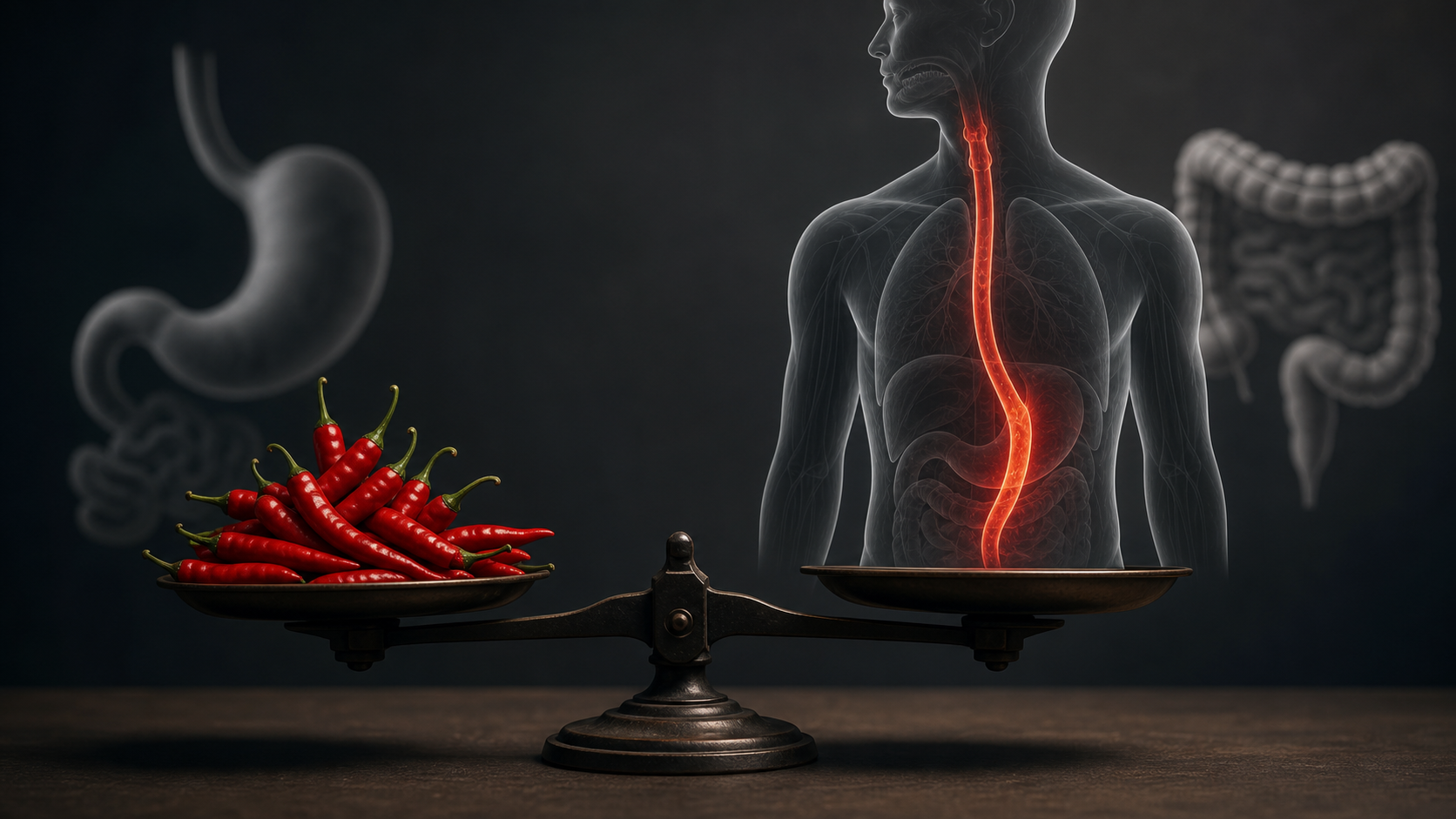
Review Flags Higher Esophageal Cancer Risk Among Heaviest Chili Pepper Consumers
Chili Pepper Review Is a Dose Problem, Not a Spicy-Food Verdict
The headline risk is not heat. It is dose.
Science Daily’s July 14, 2026 report says a major review found substantially higher esophageal cancer risk among people who consumed the most chili peppers. The same report says evidence was less clear for stomach and colorectal cancers.
That is the usable claim: a high-intake esophageal-cancer signal. It is not yet a blanket warning against chili peppers, spicy food, or digestive-cancer risk in general.
The Signal Stops At One Cancer Type
The strongest reported finding is tied to esophageal cancer.
That matters because cancer-risk headlines can expand faster than the evidence. “Higher esophageal cancer risk among the heaviest chili-pepper consumers” is a different claim from “spicy food causes cancer.”
The clean read is narrow:
- The review flagged substantially higher esophageal cancer risk in the highest-consumption group. - Stomach and colorectal cancer evidence was less clear. - The finding should be treated as a focused risk signal, not a finished dietary rule.
The Missing Threshold Is The Decision Point
The phrase doing the most work is “consumed the most.”
Without the threshold, readers cannot map the finding onto their own behavior. “Most” could mean frequency, portion size, capsaicin exposure, preparation method, or a regional eating pattern captured by the reviewed studies.
The practical questions are the whole story:
- How did the review define the highest chili-pepper intake group? - Was intake measured by daily use, weekly use, portion size, or self-report? - Were fresh, dried, powdered, pickled, or oil-based chili forms treated the same way? - Did the analysis account for other esophageal cancer risks such as smoking, alcohol use, reflux, hot beverages, or baseline diet?
Until those details are visible, the audience is not “anyone who likes spicy food.” It is people at the extreme end of chili-pepper consumption.
The Other Cancers Keep The Claim Narrow
The stomach and colorectal findings did not carry the same clarity, according to the Science Daily report.
That caveat is not cosmetic. It prevents one cancer-type signal from becoming a general gastrointestinal-cancer warning.
A review can point to a stronger association in one disease category and uncertainty in others. The right response is to narrow the interpretation, not inflate it.
The Confidence Gate Is Still Ahead
At the public-report level, the available trail runs through the Science Daily summary. The supplied source pack does not include an independent corroborating report on the chili-pepper claim.
That does not make the finding wrong. It does keep the confidence level capped.
The next checkpoint is the underlying review itself. It needs to show:
- the intake categories behind “most” - whether the included evidence is observational or stronger - how populations and baseline diets differed - how confounders were handled - whether risk rose consistently with higher intake
A useful frame is the dose gate: association, dose, population. If the review only shows association, the claim stays cautious. If the dose threshold is undefined, the headline stays hard to apply. If the population pattern is narrow, the guidance should be narrow too.
For now, the takeaway is caution for very high chili-pepper consumers, not a universal instruction to avoid chili peppers. The next evidence checkpoint is simple: the review paper’s definition of heavy intake and how firmly it connects that intake to esophageal cancer risk.