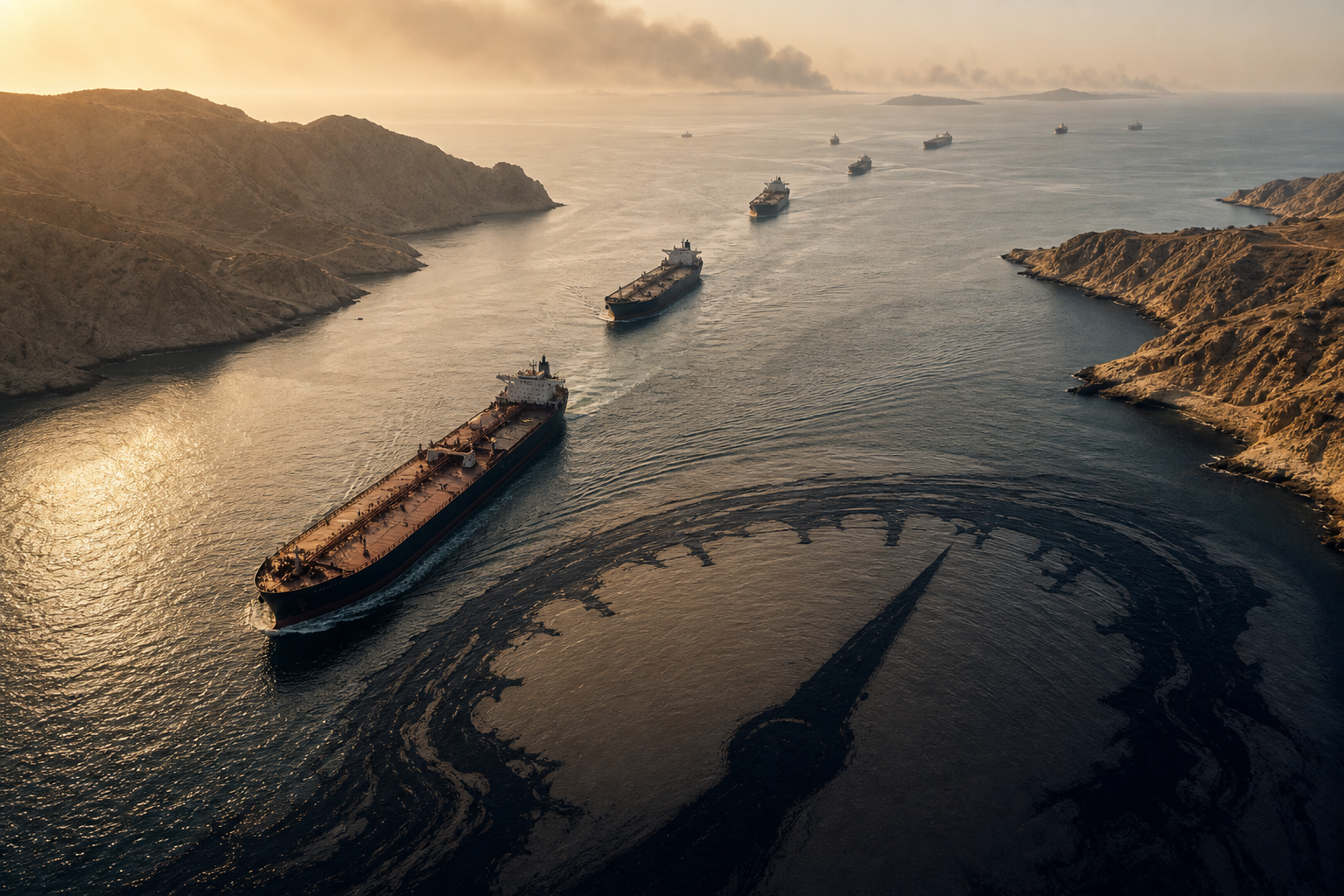
Hormuz Tanker Slowdown Turns Iran Fighting Into an Oil-Market Test
Oil traders are not paying for another Iran headline. They are paying to find out whether the Strait of Hormuz is becoming harder to use.
CNBC reports that tanker traffic through Hormuz has slowed while oil has rallied more than 7% this week on fears that exports through the strait could plunge. That is the market-relevant shift: the fighting is being tested through logistics, not just politics.
The hard boundary is just as important. The source pack reports slower tanker traffic and renewed U.S.-Iran strikes. It does not yet quantify the slowdown, show how long it has lasted, or confirm an export collapse.
Hormuz Is the Market’s Lie Detector
Hormuz matters because it turns military risk into a physical question: can tankers keep moving?
A strike headline can move sentiment. A tanker slowdown can move supply expectations. That is why this report carries more market weight than another round of rhetoric.
CNBC’s lead report connects three pieces:
- tanker traffic through the Strait of Hormuz has slowed, - renewed fighting with the U.S. followed Iranian attacks, - oil has rallied more than 7% this week as investors fear exports through the strait could plunge.
The constraint is simple: slower traffic is evidence of stress, not proof that barrels have been removed from supply.
The Rally Is Ahead of the Export Proof
Oil’s move says traders are already pricing risk before the physical data has caught up.
The current evidence supports a risk-premium trade more clearly than a confirmed supply-shock trade. Investors are paying for the chance that Hormuz becomes unreliable. The available reporting does not yet prove that export volumes have materially fallen.
That leaves two very different readings on the table:
1. Risk premium: crude rises because disruption odds have increased. 2. Supply shock: crude rises because barrels are delayed, rerouted, or removed from the market.
Right now, the first case is stronger than the second.
Strikes Explain the Fear, Not the Flow
The escalation backdrop is supported by more than one report.
NPR’s interview with Sen. Jeanne Shaheen places renewed strikes in the war with Iran inside the wider U.S. political and NATO context. CNBC’s market live update also says the U.S. launched fresh strikes on Iran after President Donald Trump said Wednesday he may no longer be interested in negotiating a deal.
Those reports explain why investors are watching Hormuz more closely.
They do not prove that exports through the strait have plunged. For that, the market needs shipping and export evidence, not just confirmation that the conflict has intensified.
The Checkpoint Is Tanker Behavior
The next test is whether the logistics evidence catches up with the price move.
The cleanest confirmation would be updated tanker-tracking data showing whether traffic through Hormuz is still slowing or beginning to normalize. The next layer would be export-volume reporting showing whether barrels are being delayed, rerouted, or removed from supply.
Until then, the strongest claim is narrow but important: Hormuz is showing market stress around a critical chokepoint.
Oil Needs the Data to Agree
The next move depends on whether three signals start pointing in the same direction:
- tanker-tracking data, - official U.S. or Iranian statements, - crude price action.
If tanker traffic worsens and oil extends the rally, traders will treat Hormuz more like an active supply shock.
If traffic stabilizes or oil gives back gains, this looks more like geopolitical risk premium than physical disruption.
For now, the evidence checkpoint is clear: the next tanker and export data will decide whether this is a shipping scare or the start of a confirmed oil-flow problem.