Trump’s Mount Rushmore Speech Breaks the July 4 Unity Script
Mount Rushmore Turned the 250th Birthday Into a Stress Test
A national birthday stage is supposed to widen the frame. Trump used it to narrow the fight.
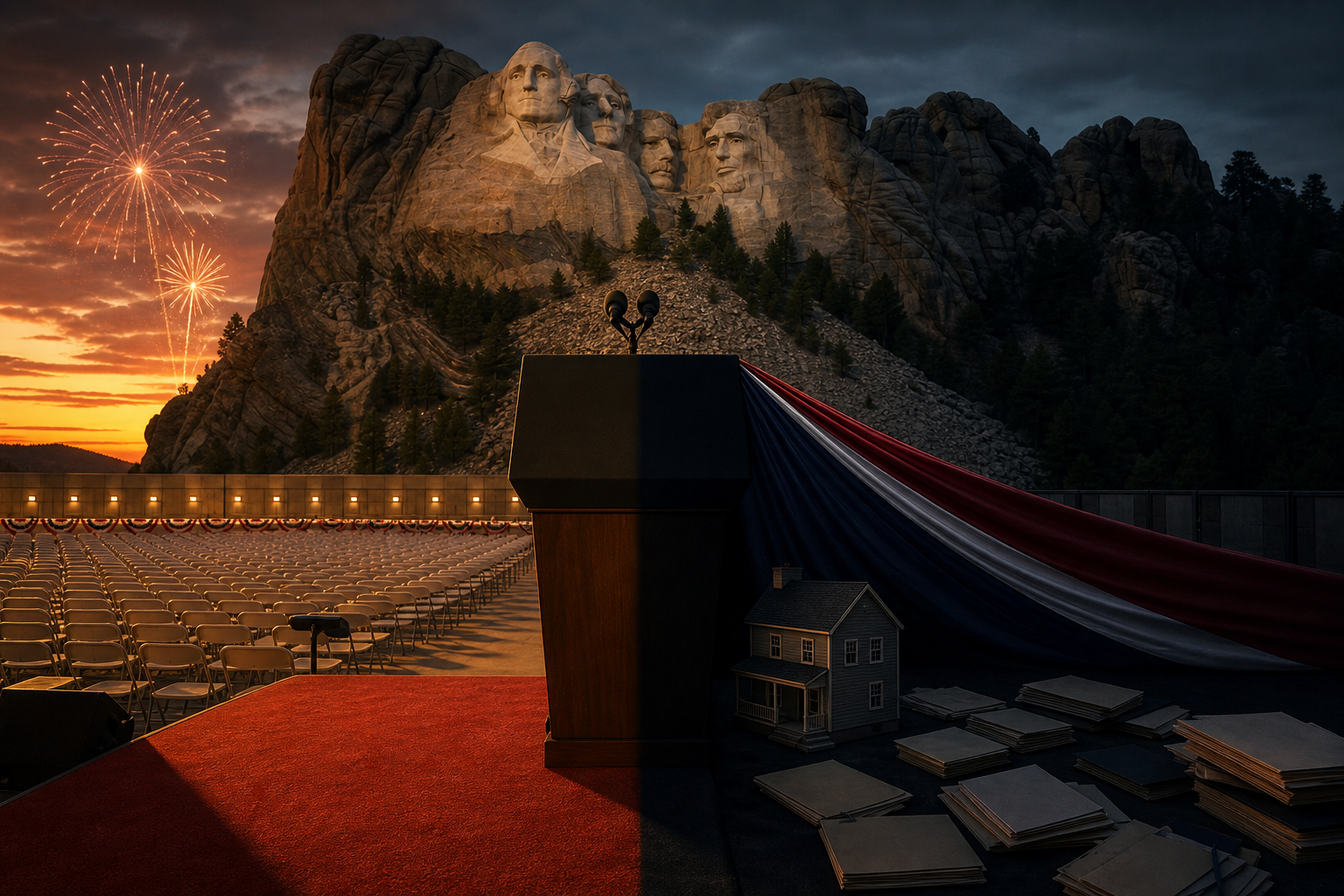
NPR reports that President Trump’s July 4 speech at Mount Rushmore moved from U.S. exceptionalism into warnings about communism, breaking from the more apolitical unity script presidents usually use on Independence Day.
The bigger issue is not just tone. America’s 250th anniversary is already becoming a stress test for three things at once: civic commemoration, fundraising control, and whether patriotic messaging is matched by governing action.
That is the useful frame: birthday stage, campaign pressure, governing test.
The Unity Script Broke First
Independence Day speeches usually flatten conflict. They lean on founding ideals, service, sacrifice, endurance, and shared national identity.
NPR’s Mount Rushmore report describes a different turn. Trump marked the 250th-anniversary launch with a speech that shifted from American exceptionalism to warnings about communism.
That venue-message mismatch is the story.
Mount Rushmore and the 250th anniversary signal national commemoration. A warning-heavy political message turns that commemoration into contested terrain.
For Trump, that may be useful politics. For the anniversary itself, it creates a constraint: the more the celebration carries campaign-style conflict, the harder it is to present as shared civic ground.
Freedom 250 Made the Machinery Visible
The speech did not land in a vacuum.
NPR separately reported that House Democrats released a 55-page report accusing Freedom 250 of using America’s birthday celebrations for profit through questionable fundraising methods.
That shifts the question from rhetoric to control.
The fight is now about who gets to operate the patriotic brand:
- Who controls the anniversary infrastructure? - Who raises money from it? - Who benefits from the celebration apparatus? - What guardrails separate civic commemoration from private or political gain?
The caveat is important. An accusation is not proof.
The next hard evidence would be Freedom 250’s response, the underlying fundraising documents, and independent verification of the methods described in the Democratic report.
Still, the risk is clear. A national birthday is easier to defend when it looks civic. It becomes more exposed when critics can frame it as a profit center or political asset.
The Housing Bill Tests the Gap
NPR’s politics chat also flagged Trump’s reluctance to sign a bipartisan housing bill intended to help make homes more affordable.
That belongs in this story because it tests what the White House does with the anniversary moment.
A July 4 stage can define enemies, elevate symbols, and dominate attention. But housing affordability is a household-level pressure point. If a bipartisan affordability bill remains unsigned, the contrast sharpens: patriotic spectacle on one side, delayed governing action on the other.
The question is not whether every anniversary event needs to be a policy rollout.
The question is whether the 250th becomes a platform for civic confidence or a backdrop for conflict while a concrete affordability measure waits.
The Next Evidence Checkpoint
This story now turns on two tests.
First, the housing bill. A signature, delay, or rejection will show whether policy action follows the patriotic messaging.
Second, Freedom 250. A response, documents, or independent verification will determine whether the fundraising accusations stay political or become a deeper governance problem.
The Mount Rushmore speech opened the fight over tone. The next evidence will show whether America’s 250th becomes a shared commemoration — or a governing and fundraising battle wrapped in red, white, and blue.