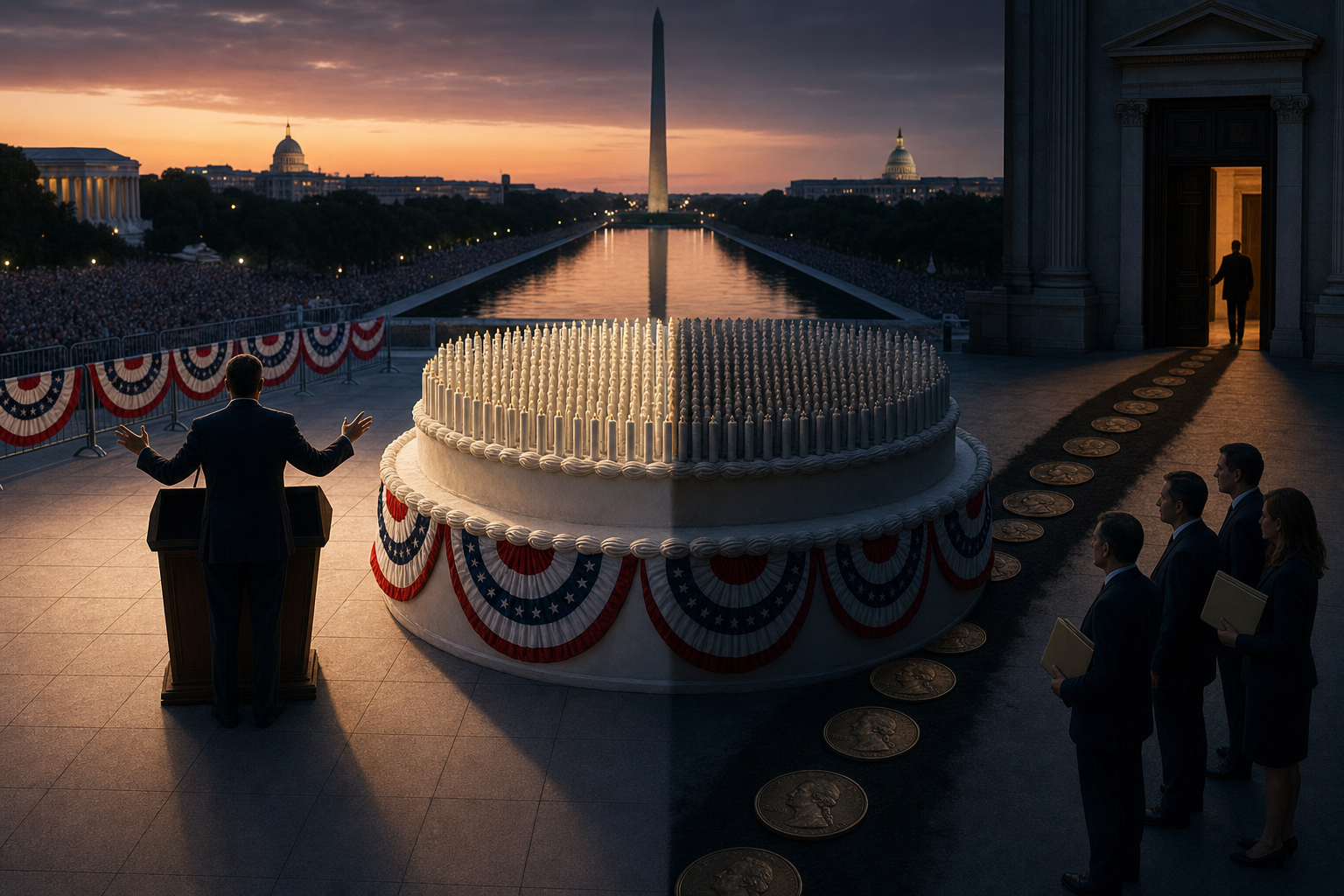
Trump Defends Business Dealings as Democrats Accuse Freedom 250 of Profit Push
Trump’s July 4 Ethics Fight Turns on a Money Trail
The fight over America’s 250th birthday is no longer only about patriotic staging. It is now about whether a public national celebration created private benefit.
President Donald Trump defended his business dealings and his children in an exclusive CNBC interview as he prepared for July 4 events marking the country’s 250th birthday on the National Mall, including fireworks.
House Democrats are trying to attach a narrower ethics charge to that moment. NPR Politics reports they released a 55-page report accusing Freedom 250, a group connected to the anniversary celebrations, of using the event for profit through questionable fundraising methods.
The confirmed fact is Trump’s CNBC defense. The unresolved question is whether Democrats can turn the Freedom 250 allegation into a documented case.
The Public-Celebration, Private-Benefit Test
Democrats’ strongest move is not a broad complaint about Trump’s business interests. It is a more testable claim tied to one event.
Their argument puts the anniversary celebration itself under scrutiny:
- Who raised money around the 250th birthday? - What were donors told the money would support? - How was the money spent? - Did any private actor benefit from the event’s patriotic branding, access, contracts, or infrastructure?
That is the useful frame: public celebration, private benefit.
A national birthday event can involve sponsors, vendors, and fundraising without proving misconduct. The case only gets stronger if records show misleading solicitations, insider advantage, or benefits routed to Trump-aligned interests.
A 55-Page Report Is an Allegation, Not Proof
NPR’s key contribution is specificity: House Democrats’ charge is packaged in a 55-page report focused on Freedom 250 and fundraising around the anniversary celebration.
That narrows the dispute. The issue is not simply that Trump appeared near a major public event or defended his family’s business activity. The allegation is about the methods used to raise money around America’s 250th birthday.
For now, that remains a contested claim. A Democratic report can set the agenda, but it does not settle the facts.
Freedom 250’s explanation is central. Without the group’s response on fundraising, spending, and its role in the celebration, the profit-push allegation remains one side of the ethics fight.
The Interview Still Has a Missing Piece
CNBC has confirmed the interview and the broad subject: Trump defended his business dealings and his children.
The missing piece is how directly Trump addressed the Freedom 250 accusations, if at all. A general defense of business activity is not the same as a specific rebuttal to a fundraising allegation tied to the July 4 celebration.
That distinction keeps the story from outrunning the evidence.
The interview matters because it places Trump’s business defense next to the anniversary controversy. It does not, by itself, prove or disprove the Democrats’ case.
The Records That Move the Story
The next checkpoint is documentary.
The records that would decide whether this is ordinary event financing or an ethics problem include:
- fundraising emails and donor communications tied to the 250th birthday - event budgets and spending records - contracts connected to the celebration - sponsorship terms or access promises - any formal response from Freedom 250
If those records show routine fundraising for a public celebration, Democrats’ case weakens.
If they show that patriotic branding was used to create private benefit, Trump’s CNBC interview becomes more than a business-defense segment. It becomes the first response in a larger fight over who profited from America’s birthday.