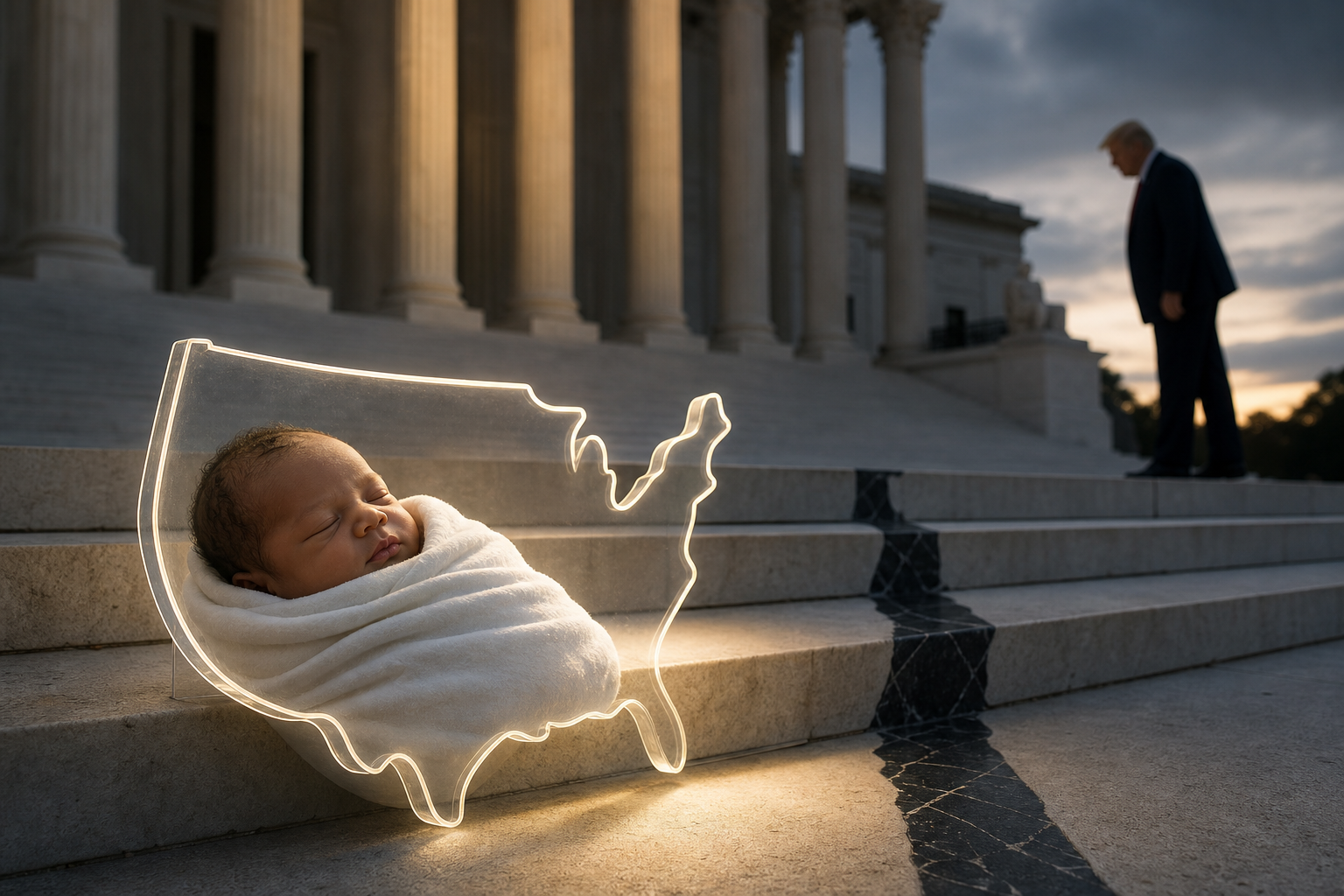
Supreme Court Upholds Birthright Citizenship
The Supreme Court has drawn a constitutional line on birthright citizenship. The next question is whether the Trump administration treats it as a boundary or looks for the seam.
NPR Politics reports that the Court upheld birthright citizenship on constitutional grounds on the final day of its term. That is the confirmed event. The unresolved story is what the ruling means in practice once the opinion text, agency response, and any administration workaround attempt are visible.
The Court Drew the Citizenship Line
The reported outcome is clear: birthright citizenship survived at the Supreme Court on constitutional grounds.
That makes the ruling a legal defeat for President Trump’s agenda on the core issue NPR describes. But the available source material does not yet define the full operational reach of the decision.
That distinction matters. A Supreme Court ruling can settle the top-line constitutional question while still leaving practical fights over implementation.
The safe read for now is narrow but significant: the constitutional protection was upheld, and the next phase depends on how the ruling is written and enforced.
A Loss Inside a Mixed Term
This ruling should not be read as the whole story of the Court’s posture toward Trump.
NPR’s broader term-end coverage says the Court dealt Trump some blows while also leaving him with more expansive powers. That context makes the birthright citizenship decision more precise: a constitutional limit in one lane, not a universal check across the entire agenda.
That is the tension. The administration can lose on birthright citizenship and still retain leverage elsewhere.
The practical question is whether this particular loss becomes binding in government operations, not whether it symbolically defines the term.
The Opinion Text Sets the Edge
The first hard checkpoint is the full opinion.
The questions that matter are concrete:
- Is the ruling written broadly or narrowly? - How does the Court ground the constitutional protection? - Does the decision leave room for future litigation? - Do concurrences or dissents point to another legal path? - Does the opinion address implementation, or only the constitutional claim?
Until those details are reviewed, the result is clearer than the boundary. NPR reports the Court upheld birthright citizenship. The exact legal edge still depends on the text.
The Compliance Test
The memorable test now is simple: rhetoric is noise; enforceable action is signal.
NPR’s related coverage says Trump has trumpeted victories and sought workarounds for losses. That pattern makes the administration’s response the next meaningful evidence point.
A public statement criticizing the ruling would matter politically. It would not, by itself, change the story.
Stronger signals would include:
- White House guidance on how the administration will comply - Agency instructions affecting citizenship claims - New legal filings attempting to narrow the ruling - Policy moves testing the edge of the decision - Public comments from officials outlining a new enforcement theory
The difference is practical. Spin describes a reaction. Implementation changes what happens next.
The Next Checkpoint Is Action
For now, the confirmed point is narrow and important: the Supreme Court upheld birthright citizenship on constitutional grounds.
The next version of the story should turn on evidence, not posture. The key checkpoint is whether the administration accepts the ruling in agency practice or tries to convert the loss into a narrower fight through guidance, filings, or policy moves.
That is where the ruling becomes more than a headline. It either hardens into a working constitutional boundary, or becomes the next front in the administration’s legal strategy.