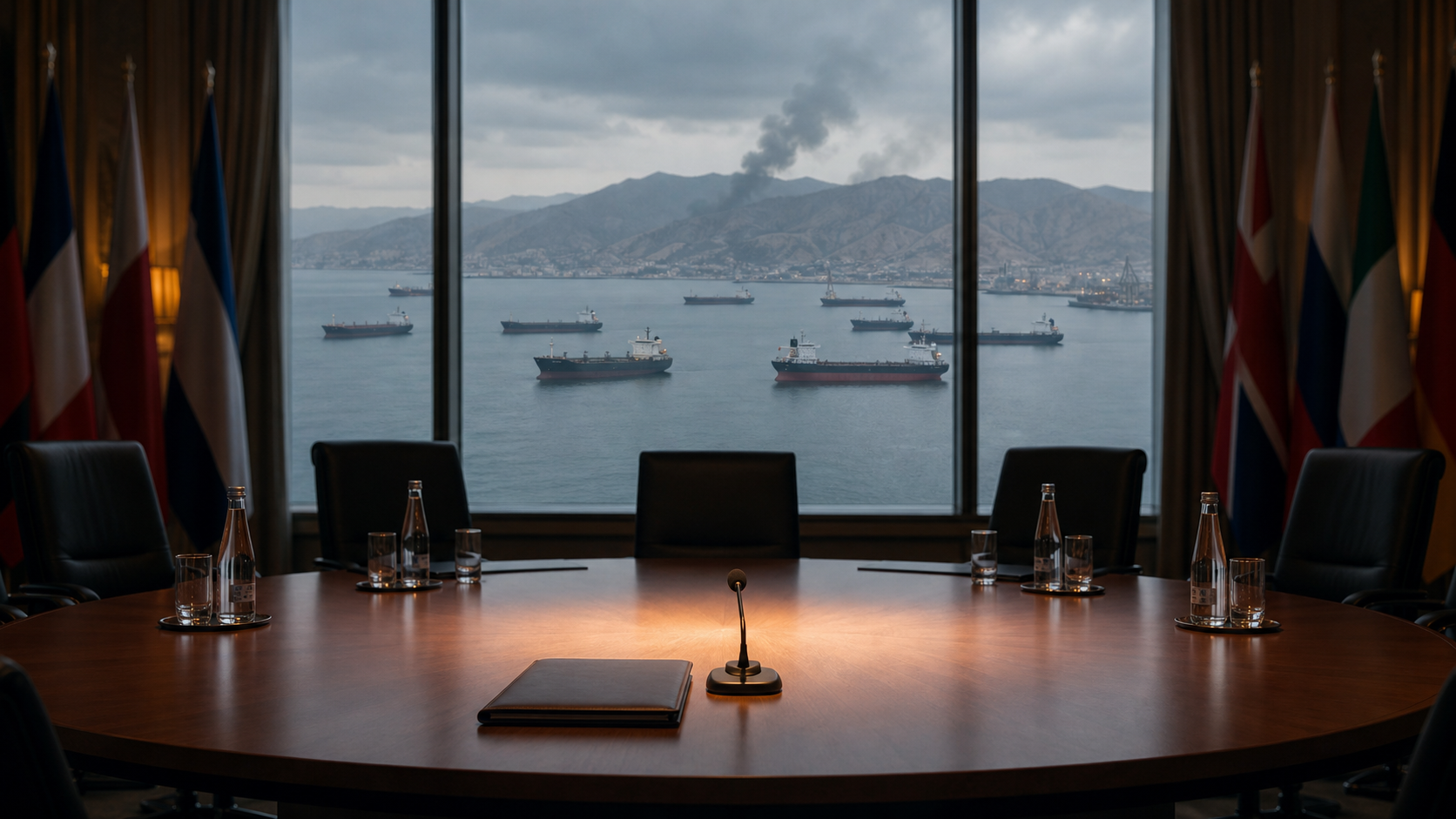
Trump’s Iran Agreement Takes the G7 Spotlight While Ships Stay Put
The G7 Deal Has a Ship Problem
Trump’s Iran agreement has won the summit stage. It has not yet won the operational test.
That is the gap behind the G7 headline. The agreement dominated the summit in France, and Trump said the next stage of talks with Iran should be easier than the first. But the public evidence still points to friction: ships have not responded as he urged, Israel is still striking Lebanon, and Israel’s ambassador says Israel is not going to withdraw from South Lebanon.
The deal now faces a simple podium-to-port test: does the announcement change behavior where the conflict created real pressure?
The Summit Claim Is Bigger Than the Proof
Trump has made the Iran agreement the center of his G7 diplomacy.
That matters because the conflict carried costs beyond the battlefield. NPR describes the U.S.-Israel-led war in Iran as a shock to the global economy and a blow to Trump’s standing at home.
That raises the burden of proof. A summit announcement can create momentum. It cannot, by itself, prove that commercial operators, Israel, Iran, or other governments are changing course.
For now, the agreement is politically important. It is not yet visibly implemented.
Hormuz Is the Cleanest Test
The most concrete signal is shipping.
Trump told ships to “start your engines.” NPR reports that is not happening yet.
That is a meaningful delay because the Strait of Hormuz is where confidence becomes measurable. During the months-long conflict involving the U.S. and Israel, Iran’s position around the chokepoint inflicted global economic pain.
If vessels remain cautious, the market is not matching the message from the podium.
The narrow read is stronger than the broad one: Trump has promoted an agreement, but it has not yet restored visible confidence in a key maritime route.
Lebanon Is Still Moving Against the Narrative
Lebanon is the second stress point.
BBC reports Israel launched fresh strikes on Lebanon despite Trump’s criticism. Trump said Benjamin Netanyahu needed “to be more responsible with respect to Lebanon.”
That weakens any claim that the Iran agreement has already produced regional de-escalation.
A separate report adds the harder constraint: Israel’s ambassador to the U.S., Michael Leiter, said Israel is “not going to withdraw from South Lebanon.”
Those facts do not prove the agreement has failed. They show its limits. The diplomatic claim has not yet overpowered the military posture still playing out in Lebanon.
The Terms Still Matter
The public record does not yet clarify the agreement’s full shape.
Is it mainly a path to more Iran talks? A ceasefire mechanism? A narrower U.S.-Iran understanding? A broader regional bargain with expectations for Israel and shipping security?
Those are not semantic differences. They determine what success should look like.
If the agreement is only a negotiating framework, then Trump’s optimism about the next stage still needs proof at the table. If it is meant to stabilize the region now, then Hormuz and Lebanon are immediate scorecards.
Without visible terms, each actor can keep defining the deal around its own behavior: Trump can sell momentum, shipping operators can stay cautious, and Israel can maintain its Lebanon posture.
The Next Checkpoint Is Behavior
The next evidence checkpoint is not another summit quote. It is whether the facts on the ground and at sea begin to move.
Watch four signals:
- Hormuz movement: Do ships actually resume safer, more normal movement through the Strait? - Lebanon strikes: Do Israeli operations slow after Trump’s criticism, or continue despite it? - South Lebanon posture: Does Israel shift from the ambassador’s stated refusal to withdraw? - Iran talks: Do the next negotiations produce visible commitments, not just Trump’s confidence that they will be easier?
Until those signals change, the Iran agreement remains a major G7 headline with unresolved execution risk. The ships, the strikes, and the withdrawal line will decide whether it becomes a diplomatic result or stays a summit claim.